Adolf Hitler (20 April 1889 – 30 April 1945) was an Austrian-born German politician who was the dictator of Germany from 1933 until his death in 1945. He rose to power as the leader of the Nazi Party, becoming the chancellor in 1933 and then assuming the title of Führer und Reichskanzler in 1934. During his dictatorship, he initiated World War II in Europe by invading Poland on 1 September 1939. He was closely involved in military operations throughout the war and was central to the perpetration of the Holocaust, the genocide of about six million Jews and millions of other victims. (Intro from Wikipedia)
April 20, 1889 - Braunau am Inn, Austria-Hungary - Adolf Hitler is born
August 1, 1892 - Passau, Germany - Hitler's family moves to Passau, Germany, when he was 3
January(?) 1(?), 1894 - Leonding, Austria-Hungary - The family returns to Austria and settles in Leonding
June 25, 1895 - Hafeld, near Lambach, Austria-Hungary - Hitler's father retires to Hafeld to farm and keep bees. Hitler attends the Volksschule (State Primary School) at the nearby town of Fischlham
January(?) 1(?), 1897 - Lambach, Austria-Hungary - The family moves to Lambach. 8-year-old Hitler takes singing lessons and sings in the church choir
January(?) 1(?), 1898 - Leonding - The Hitlers return permanently to Leonding
February 2, 1900 - Leonding - His brother Edmund dies of measles. Hitler is deeply affected
September 1(?), 1900 - Linz, Austria-Hungary - Alois Hitler sends his son to the Realschule in Linz. Unhappy with his father's decision, Adolf boycotts himself in school so that his father would let him pursue an education in Arts
January 3, 1903 - While in Linz - Alois Hitler dies in Leonding, aged 65. Adolf was 13 at the time
September 1(?), 1904 - Steyr, Austria-Hungary - Hitler enrolls at the Realschule in Steyr. His performance obviously improves
May(?) 1(?), 1905 - Steyr - Hitler passes a repeat of the final exam
January 1(?), 1907 - Vienna, Austria - The Hitlers move to Vienna so that Adolf could study Fine Arts. The family doctor discovers breast cancer in Hitler's mother. He informs Adolf, who had to inform his own mother that her chance of survival was slim without undergoing a radical mastectomy
October 1(?), 1907 - Vienna - After undergoing a mastectomy in Linz, Hitler's mother starts daily treatments of iodoform (then an experimental form of chemotherapy) as her condition worsened and the cancer had already metastasized
December 21, 1907 - Vienna - Hitler's mother, Klara Pölzl, dies from the toxic medical side-effects of iodoform, aged 47. Adolf Hitler, 18 years old, is affected by her loss for the rest of his life
January(?) 1(?), 1909 - Vienna - Hitler runs out of money and is forced to live a bohemian life in homeless shelters and men's dormitory. He brings earning some money by painting and selling watercolours of Vienna's sights. In his free time, he dedicated himself to architecture and music, attending performances of Wagner's "Lohengrin" whenever possible
May 1(?), 1913 - Munich, Germany - Hitler receives the final part of his father's estate and moves to Munich
February 5, 1914 - Salzburg, Austria - He is conscripted into the Austro-Hungarian army and journeys to Salzburg for medical assessment. He is deemed unfit for service and returns to Munich
July 28, 1914 - Munich, Germany - In Munich while World War 1 starts. Hitler enlists in the Bavarian Army =(START)
October 19, 1914 - Ypres, Belgium - The First Battle of Ypres begins
November 22, 1914 - Ypres - The First Battle of Ypres ends - indecisive. Hitler is promoted to "Gefreiter" (Lance Corporal) and assigned to be a regimental message-runner
December 4, 1914 - Fournes-en-Weppes, Northern France(?) - Awarded the Iron Cross 2nd Class
March 10, 1915 - Wavrin | Fromelles, Northern France - Corporal Hitler begins going daily to the Abiette bunker in Fromelles, to convey orders from the command based in Wavrin
July 1, 1916 - Somme River, Northern France - The Battle of the Somme begins
July 19, 1916 - Fromelles, Northern France - Battle of Fromelles (until July 20th) - German victory
September 25, 1916 - Wavrin | Fromelles, Northern France - Corporal Hitler's last day conveing orders from the command in Wavrin to the Abbiette bunker in Fromelles
October 7, 1916 - near Bapaume, Belgium - Hitler is wounded in the left thigh when a shell exploded in the dispatch runners' dugout
October 10(?), 1916 - Beelitz, Brandenburg - Taken to Hospital in Beelitz, where he would stay for 2 months
 |
| Corporal Hitler (right) |
March 5, 1917 - Fournes-en-Weppes, Northern France(?) - Returns to his regimentApril 9, 1917 - Arras, Northern France - The Battle of Arras begins
May 16, 1917 - Arras - The Battle of Arras ends - British victory
July 31, 1917 - Passchendaele, Ypres Salient, Belgium - The Battle of Passchendaele begins
August 15(?), 1917 - Alsace - Hitler's Regiment transfers to a quiet sector of the front in Alsace
November 10, 1917 - Passchendaele, Ypres Salient, Belgium - The Battle of Passchendaele ends - British victory
March 7, 1918 - While at Fournes-en-Weppes, Northern France(?) - Nationalist Anton Drexler forms a branch of the "Free Workers' Committee for a Good Peace" in Munich
May 18, 1918 - Fournes-en-Weppes, Northern France(?) - Awarded the Black Wound Badge
August 4, 1918 - Fournes-en-Weppes, Northern France(?) - Awarded the Iron Cross 1st Class for single-handedly capturing a group of french soldiers hiding in a shell hole
October 15, 1918 - Fournes-en-Weppes, Northern France(?) - Hitler and other comrades are temporarily blinded by a british mustard gas attack
October 18(?), 1918 - Pasewalk, Pomerania - Hospitalized in Pasewalk, Pomerania
November 10, 1918 - Pasewalk - Hitler learns of Germany's defeat and suffers a second bout of blindness
November 19, 1918 - Pasewalk - Discharged form the Pasewalk Hospital
November 21, 1918 - Munich - Arrives in Munich. He is assigned to 7th Company of the 1st Replacement Battalion of the 2nd Infantry Regiment
December 1(?), 1918 - Traunstein, Bavaria - Hitler is reassigned to a Prisoner of War Camp in Traunstein as a guard
January 5, 1919 - While inTraunstein(?) - Anton Drexler creates the "Deutsche Arbeiterpartei - DAP" (German Workers' Party)
January 15(?), 1919 - Munich - Traunstein POW camp is dissolved. Hitler returns to Munich to wait for reassignment
April 3, 1919 - Munich - Hitler is elected liaison of his battalion (reelected on the 15th)
May 6, 1919 - While in Munich - The Bavarian Soviet Republic is crushed by Lt.General Burghard von Oven
June 1(?), 1919 - Munich - Moved to the demobilization office of the 2nd Infantry Regiment. New commander Karl Mayr recruits Hitler as an undercover agent. His job was to influence other soldiers and to infiltrate the German Workers' Party (DAP)
July 10, 1919 - Lechfelf, near Augsburg - Hitler attends "national thinking" courses (until July 19th). Mayr is so impressed with Hitler that he assigns him to an anti-bolshevik "educational commando" as an instuctor
September 12, 1919 - Munich - While monitoring the activities of the DAP, Hitler became attracted to the founder Anton Drexler's antisemitic, nationalist, anti-capitalist, and anti-Marxist ideas. Impressed with Hitler's oratory skills, Drexler invited him to join the DAP
September 16, 1919 - Munich - Letter to Adolf Gemlich: The aim of the government "must unshakably be the removal of the Jews altogether"
October 16, 1919 - Munich - First DAP speech held in the Hofbräukeller restaurant, for 111 people
February 24, 1920 - Munich - Speech to 2,000 people in the Staatliches Hofbräuhaus in Munich. Hitler enunciates the 25 points of the German Workers' Party Manifesto. The DAP changes its name to "Nationalsozialistische Deutsche Arbeiterpartei" (National Socialist German Workers' Party, or "Nazi Party")
March 31, 1920 - Munich - Discharged from the German Army. He begins working full-time for the party
July 11, 1921 - Munich - Returns to Munich from a fundraising trip to Berlin with influential nazi journalist Dietrich Eckart. He angrily tenders his resignation when some members of his executive committee wanted to merge with the rival German Socialist Party
July 26, 1921 - Munich - Rejoins the Nazi Party with the condition that he would replace Drexler as party chairman
July 29, 1921 - Munich - Replaces Drexler as "Führer" of the Nazi Party
October 5, 1921 - Munich - Formation of the Nazi Party's paramilitary wing - the "Sturmabteilung - SA" (Storm Detachment), which protected meetings and attacked political opponents
March 8, 1922 - Munich - Creation of the "Jugendbund der NSDAP" (Nazi Party Youth)
May 13, 1922 - Munich - First meeting of the Nazi Party Youth
November 16, 1922 - Munich - Mass meeting on the Königsplatz, where the swastika is used for the first time. Hermann Göring and wife Carin attend the meeting January 11, 1923 - While in Munich - France occupies the Ruhr industrial region as a result of Germany's failure to meet its reparations payments, leading to chaos
January 27, 1923 - Munich - Nazi Party congress and rally
September 1, 1923 - Nuremberg - Two-days German Day Rally
October 2, 1923 - Munich, Germany - Interview to "Daily Mail": "If a German Mussolini is given to Germany... People would fall down on their knees and worship him more than Mussolini has ever been worshipped"
 |
| Beer Hall Putsch, 1923 |
November 9, 1923 - Munich - Hitler and the Nazis, alongside national conservatives, try to seize power in Munich in the Beer Hall "Putsch" (coup d'état). Troops open fire and 16 nazis are killed. The Nazi Party is bannedNovember 11, 1923 - Munich - Hitler is arrested for treason
April 1, 1924 - Landsberg, Bavaria - Hitler and General Erich Ludendorff are tried for treason. Hitler is sentenced to 5 years' imprisonment at Landsberg Prison
April 15, 1924 - Landsberg - Carin Göring visits Hitler in prison
December 20, 1924 - Landsberg - Hitler is released from prison
January 4, 1925 - Munich - Meeting with the Prime-Minister of Bavaria, Heinrich Held. Hitler agrees to respect the state's authority and promises that he would seek political power only through the democratic process
February 16, 1925 - Munich - The ban on the NSDAP is lifted and the party is formally refounded
February 27, 1925 - Munich - After an inflammatory speech, Hitler is banned to speak in public by the Bavarian authorities
April 7, 1925 - Munich - Hitler renounces his Austrian citizenship
July 12, 1925 - Weimar - Gau leaders' conference in Weimar. Hitler meets Joseph Goebbels November 20, 1925 - Plauen - Hitler and Goebbels meet again at an event in Plauen where both were speaking
February 14, 1926 - Bamberg, Upper Franconia - Bamberg Conference (Hitler wanted to pressure the dissident northern faction to accept the leadership of Munich)
February 15, 1926 - Munich - Conversation with Joseph Goebbels during his visit to the NSDAP headquarters
April 8, 1926 - Munich - Hitler embraces Goebbels "with tears in his eyes" after a wildly successful speech at the Burgerbraukeller
July 3, 1926 - Weimar - 2nd NSDAP congress (2 days)
July 4, 1926 - Weimar - The "Jugendbund der NSDAP" is renamed "Hitlerjugend" (Hitler Youth)
July 20, 1926 - Elberfeld - Meeting with Goebbels and Kaufmann. Hitler appoints Kaufmann Gauleiter (Party Organizer) for North and West Germany
February 23, 1927 - Munich - Goebbels visits Hitler
August 19, 1927 - Weimar - 3rd NSDAP congress (3 days)
May 20, 1928 - Berlin - The Nazis score just 2,6% in the May 1928 Reichstag elections. Goebbels is elected to the Reichstag
August 30(?), 1928 - Munich - Meeting of the NSDAP elite in Munich
November 16, 1928 - Berlin - Speech in Berlin
July 1(?), 1929 - Berlin - Speech to a rally of National Socialist students in Berlin
August 1, 1929 - Nuremberg - 4th NSDAP congress (4 days)
October 5, 1929 - Munich - Hitler moves into a luxury eight-room apartment in Munich. His half-niece Geli Raubal (daughter of his half-sister Angela Raubal) goes living there
February 21, 1930 - Nuremberg - Meets Goebbels in Nuremberg
April 26, 1930 - Munich - NSDAP leaders' conference in Munich (2 days)
May 2, 1930 - Berlin - Hitler visits Berlin
August 30, 1930 - Berlin - Meeting with Göring and Goebbels
September 10, 1930 - Berlin - Speech in the Sportpalast
September 14, 1930 - Berlin - The nazis win 18% of the votes in the September 1930 Reichtag elections
March 31, 1931 - Weimar - Goebbels meets Hitler in Weimar
April 5, 1931 - Munich - Easter with Goebbels in Munich
August 25, 1931 - Berlin - Hitler takes an interest in Magda Quandt and visits her while Goebbels was away at a memorial ceremony
September 18, 1931 - While in Nuremberg - Geli Raubal is found dead in Hitler's apartment with a gunshot wound to the chest, an apparent suicide with Hitler's pistol
September 24, 1931 - Tegernsee Lake, South Bavaria - Going through a deep depression after Geli Raubal's suicide, Hitler does not attend her funeral, staying at a house on the shores of Tegernsee Lake
September 26, 1931 - Vienna, Austria - Hitler visits Geli Raubal's grave at Vienna's Zentralfriedhof
October 3, 1931 - Berlin - Meeting with General Kurt von Schleicher, state secretary at the Reichwehr Ministry
October 10, 1931 - Berlin | Bad Harzburg - Meeting with Hindenburg. On the evening, Hitler drives to Bad Harzburg with Goebbels and Göring
October 18, 1931 - Braunschweig - Addresses a National-Socialist meeting in Braunschweig
November 1, 1931 - Munich - Hitler convinces Goebbels and Magda Quandt to travel with him to Munich, via Weimar
December 19, 1931 - Severin, Mecklenburg - Attends the marriage of Joseph Goebbels and Magda Quandt
January 18, 1932 - Munich - Meeting with Goebbels
February 9, 1932 - Berlin - Ludwig Assner, a german politician and member of the Bavarian State Parliament, sends a poisoned letter to Hitler from France. An acquaintance of Assner warns Hitler and the letter is intercepted
February 22, 1932 - Berlin - Visit to Berlin
March 6, 1932 - Frankfurt-am-Main - Speech in front of 35,000 people
March 27, 1932 - Munich | Obersalzberg - Hitler and Goebbels leave Munich for the Easter break at Obersalzberg
April 4, 1932 - Lustgarten, Berlin - Speech at Lustgarten, Berlin
April 20, 1932 - Kassel - Speech in front of 40,000 people
April 24, 1932 - While in Munich - The Free State of Prussia elections to the Landtag results in 36% of the votes and 162 seats for the NSDAP
May 5, 1932 - Berchtesgaden - Goebbels and Magda visit Hitler in Berchtesgaden
May 7, 1932 - Berlin - Back in Berlin
May 30, 1932 - Berlin - Meeting with Hindenburg
July 20, 1932 - While in Bremen - The prussian government is ousted by a coup
July 31, 1932 - Berlin - The nazis win 37% of the votes in the July 1932 Reichtag elections and thus entitled to select the President of the Reichtag - Hermann Göring is selected
August 6, 1932 - Berchtesgaden - Meeting with Goebbels
August 25, 1932 - Berchtesgaden - Meeting with Goebbels
August 30, 1932 - Berlin - Attends the inaugural session of the Reichstag
August 31, 1932 - Berlin - Party at Göring's house with presence of Hitler, Goebbels and Röhm
November 30, 1932 - Weimar - Hitler meets Goebbels in Weimar
January 4, 1933 - Cologne - Meeting with Von Papen at the house of the banker Kurt von Schoeder
January 24, 1933 - Munich - Meeting with Goebbels in Munich
January 30, 1933 - Berlin - President Hindenburg appoints Adolf Hitler, "Führer" of the National Socialist German Workers Party (NSDAP), Chancellor of Germany
February 4, 1933 - Berlin - President Hindenburg signs an emergency decree “for the protection of the German people,” giving the regime the power to forbid strikes, meetings, and demonstrations
February 20, 1933 - Berlin - Secret meeting between Adolf Hitler and German businessmen at the official residence of Reichstag President Hermann Göring in Berlin. The meeting raised ℛℳ 2 million for the Nazi Party election campaign. In his speech, Hitler blamed democracy for the rise of communism February 27, 1933 - Berlin - The Reichtag fire gives Hitler a pretext for suppressing his political opponents
March 5, 1933 - Berlin - The nazis win 44% of the votes for the March 1933 parliamentary election
March 23, 1933 - Berlin - The Parliament passes the Enabling Act of 1933, which gives the cabinet the right to enact laws without the consent of Parliament. This gave Hitler dictatorial powers
March 26, 1933 - Berchtesgaden - Goebbels arrives for a visit
April 21, 1933 - Berlin - Back in Berlin
July 14, 1933 - Berlin - All competing parties in Germany are outlawed or dissolved
July 19, 1933 - Bayreuth - Hitler and Goebbels attend the Bayreuth Festival
August 6, 1933 - Obersalzberg - Speech on the autobahn construction and the establishment of a Senate
August 25, 1933 - Munich | Berchtesgaden - Magda Goebbels meets Hitler in Munich and both go to Berchtesgaden
August 28, 1933 - Berchtesgaden - Returns to Berchtesgaden
August 30, 1933 - Nuremberg - 5th NSDAP congress, the "Rally of Victory". Leni Riefenstahl's film "Der Sieg des Glaubens" is made at this rally
October 1(?), 1933 - While at the Harvest Festival on the Bückeberg - Germany withraws from the League of Nations and the World Disarmament Conference. Stalin initiates confidential communications with Hitler
October 11, 1933 - Berlin - Meeting with Goebbels about the disarmament question
October 15, 1933 - Munich - Attends the Festival of German Art
November 10, 1933 - Berlin - Speech for the workers of the Siemens factory
February 28, 1934 - Berlin - Hitler meets Blomberg and the leadership of the SA and SS
April 1(?), 1934 - Munich - At Hitler's request, Himmler and Heydrich begin building a dossier on SA leader Ernst Röhm in an effort to remove him as a rival for party leadership June 14, 1934 - Venice, Italy - Adolf Hitler meets Benito Mussolini for the first time, at the Venice Biennale (meetings on 14th and 15th) June 20, 1934 - Berlin - Conference with Himmler
June 21, 1934 - Berlin - Hitler decides that Röhm and the SA leadership had to be eliminated
June 28, 1934 - Essen - Hitler goes to Essen to attend a wedding celebration and reception
June 30, 1934 - Munich | Bad Wiessee | Munich - "Night of the Long Knives" - Hitler and his entourage fly to Munich. Then goes to Bad Wiessee and personally puts Röhm and other SA leaders under arrest. He then returns to Munich to address the assembled crowd at party headquarters.
July 1, 1934 - While in Munich - SA leader Ernst Röhm is offered the option to commit suicide but refuses, so he is shot and killed
July 13, 1934 - Berlin - Hitler justifies the purge in a nationally broadcast speech to the Reichstag
July 15, 1934 - Heiligendamm - Hitler, Joseph and Magda Goebbels go to Heiligendamm
July 20, 1934 - Berlin - The SS becomes an independent organisation answerable only to Hitler. The SA is converted into a sports and training organization
August 2, 1934 - Berlin - President Paul Hindenburg dies. Hitler proposes a referendum in order to confirm his succession
August 26, 1934 - Cologne - Hitler and Goebbels open a Saarland exhibition in Cologne
August 29, 1934 - Obersalzberg - Hitler and Goebbels arrive in Obersalzberg for a few days stay
September 4, 1934 - Nuremberg - Hitler arrives in Nuremberg for the 6th NSDAP congress and rally
September 5, 1934 - Nuremberg - 6th NSDAP congress and rally (5 days), attended by 700,000 nazi supporters. Leni Riefenstahl's film "Triumph des Willens" was made at this rally
January 13, 1935 - While in Berlin(?) - 91% of the people of the Saarland, then under League of Nations administration, vote to unite with Germany
March 1, 1935 - Saarbrücken - Hitler announces the expansion of the Wehrmacht to 600,000 men (six times the number permitted by the Treaty of Versailles), the development of the Air Force and the increase in size of the Navy
March 24, 1935 - Berlin - Simon and Eden arrive in Berlin for talks with Hitler on the topic of arms limitation
March 28, 1935 - Berlin - Hitler and Goebbels attend the premiere of Leni Riefenstahl's "Triumph of the Will"
May 22, 1935 - Berlin - Meeting with Polish Ambassador Józef Lipski
June 18, 1935 - While in Berlin(?) - The Anglo-German Naval Agreement is signed in London - It allows german tonnage to increase to 35% of that of the British Navy
September 10, 1935 - Nuremberg - 7th NSDAP congress and rally (6 days). Leni Riefenstahl's film "Tag der Freiheit: Unsere Wehrmacht" is made at this rally
September 15, 1935 - Berlin - Approval of the "Nuremberg Laws" - The laws banned sexual relations and marriages between Aryans and Jews and were later extended to include "Gypsies, Negroes or their bastard offspring". The laws stripped all non-Aryans of their German citizenship and forbade the employment of non-Jewish women under the age of 45 in Jewish households. (Wikipedia)
February 6, 1936 - Garmish-Partenkirchen, Bavaria - Opening Ceremony of the 1936 Winter Olympics
February 10, 1936 - Munich - Hitler decrees that the Gestapo is a special police organization with powers that extend to the whole of Germany
February 11, 1936 - Schwerin - Hitler and Goebbels attend the funeral of Wilhelm Gustloff, leader of the Swiss NSDAP (who had been assassinated by a jewish student). Hitler gives a "radical, trenchant speech against the jews"
February 15, 1936 - Berlin - Hitler and Goebbels open the International Automobile Exhibition in Berlin
February 17, 1936 - Garmisch-Partenkirchen, Bavaria - Hitler and Goebbels attend the closing ceremony of the Winter Olympic Games
March 2, 1936 - Berlin - Hitler summons Goebbels, Göring, Ribbentrop and Erich Raeder among others to the Reich Chancellery to inform them that he would announce the remilitarization of the Rhineland
March 8, 1936 - While in Berlin - Germany reoccupies the demilitarised region of Rhineland (in violation of the Treaty of Versailles)
July 25, 1936 - Berlin - Grants an audience to an envoy from General Francisco Franco
August 1, 1936 - Berlin - Opening Ceremony of the 1936 Olympic Games
August 15, 1936 - Berlin - Conversation with Magda Goebbels about her husband's affair with czech actress Lída Baarová
August 16, 1936 - Berlin - Closing ceremony of the Olympic Games. Hitler rebukes Goebbels, stating that in view of his "perfect marriage" as well as the upcoming Sudeten annexation, his affair with a Czech actress was an impossibility. Baarová is told that she had to end her relationship with Goebbels immediately and is forbidden to perform on Hitler's direct orders.
September 8, 1936 - Nuremberg - 8th NSDAP congress (6 days)
October 24, 1936 - Berchtesgaden - Receives italian foreign Minister Galeazzo Ciano at Berchtesgaden
November 25, 1936 - Berlin - Germany signs the Anti-Comintern Pact with Japan
December 20, 1936 - Nuremberg - Helmut Hirsch, a German Jew and a member of the Strasserist Black Front, is tasked with planting two suitcases filled with explosives at the Nazi party headquarters in Nuremberg. The plot is revealed to the Gestapo by a double agent and Hirsch is executed by guillotine
December 30, 1936 - Berchtesgaden - Travels by train to Berchtesgaden
January 8, 1937 - Berlin - Returns to Berlin
January 30, 1937 - Berlin - Reichstag speech
June 6, 1937 - Regensburg - Unveiling of the bust for the 'German naturalized' Austrian composer Anton Bruckner in the Walhalla in Regensburg
July 9, 1937 - Obersalzberg - The Goebbels family joins Hitler on the Obersalzberg
July 16, 1937 - Munich - Hitler and Goebbels visit the "Exhibition of Degenerate Art"
August 2, 1937 - Breslau - Hitler and Goebbels attend a choral festival in Breslau with a public of 30,000 people
September 6, 1937 - Nuremberg - 9th NSDAP congress (7 days)
September 25, 1937 - Munich - Hitler meets Mussolini in his Munich apartment
September 29, 1937 - Berlin - Hitler bids farewell to Mussolini at the Lehrter Bahnhof Strain station
November 26, 1937 - Berlin - Mental patient Josef Thomas, who traveled from Elberfeld to Berlin to shoot Hitler and Luftwaffe commander Hermann Göring, is arrested by the Gestapo after he confessed his intent
December 1(?), 1937 - Berlin - A Hitler decree allows for the incarceration of anyone deemed by the regime to be an undesirable member of society
February 12, 1938 - Berghof, Berchtesgaden - Hitler receives austrian Federal Chancellor Schuschnigg in the Berghof
February 20, 1938 - Berlin - Speech to the Reichstag: "Among the interests of the German Reich is the protection of those national comrades who […] are not in a position along our borders to ensure their right to human, political, and ideological freedom!"
March 12, 1938 - Linz, Austria - Anschluss - Hitler arrives in Linz, having entered Austria via Braunau
March 14, 1938 - Vienna, Austria - Hitler makes a triumphant entry into Vienna
March 15, 1938 - Vienna, Austria - Speech in the Heldenplatz for 250,000 people
March 28, 1938 - Berlin - Meetings with Konrad Henlein of the Sudeten German Party
April 11, 1938 - Vienna | Berlin - Hitler and Goebbels take the train to Berlin. Goebbels' diary: "The Führer wants to force [the jews] all out of Germany. To Madagascar or somewhere. Quite right!”
May 3, 1938 - Roma-Ostiense station, Rome - Hitler, Himmler and Goebbels travel to Rome and meet King Victor Emmanuel III of Italy at Roma-Ostiense station
May 6, 1938 - Rome, Italy - Hitler, Himmler and Goebbels meet Mussolini and Galeazzo Ciano at the Villa Borghese
May 10, 1938 - Berlin - Hitler, Himmler and Goebbels return to Berlin
August 17, 1938 - Harorn - Hitler declares that the SS-VT would have a role in domestic as well as foreign affairs
 |
| NSDAP Nuremberg rally, 1938 |
September 5, 1938 - Nuremberg - 10th NSDAP congress (7 days)September 15, 1938 - Berchtesgaden - Hitler receives British Prime-minister Neville Chamberlain
September 22, 1938 - Bad Godesberg, Rhine - Neville Chamberlain flies to meet Hitler again - Hitler demands immediate cession of the Sudetenland
September 24, 1938 - Berlin - Hitler and Goebbels return to Berlin
September 29, 1938 - Munich - Hitler receives Neville Chamberlain - meeting with presence of Mussolini and Daladier. It leads to the "Munich Agreement", which hands over the Sudetenland districts to Germany
October 23, 1938 - Obersalzberg - Goebbels joins Hitler on the Obersalzberg
November 6, 1938 - Weimar - Hitler warns the democracies of the "dangers of free speech, especially - freedom for war-mongering"
November 9, 1938 - Munich - Swiss theology student Maurice Bavaud poses tries to shoot Hitler from the reviewing stand as he passes through a parade. His view of Hitler is blocked by the unwitting crowd and he is forced to abandon the plan. He then attempts to follow Hitler but fails. He is later discovered and turned over to the Gestapo
December 30, 1938 - Berlin - NSDAP parade in Berlin
January 5, 1939 - Obersalzberg - Goebbels arrives for a 10-day stay on the Obersalzberg
January 30, 1939 - Berlin - "Export or die" speech in the Reichstag, calling for an economic offensive. "If the international Jewish financiers in and outside Europe should succeed in plunging the nations once more into a world war, then the result will not be the Bolshevisation of the earth, and thus the victory of Jewry, but the annihilation of the Jewish race in Europe!"
February 14, 1939 - Hamburg - Hitler attends the launching ceremony of the Battleship "Bismarck"
March 15, 1939 - Prague - After Slovakia declares independence, Hitler orders the Wehrmacht to invade the Czech state, which he turns into a german protectorate
March 16, 1939 - Prague - Onset of Nazi students in the courtyard of Prague Castle - with Himmler, Heydrich and Karl Wolff
March 23, 1939 - Kummersdorf, S of Berlin - Hitler agrees to be briefed by Wernher Von Braun on the process of the army's advanced ballistic missile programme April 1, 1939 - Wilhelmshaven - Hitler attends the launching ceremony of the Battleship "Tirpitz"
April 3, 1939 - Berlin - Hitler orders the military to prepare for "Fall Weiss" (the invasion of Poland)
April 28, 1939 - Berlin - Reichstag speech: Hitler renounces both the Anglo-German Naval agreement and the German-Polish non-aggression Pact
May 20, 1939 - Münsterlager training area - Hitler and Himmler attend a live-fire military exercise at the Münsterlager training area
August 22, 1939 - Berchtesgaden - Orders a military mobilisation against Poland
August 23, 1939 - Berchtesgaden - The Ribbentrop-Molotov Pact is signed in Moscow. It was a treaty of non-Aggression between Germany and the Soviet Union that also enabled the two countried to partition Poland between them
August 24, 1939 - Berlin - Hitler and Goebbels return to Berlin
August 29, 1939 - Obersalzberg - Conference of Senior Military commanders in Hitler's Mountain retreat
September 1, 1939 - Berlin - German Invasion of Poland and Beginning of World War 2. Speech in the Reichstag, citing the 21 border incidents as justification for Germany's "defensive" action against Poland. On the same day, Hitler signs the order for "Aktion T4", a campaign of mass murder by involuntary euthanasia in Nazi Germany
September 3, 1939 - Berlin - France and Great Britain declare WAR on Nazi Germany
September 5, 1939 - Near Plevno (Plewno? W Grudziadz), Poland - Hitler pays a surprise visit to Guderian's XIX Ak(mot.) HQ September 19, 1939 - Danzig - Hitler announces in a speech that Germany was working on a "secret weapon" (Rocketry)
September 25, 1939 - Guzów, SW of Warsaw, Poland - Hitler visits the war front
September 26, 1939 - Berlin - Returns to Berlin with Himmler
September 27, 1939 - Gross-Born - Goebbels visits Hitler's headquarters at the troop training ground of Gross-Born
October 5, 1939 - Warsaw, Poland - Reviews the victorious german troops in Warsaw. General Michał Karaszewicz-Tokarzewski and other members of the Polish Army attempt to detonate hidden explosives during Hitler's victory parade in Warsaw. 500 kg of TNT are concealed in a ditch, ready to be detonated by Polish sappers. However, at the last moment, the parade is diverted and the saboteurs miss their target
October 6, 1939 - Berlin - Speech in the Reichstag. Hitler makes a peace offer to France and Britain. Britain refuses Hitler's offer on 10 October and France refuses on 12 October
October 18, 1939 - Berlin - Raeder, Dönitz and Günther Prien fly to Berlin on Hitler's personal airplane and are decorated by the Führer November 6, 1939 - While in Berlin - Georg Elser installs a homemade bomb in the Bürgerbräukeller where Hitler was to speak two days later
November 8, 1939 - Munich, Germany - Hitler flies to Munich, where he gives a speech at the Bürgerbräukeller. Surprisingly, Hitler finishes his speech earlier than expected, after being informed by his pilot that he would have to return to Berlin by train due to bad weather making it dangerous to fly. Hitler leaves the place 11 minutes before Elser's bomb explodes, leaving 8 dead and 63 wounded
December 24, 1939 - Bad Ems (E. of Koblenz) - Visit to Kurt Meyer's regiment
March 18, 1940 - Brenner Pass (Italy-Austria border) - Meeting with Benito Mussolini
April 8, 1940 - Berlin - Hitler informs Goebbels about the invasion of Denmark and Norway on the next day
April 9, 1940 - While in Berlin - German forces invade Denmark and Norway
May 10, 1940 - "Felsennest HQ", near Bad Münstereifel, W. Germany - Germany invades France, the Netherlands, Belgium and Luxembourg. Hitler arrives on "Felsennest", his bunker HQ near Belgium
May 29, 1940 - "Felsennest HQ" - Hitler gives an inexplicable order to stop the British expeditionary force's pursuit of Dunkirk, allowing only Luftwaffe bombings.
June 14, 1940 - While in "Felsennest HQ" - German forces occupy Paris unopposed
June 18, 1940 - Munich, Germany - Mussolini and Count Ciano arrive in Munich for a meeting with Adolf Hitler. Mussolini is informed that Italian claims on Nice, Corsica and Tunisia were interfering with Germany's armistice negotiations
June 21, 1940 - Compiègne, France - The Armistice is signed between officials of Nazi Germany and the Third French Republic on the same place and same rail carriage where Germany signed their surrender in WW1. Hitler leaves the carriage in disdain, as Ferdinand Foch had done in 1918.
 |
| Albert Speer, Hitler and Arno Breker |
June 23, 1940 - Paris, France - Lightning visit to ParisJune 30, 1940 - Berlin - Hitler approves Madagascar Plan. Adolf Eichmann is charged with the details of it's implementation July 3, 1940 - Near Freudenstadt, Black Forest - Goebbels is summoned to Hitler's headquarters near Freudenstadt in the Black Forest
July 18, 1940 - Berlin - Reception of the troops in Berlin following the French campaign
July 19, 1940 - Berlin - Hitler promotes 12 generals to the rank of Field Marshal at the Kroll Opera House in Berlin: Walther von Brauchitsch, Wilhelm Keitel, Gerd von Rundstedt, Fedor von Bock, Wilhelm von Leeb, Günther von Kluge, Wilhelm List, Erwin von Witzleben, Walther von Reichenau, Albert Kesselring, Erhard Milch, Hugo Sperrle
August 4, 1940 - Berlin - Hitler summons Goebbels to the Reich Chancellery: "He has decided to get tougher. Large-scale air raids on England impending. Accompanied by a barrage of propaganda to the English people that I’m to prepare and carry out"
September 4, 1940 - Berlin - Speech in the Sportpalast: "When the British Air Force drops two or three or four thousand kilograms of bombs, then we will in one night drop 150, 230, 300 or 400,000 kilograms. When they declare they will increase their attacks on our cities, then we will raze their cities to the ground. We will stop the handiwork of those night air pirates, so help us God! The hour will come when one of us will break and it will not be National Socialist Germany!"
September 9, 1940 - Berlin - The bombing of british cities begins
September 27, 1940 - Berlin - Signs the Tripartite Pact with Japan and Italy
October 4, 1940 - Brenner Pass (Italy-Austria border) - Hitler and Mussolini meet at the Brenner Pass
October 23, 1940 - Hendaye (French-spanish border) - Hitler meets General Franco in order to negotiate a planned alliance
October 24, 1940 - Montoire-sur-le-Loir, France - Famous handshake between Adolf Hitler and Maréchal Pétain took place signifying the start of organised French collaboration with the Nazi regime
November 13, 1940 - Berlin - "Diplomatic breakfast" with Soviet Foreign Minister Vyacheslav Molotov
December 18, 1940 - OKW, Wünsdorf, near Zossen - Hitler issues his directive 21 on Operation Barbarossa
December 26, 1940 - Metz, France - Hitler addresses the Leibstandarte-SS Division
January 19, 1941 - Obersalzberg, Berchstesgaden, Bavaria, Germany - Meeting with Benito Mussolini
February 20, 1941 - Munich - Attends the funeral of Hermann Kriebel, with Ribbentrop, Göring and Rudolf Hess
February 22, 1941 - Berlin - "we shall regain our health only by eliminating the Jews"
March 20, 1941 - Berlin - Himmler, Heydrich and Rudolf Hess, among others, attend a "Generalplan Ost" exhibition
March 27, 1941 - Berlin - Hitler issues his "Directive No. 25" to antagonize Yugoslavia after a coup d'état. Receives the Japanese foreign minister Yosuke Matsuoka
April 12, 1941 - Berlin - Hitler and Goebbels receive the news in shock that Rudolf Hess took off in a plane and landed by parachute in Scotland
April 13, 1941 - Berchtesgaden - Hitler and Goebbels fly to Berchtesgaden. Hitler abolishes the position of the Führer's deputy
April 14, 1941 - Berlin - Back in Berlin
May 5, 1941 - Gotenhafen - Hitler and Wilhelm Keitel visit the "Bismarck" and the "Tirpitz" in Gotenhafen June 9, 1941 - Berghof, Berchtesgaden - Hitler receives Ante Pavelić, prime-minister of independent Croatia
June 22, 1941 - While at the Berghof - Operation Barbarossa - over 3 million Axis troops invade the Soviet Union
June 24, 1941 - Wolfsschanze, near Rastenburg, East Prussia (Wolf's Lair, Ketrzyn-Poland) - Hitler arrives to his recently built new Headquarters in Rastenburg, East Prussia
July 15, 1941 - Wolfsschanze - After Smolensk is taken, Hitler orders Army Group Centre to temporarily halt its advance to Moscow and divert its Panzer groups to aid in the encirclement of Leningrad and Kiev
August 4, 1941 - Barysaw Airfield, Belarus - Hitler lands at the Barysaw airfield on his way to a meeting at the Army Group Center HQ
August 23, 1941 - Wolfsschanze - Guderian travels to Hitler's HQ to convince him to persist against Moscow
August 24, 1941 - Wolfsschanze - Hitler orders the suspension of the "Aktion T4" killings with the transfer of personnel to the Eastern Front
August 27, 1941 - Krosno Airbase, SE Poland - Hitler and Mussolini visit the eastern front in Ukraine. During the flight back to Krosno airbase, Mussolini pilots Hitler's Fw200 Condor aeroplane
September 21, 1941 - Army South Group HQ (Kiev region) - Goebbels arrives for a visit. Hitler decides to begin deporting the German jews to the East
September 22, 1941 - While in Army South Group HQ (Kiev region?) - Directive: "the führer has decided to erase the city of Petersburg from the face of the Earth. I have no interest in the further existence of this large population point after the defeat of Soviet Russia"
October 2, 1941 - While in Army South Group HQ (Kiev region?) - The advance to Moscow is resumed, but now with much weakened forces
October 3, 1941 - Berlin - Returns to Berlin
October 31, 1941 - Prague, Czechoslovakia - Hitler declares that soviet prisoners of war who had previously been left to die in captivity were "to be extensively exploited" as laborers
December 8, 1941 - Berlin - Hitler signs his directive No.39, ordering the Wehrmacht to assume a defensive stance of the whole front
December 9, 1941 - Berlin - Arrives in Berlin for a meeting with Goebbels
December 11, 1941 - Berlin - Hitler declares WAR against the United States
December 12, 1941 - Berlin - Reich Chancellery Meeting - Hitler resolves that the Jews of Europe were to be exterminated immediately, rather than after the war, which now had no end in sight.
December 17, 1941 - Wolfsschanze, near Rastenburg, East Prussia - Guderian receives orders from the Führer to stand fast
December 18, 1941 - Wolfsschanze - Himmler to Hitler: (Himmler) "What to do with the jews of Russia?" (Hitler) "exterminate them as partisans!"
 |
Declaration of war against the U.S.
(source: Bundesarchiv) |
December 19, 1941 - Wolfsschanze - Hitler becomes Supreme Commander of the German Army after the dismissal of Walther von Brauchitsch
December 20, 1941 - Wolfsschanze - Guderian flies to Hitler's HQ to try to convince him to authorize withrawals. Hitler cancels the withrawal and orders the army to defend every patch of ground, "digging trenches with howitzer shells if needed"
December 25, 1941 - Wolfsschanze - Hitler dismisses Generals Guderian, Von Bock, Hoepner and Strauss, surrounding himself with staff offivers with little or no recent combat
April 25, 1942 - Berlin - Speech in the Reichstag
April 28, 1942 - Schloss Klessheim (4km W. of Salzburg, Austria) - Meeting with Benito Mussolini at Schloss Klessheim, near Salzburg
May 27, 1942 - Wolfsschanze - Hitler is informed that Reinhard Heydrich was seriously injured after an assassination attempt. He is joined by Himmler at Rastenburg and both decide to send their physicians by air to Prague in an attempt to save Heydrich's life
June 1, 1942 - Poltava, Ukraine - Hitler arrives in Poltava, Ukraine, in his FW200 Condor Aircraft
June 4, 1942 - near Imatra, Finland - Adolf Hitler visits Mannerheim on his 75th birthday, the day the finnish government grants him the title of Marshal of Finland. Hitler flies to Imola airfield and is driven to meet Mannerheim, accompanied by President Ryti
June 8, 1942 - Berlin - Obsequies over Heydrich's coffin at the chancellery. Hitler lays a wreath of orchids and touches the heads of Heydrich's two little sons whom Himmler was holding by the hand. The Berlin Philarmonic Orchestra plays Wagner's funeral March. Himmler delivers the final oration on Heydrich's career before the body is taken for burial
June 9, 1942 - Berlin - In vengeance for the assassination of the "man with the iron heart", Hitler orders the entire male population of the village of Lidice to be shot and the women taken to concentration camps.
June 27, 1942 - Wolfsschanze - Hitler receives Mannerheim in Rastenburg
July 16, 1942 - Werwolf HQ, 12km N. of Vinnitsa, Ukraine - Hitler arrives at the "Werwolf" HQ, 12km north of Vinnitsa.
July 23, 1942 - Werwolf HQ - Hitler rewrites the operational objectives for the 1942 campaign, greatly expanding them to include the occupation of the city of Stalingrad
August 12, 1942 - Vinnitsa, Ukraine - Goebbels joins Hitler at his headquarters to provide him with the report of his tour of inspection
October 29, 1942 - Werwolf HQ - Letter from Hitler, who hoped that Goebbels could decipher his handwriting because his hands were "gradually beginning to shake"
October 30, 1942 - Werwolf HQ - Leaves "Werwolf" HQ
November 8, 1942 - Munich - Commemoration of the anniversary of the failed 1923 putsch
November 23, 1942 - While at Wolfsschanze, near Rastenburg, East Prussia - The German 6th Army is encircled in Stalingrad
November 26, 1942 - Wolfsschanze - Hitler gives Günther Rall the oakleaves to his knights cross December 22, 1942 - Wolfsschanze - Albert Speer convinces Hitler to sign orders authorizing the mass production of the A-4 rocket as "vengeance weapon"
January 7, 1943 - Wolfsschanze - Hitler denies General Friedrich Paulus permission to surrender in Stalingrad
January 11, 1943 - Berlin - Hitler conference - Outburst about the use of battleship "Tirpitz" against a merchant convoy - Raeder resigns
January 22, 1943 - Wolfsschanze - Goebbels joins Hitler at his headquarters in East Prussia
January 25, 1943 - Wolfsschanze - Hitler again denies General Friedrich Paulus permission to surrender in Stalingrad, promoting him to Field Marshal with the hope that he would lead his army to the last men or commit suicide
January 31, 1943 - Wolfsschanze, near Rastenburg, East Prussia - Field Marshal Friedrich Paulus and the german 6th army surrender to the soviets in Stalingrad. Hitler awards the Oakleaves for the Knight's Cross personaly to Kriegsmarine aces Lüth, Merten, Guggenberger and Töniges
February 6, 1943 - Wolfsschanze - Meeting with Von Manstein to discuss the proposals for a counteroffensive against the soviet army in the Donbass region
February 16, 1943 - Wolfsschanze - Letter to Benito Mussolini
February 17, 1943 - Zaporizhzhya, Ukraine - Hitler flies to Zaporizhzhya for briefings and meetings. Von Manstein persuades Hitler to allow ArmyGroup South to fight a mobile defence
February 19, 1943 - "Werwolf" HQ, 12km N. of Vinnitsa, Ukraine - Hitler arrives at the "Werwolf" HQ to observe Field Marshal Erich von Manstein's Kharkhov offensive
March 8, 1943 - Vinnitsa, Ukraine - Goebbels arrives to Hitler's headquarters and the Führer informs him that he was about to dismiss Göring
March 10, 1943 - Zaporizhzhya - Hitler is briefed by Von Manstein and Wolfram von Richthofen
March 11, 1943 - Zaporizhzhya - While with the High Command of the Army Group South, Hitler phones Sepp Dietrich and orders him to recapture Kharkov
March 13, 1943 - Smolensk - Hitler leaves the "Werwolf" HQ. A bomb camouflaged as a package of two liqueur bottles is smuggled to Hitler's FW200 Condor aircraft. It was supposed to explode in flight over Poland, but it iced up in the hold of the aircraft, causing the detonator to fail.
 |
| (source: WW2 database) |
March 19, 1943 - Rügenwalde, Pomerania - Visiting Rügenvalde with Hitler, Keitel, Jodl and Ferdinand Porsche to see the railroad gun "Dora" in actionMarch 21, 1943 - Berlin - Hitler gives a 10-minute address on the radio. Then he visited the Zeughaus Berlin, the old armory on Unter den Linden, to inspect captured Soviet weapons. A group of top Nazi and leading military officials – among them Hermann Göring, Heinrich Himmler, Field Marshal Wilhelm Keitel, and Grand Admiral Karl Dönitz – were present as well. As an expert, Gersdorff was to guide Hitler on a tour of the exhibition. Moments after Hitler entered the museum, Gersdorff set off two ten-minute delayed fuses on explosive devices hidden in his coat pockets. His plan was to throw himself around Hitler in a death embrace. A detailed plan for a coup d'état had been worked out and was ready to go but, contrary to expectations, Hitler raced through the museum in less than ten minutes. After Hitler had left the building, Gersdorff was able to defuse the devices in a public bathroom “at the last second.” After the attempt, he was transferred back to the Eastern Front, where he managed to evade suspicion (Wikipedia)
March 22, 1943 - Berghof, Berchtesgaden - Arrives at the Berghof with Himmler
April 7, 1943 - Schloss Klessheim (4km W. of Salzburg, Austria) - Visit to Schloss Klessheim (until April 10th) - Meetings with Benito Mussolini
May 4, 1943 - Munich - Meeting in Munich with his senior officers and advisors about the coming "Operation Zitadelle"
May 10, 1943 - OKW, Wünsdorf, near Zossen(?) - Meeting with Heinz Guderian. (Guderian) "Is it really necessary to attack Kursk, and indeed in the east this year at all? Do you think anyone even knows where Kursk is? The entire world doesn't care if we capture Kursk or not. What is the reason that is forcing us to attack this year on Kursk, or even more, on the Eastern Front?" (Hitler) "I know. The thought of it turns my stomach." (Guderian) "In that case your reaction to the problem is the correct one. Leave it alone."
June 24, 1943 - Obersalzberg - Meeting with Goebbels
July 7, 1943 - Wolfsschanze, near Rastenburg, East Prussia - Wernher Von Braun presents a 30mm color movie showing a A-4 rocket taking off. Hitler is so enthusiastic that makes Von Braun a professor
July 10, 1943 - Wolfsschanze - Hitler awards Franz Staudegger the Knight's Cross for heroism in battle
July 12, 1943 - Wolfsschanze - Hitler summons Von Kluge and Von Manstein to his HQ
July 18, 1943 - Feltre, Veneto, Italy - Hitler flies to Italy to meet Mussolini near the town of Feltre, Veneto
July 26, 1943 - Wolfsschanze - Hitler, Bormann, Himmler and Goebbels meet in Hitler's headquarters in East Prussia to discuss the events in Italy
August 27, 1943 - "Werwolf" HQ, 12km N. of Vinnitsa, Ukraine - Hitler arrives at the "Werwolf" HQ to observe the defense of Kharkov and to meet Von Manstein: If 12 divisions couldn't be brought, it was necessary to evacuate Donets Basin. (he stays until September 15th)
September 8, 1943 - Zaporizhzhya, Ukraine - Hitler visits the East front HQ for the last time
September 10, 1943 - Wolfsschanze, near Rastenburg, East Prussia - Hitler and Goebbels discuss their views on Italy and Mussolini
September 22, 1943 - Wolfsschanze - Meeting with Goebbels. Later he distributes awards to Rall (swords to his knight's cross), Nowotny, Grasser and Sayn-Wittgenstein October 19, 1943 - Wolfsschanze - Hitler decorates Walter Nowotny with the diamonds to his Knight's Cross
October 27, 1943 - Wolfsschanze - Goebbels visits Hitler at his headquarters: "How do we get out of the two front war, and is it better to reach a deal with England or with the Soviets?"
November 11, 1943 - Breslau (Wroclaw, Poland) - Speech to 10,000 officer cadets
November 16, 1943 - Wolfsschanze - Encouraged by Claus Stauffenberg, Major Axel von dem Bussche agreed to carry out a suicide bombing in order to kill Hitler. Bussche, who was over two meters tall, blonde and blue-eyed, exemplified the Nazi "Nordic ideal" and was thus chosen to personally model the Army's new winter uniform in front of Hitler. In his backpack, Bussche concealed a landmine, which he planned to detonate while embracing Hitler. However, the viewing was canceled after the rail car containing the new uniforms was destroyed in an Allied air raid on Berlin (wikipedia)
February 2, 1944 - Wolfsschanze - Hitler awards the Oak Leaves to tank ace Michael Wittmann. The Führer notices that Michael is missing a front tooth and sends him to the dentist
March 11, 1944 - Berghof, Berchtesgaden - Covert German resistance member Busch and his aides are summoned to brief Hitler at the Berghof. In discussion with Tresckow, Breitenbuch, one of the aides, conceals a pistol in his trouser pocket to kill Hitler. Busch and Breitenbuch travel on a FW200 Condor aircraft to Bavaria, and are allowed into the Berghof. But SS guards had orders not to permit aides into the conference room with Hitler, and Breitenbuch's attempt is prevented.
March 19, 1944 - Schloss Klessheim (4km W. of Salzburg, Austria) - Hitler gives orders for "Operation Margarethe" to occupy Hungary and enforce the deportation of the Hungarian Jews to Auschwitz
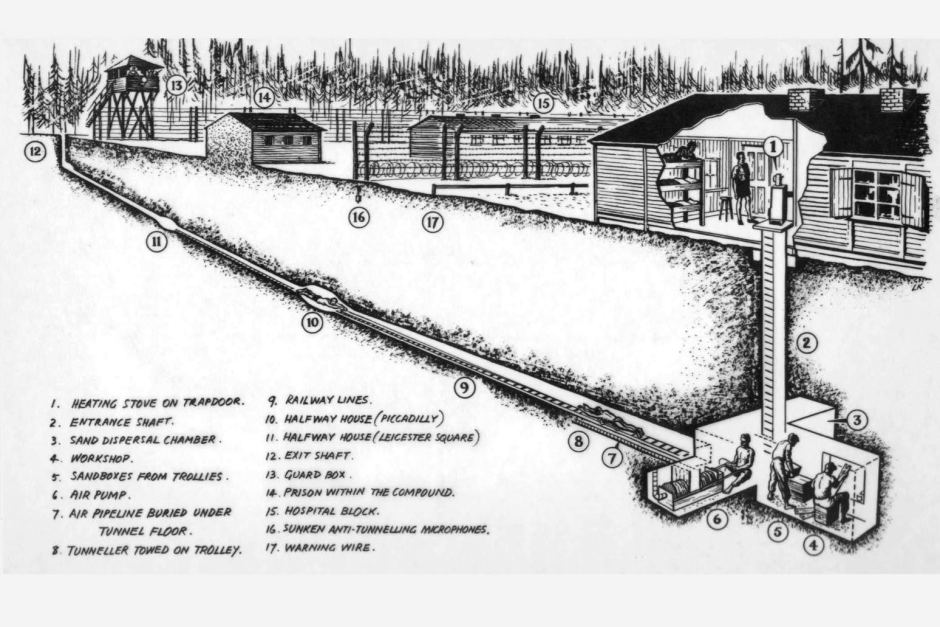
March(?) 25(?), 1944 - Berlin - Hitler presents Cdr.Kinashi (Japanese imperial navy submariner) with the Iron Cross 2nd class for sinking "USS Wasp" March 26, 1944 - Berghof, Bechtesgaden - During a meeting with Heinrich Himmler, Hermann Göring and Wilhelm Keitel, Adolf Hitler receives a report about the mass escape from Stalag Luft III. In a bad mood, Hitler orders the fugitives to be summarily shot. Himmler and Göring try to persuade him from that decision, believing the killings would create an international outcry. In the end, they agree to a compromise: half of the allied officers would be shot April 4, 1944 - Obersalzberg - Hitler personally decorates 7 servicemen with the Oak Leaves for their Knight's crosses, including the ace of aces, Erich Hartmann
April 22, 1944 - Schloss Klessheim - Mussolini arrives at Schloss Klessheim for another meeting with Adolf Hitler
May 5, 1944 - Wolfsschanze, near Rastenburg, East Prussia - Fighter ace Otto Kittel receives the Oak Leaves for his Knight's Cross from Hitler Personally May 13, 1944 - Wolfsschanze, East Prussia(?) - Albert Speer convinces Hitler to reinstate Von Braun so that the V-2 program could continue
June 2, 1944 - Obersalzberg - Visit to Hermann Göring
June 3, 1944 - Berghof, Berchtesgaden - Attends the marriage of Hermann Fegelein and Gretl Braun
June 5, 1944 - Obersalzberg - Goebbels visits Hitler on the Obersalzberg
June 6, 1944 - Schloss Klessheim (4km W. of Salzburg, Austria) - Hitler receives the hungarian prime-minister, Döme Sztójay, then summons Goebbels to meet him there
June 21, 1944 - Obersalzberg - Meeting with Goebbels
June 22, 1944 - Berghof, Berchstesgaden - Meeting with Goebbels. Hitler sends a telegram awarding Wittmann the Swords for his Knight's Cross with Oakleaves
June 25, 1944 - Berghof, Berchstesgaden - Hitler decorates Michael Wittmann with the Swords for his Knight's Cross with Oakleaves (total - 138 tanks and 132 AT guns destroyed)
July 11, 1944 - Wolfsschanze, near Rastenburg, East Prussia - Von Stauffenberg aborts an attempt to kill Hitler with a bomb because Himmler was not present
July 15, 1944 - Wolfsschanze - Von Stauffenberg again aborts an attempt to kill Hitler with a bomb because Himmler and Göring were not present
 |
The Wolfsschanze after the
explosion, July 20, 1944 |
July 20, 1944 - Wolfsschanze - Von Stauffenberg places a bomb inside his briefcase,positioning the briefcase under the table near Hitler. After a few minutes, Von Stauffenberg receives a planned phonecall and leaves the room. The bomb detonates, demolishing the conference room and killing a stenographer. More than 20 people are injured, including Hitler. Later, the Führer Inspects the bomb-damaged conference hut at the Wolfsschanze with Benito MussoliniJuly 22, 1944 - Wolfsschanze - Meeting with Benito Mussolini at the Wolfsschanze just after the failed attempt on his life, with the presence of Martin Bormann, Karl Dönitz and Hermann Göring
July 27, 1944 - Wolfsschanze - Telegram to Otto Carius, awarding him the "Knights Cross with Oak leaves"
September 2, 1944 - Wolfsschanze - Meeting with Goebbels and Albert Speer
September 26, 1944 - Wolfsschanze - Hitler orders Himmler to create special army units, the "Volkssturm". All males aged 16 to 60 were eligible for conscription
November 20, 1944 - Wolfsschanze - Hitler departs the Wolf's Lair for the final time, to undergo a further operation on his vocal chords
December 1, 1944 - Berlin - Hitler summons Goebbels to the Reich Chancelery and outlines his plan for a major offensive in the West
December 3, 1944 - Lanke, Bogensee (N. of Berlin) - Hitler visits Joseph and Magda Goebbels
December 11, 1944 - Giessen, Hesse - Hitler travels on his special train to Giessen, taking up residence in the "Adlerhorst" command complex
January 15, 1945 - Berlin - Hitler moves to Berlin for the last time
January 16, 1945 - Berlin - Hitler retreats to his Reich Chancellery bunker to take direct control over operations in Eastern Front
January 22, 1945 - Berlin - Meeting with Goebbels
January 25, 1945 - Berlin - Hitler appoints Himmler as commander of the Army Group Vistula
February 3, 1945 - Berlin - Hitler's living quarters is destroyed by an USAAF air raid and he moves into the Reich Chancellery's air raid shelter
March 3, 1945 - near Oder River - Hitler visits General Theodor Busse's 9th Army Headquarters
March 18, 1945 - Berlin - Speer presents a memorandum to Hitler informing him that "economically speaking the war was more or less lost"
March 19, 1945 - Berlin - "Nero Order" - Hitler orders all “military, transportation, communications, industrial, and supply facilities as well as all material resources within the territory of the Reich that the enemy can use for the continuation of their struggle, either now or in the foreseeable future,” should be destroyed. Later that day, Albert Speer is able to convince him to cancel the order
 |
Award ceremony for young Iron Cross recipients
in the Gardens of the Reich Chancellery |
March 20, 1945 - Berlin - Award ceremony for young Iron Cross recipients in the Gardens of the Reich Chancellery. Guderian convinces Hitler to remove Himmler from the command of Heeresgruppe (ArmyGroup) VistulaMarch 28, 1945 - Berlin - Guderian is dismissed following a shouting-match with Hitler over losses in Küstrin
April 12, 1945 - Berlin - Hitler learns about the death of Roosevelt and was beside himself with glee
April 20, 1945 - Berlin - Hitler's 56th birthday. Himmler visits the Führer and swears unswerving loyaly to him. Breefing with Himmler and Göring. For the first time, Berlin is bombarded by soviet artillery
April 22, 1945 - Berlin - Hitler suffers a nervous breakdown after being informed that his orders for Steiner's unit to counterattack were not obeyed. He launches a violent reprimand against the commanders present, accusing them of being incompetent and treacherous to the German people. He declares the war lost and announces that he will not be taken alive to be "exposed"
April 23, 1945 - While in Berlin - Radio message from Göring, announcing that, unless he received instructions to the contrary, he would in a few hours take over the “overall leadership of the Reich” since this would presumably mean that Hitler had lost his freedom of action. The “Führer” responded with a fit of rage, dismissing Göring from his position as commander-in-chief of the Luftwaffe.Himmler meets directly with swedish diplomat Folke Bernadotte at the Swedish consulate in Lübeck. Representing himself as the provisional leader of Germany, he claims that Hitler would be dead within the next few days. Hoping that the British and Americans would fight the Soviets alongside what remained of the Wehrmacht, Himmler asks Bernadotte to inform Eisenhower that Germany wishes to surrender to the Western Allies. Bernadotte asks Himmler to put his proposal in writing, and Himmler obliges
April 28, 1945 - Berlin - Hitler flies into a rage at Himmler's apparent betrayal. He and Eva Braun are married after midnight on the night of 28-29 April in a civil ceremony inside the Reich Chancellery bunker
April 29, 1945 - Berlin - Hitler writes his Last Will and Testament, declaring both Himmler and Göring to be traitors. He strips Himmler of all of his party and state offices and expels him from the Nazi Party. Hitler names Grand Admiral Karl Dönitz as his successor
April 30, 1945 - Berlin - Hitler and Eva Braun bid farewell to their closest friends and associates and close their room's door. After Eva Braun takes a cyanide pill to end her life, Hitler commits suicide by gunshot, aged 56 =(END)