Wednesday, 11 September 2019

Edward III of England | Timeline

Edward III (13 November 1312 – 21 June 1377) was King of England and Lord of Ireland from January 1327 until his death; he is noted for his military success and for restoring royal authority after the disastrous and unorthodox reign of his father, Edward II. Edward III transformed the Kingdom of England into one of the most formidable military powers in Europe. His long reign of 50 years was the second longest in medieval England (after that of his great-grandfather Henry III) and saw vital developments in legislation and government, in particular the evolution of the English parliament, as well as the ravages of the Black Death. (Intro from Wikipedia)

November 13, 1312 - Windsor Castle, Berkshire - Prince Edward (future Edward III) is born
November 16, 1312 - Windsor Castle - Prince Edward is baptized
January 21, 1327 - London - Edward II is forced to relinquish the throne to his son, who is proclaimed king
February 1, 1327 - Westminster Abbey, London - Edward III is crowned at the age of 14 =(START)
July 1, 1327 - York - The English army prepared by Regent Queen Isabella and Roger Mortimer, sets off from York. Edward III accompanies the army
July 15, 1327 - Durham - The army reaches Durham
July 31, 1327 - Weardale, England - Battle of Stanhope Park (ends in August 6th) - Scottish victory. 14-year-old Edward III is nearly captured
August 10, 1327 - Durham - The English army returns to Durham in frustration
December 20, 1327 - Gloucester, England - Attends the burial of his father by the high altar of Gloucester Abbey
January 24, 1328 - York Minster, Yorkshire - 16-year-old Edward III marries Philippa, daughter of William V, Count of Hainault and Holland
March 1, 1328 - York - Edward III issues letters patent which set out the core of a peace agreement with the scots
March 17, 1328 - York(?) - The Treaty of Edinburgh-Northampton is signed by Robert the Bruce. The terms of the treaty stipulated that in exchange for £20,000 sterling, the English Crown would recognise: Scotland as an independent kingdom, Robert the Bruce, his heirs and successors as the rightful rulers of Scotland, and the border between England and Scotland as that recognised under the reign of Alexander III (1249-1286)
May 3, 1328 - Northampton - The Treaty of Edinburgh-Northampton is ratified by the english Parliament meeting in Northampton. The treaty is resented in England and widely referred to as "the shameful peace"
June 15, 1330 - Woodstock Palace, Oxfordshire - Edward of Woodstock, the future "Black Prince", is born
October 19, 1330 - Nottingham Castle - Edward and a group of trusted men take Roger Mortimer by surprise and execute him. Edward begins reigning in his own right
June 16, 1332 - Woodstock Palace - Princess Isabel Plantagenet, Countess of Bedford, is born
May 9, 1333 - Berwick-upon-Tweed - Edward III arrives at Berwick-upon-Tweed
July 19, 1333 - Halidon Hill, near Berwick-upon-Tweed - Battle of Halidon Hill - Decisive english-Balliol victory
June 19, 1334 - Berwick(?) - Balliol pays homage to Edward III, after formally ceding to England the eight counties of South-East Scotland
February 1(?), 1335 - Woodstock Palace - Princess Joan Plantagenet is born
August 1(?), 1335 - Nottingham - Rumours of an impending french invasion leads the king to order his household removed to Nottingham
February 16, 1336 - Hartfield, Hertfordshire - Prince William "of Hatfield" Plantagenet is born
March 3, 1337 - York Minster, Yorkshire - Prince William "of Hatfield" Plantagenet dies, aged 1
March 17, 1337 - Nottingham - Prince Edward is created Duke of Cornwall and eight nobles are created earls
July 11, 1338 - London - The King appoints Prince Edward "Guardian of the Kingdom" before departing to Flanders
July 12, 1338 - River Orwell, between Ipswich and Felixtowe - Edward III sails aboard "Christopher"
July 16, 1338 - Antwerp, Burgundian netherlands (Belgium) - Edward III lands on the continent
July 22, 1338 - Antwerp - Edward III revokes all commissions addressed to the king of France
September 1(?), 1338 - St.Kastor, Koblenz - Edward makes the Treaty of Koblenz with King Ludwig der Bayer, who makes Edward the Vicar General to the Holy Roman Empire, and also recognizes his claim to the throne of France
November 29, 1338 - Antwerp, Belgium - Prince Lionel "of Antwerp" Plantagenet, Duke of Clarence, is born
August 1(?), 1339 - Ghent - Edward III leaves Flanders to seize Cambrai
September 26, 1339 - Cambrai - Edward III begins launching attacks against Cambrai
October 6, 1339 - Cambrai - Edward III learns that Philip is approaching with a large army
October 8, 1339 - Cambrai - Edward III abandons the siege. He retreats across Picardy, devastating the plains of Cambresis along the way. A strong English garrison is left in the castle of Thun-l'Eveque
October 23, 1339 - between La Capelle and Buironfosse - Edward proceeds to Saint-Quentin. The armies of England and France face each other across the plain between La Capelle and Buironfosse, but don't engage in battle
January 1(?), 1340 - St.Bavon Abbey, Ghent, Flanders - A parliament is held in Ghent. An alliance is signed between England and Holland, Brabant and the three great cities of Flanders
February 20, 1340 - Ghent - Edward III departs from Flanders, leaving the Queen in St.Bavon Abbey
March 6, 1340 - (While in London?) - Prince John "of Gaunt" Plantagenet is born
June 22, 1340 - River Orwell, Suffolk - The english fleet sets sail to Flanders
June 23, 1340 - Blankenberge - The fleet anchors at Blankenberge. Cobham, Chandos and Lambkin land to reconnoitre the french fleet
June 24, 1340 - Sluys - Catastrophic defeat of the French at Sluys - The french lose 16,000 to 20,000 men, with most of their 213 ships captured. The english suffer few casualties
July 2, 1340 - River Orwell - Returns to England
July 22, 1340 - London(?) - Edward III issues a charter of insurance to London merchants to maintain safety in maritime trade.
July 30, 1340 - London(?) - Edward III issues a safe-conduct to a Genoese ship, showing his involvement in maritime and diplomatic matters.
August 3, 1340 - Winchelsea - Edward III arrives at Winchelsea, preparing to launch a new campaign in France.
August 10, 1340 - Winchelsea - Edward III's fleet departs Winchelsea for Flanders.
August 23, 1340 - Scheldt - Edward III arrives at Scheldt, near Tournai in Flanders, preparing to besiege Tournai.
August 26, 1340 - Tournai - Edward III besieges Tournai
September 1(?), 1340 - St.Bavon Abbey, Ghent - Visit to the Queen and to his new son, John (of Gaunt)
September 22, 1340 - Tournai - Edward's mother-in-law, Jeanne of Valois, visits him in his tent and begs for peace. She had already made the same plea in front of Philip, who was her brother. A truce (known as the Truce of Espléchin) could then be made without anyone losing face
September 25, 1340 - Tournai - Tournai is relieved
November 30, 1340 - Winchelsea - Edward III, the Queen and princes Lionel and John of Gaunt return to England
February 16, 1341 - London(?) - Edward III agrees to accounts being audited by Parliament
June 5, 1341 - King's Langley, Hertfordshire - Prince Edmund Plantagenet, Duke of York, is born
March 1(?), 1342 - Tower of London - Princess Blanche Plantagenet is born (but dies shortly after)
January 19, 1344 - Windsor - A great tournament is held (until January 22nd). King Edward III creates the Order of the Round Table
April 23, 1344 - Windsor Castle - The Order of the Garter is instituted
October 10, 1344 - Bishops Waltham, Hampshire - Princess Mary Plantagenet, Duchess of Brittany, is born
July 3, 1345 - Sluys - Edward III arrives in Flanders with Prince Edward for 3 weeks of negociations
July 11, 1346 - Portsmouth - Edward leaves Portsmouth with a fleet of 750 ships and 15,000 men
July 20, 1346 - (While at Carentan) - Princess Margaret Plantagenet, Countess of Pembroke, is born
July 12, 1346 - St.Vaast la Hogue - The english army lands in France, 20 miles from Cherbourg. The Black Prince is knighted
July 20, 1346 - Carentan - The english army passes through Carentan. Meanwhile in England, Princess Margaret Plantagenet, Countess of Pembroke, is born
July 22, 1346 - St.Lô - The english army passes through St.Lô
July 26, 1346 - Caen - The english army sacks Caen, plundering the city's huge wealth
August 1, 1346 - Caen - The army moves east and then southeast along the River Seine with the intention of attacking Paris
August 8, 1346 - Louviers (River Seine) - Edward III and the Black Prince reach the River Seine at Louviers
August 14, 1346 - Poissy - The english army crosses the River Seine at Poissy, then heads directly north to the Channel Coast
August 16, 1346 - Grisy - The english army heads north
August 18, 1346 - Troussures, SW Beauvais - The english army heads north
August 20, 1346 - Hangest-sur-somme | Pont-Remy (Between Amiens and Abbeville) - Edward tries in vain to probe the crossings at Hangest-sur-somme and Pont-Remy
August 23, 1346 - Blanchetaque, near Saigneville - Edward successfully forces a crossing at the well-defended village of Blanchetaque
August 24, 1346 - Noyelles-sur-Mer | Le Crotoy - Edward's army resupplies and plunders Noyelles-sur-Mer and Le Crotoy
Battle of Crécy, 1346
August 26, 1346 - Crécy-en-Ponthieu - Battle of Crécy - Decisive english victory
September 4, 1346 - Calais - Edward's men besiege Calais
October 17, 1346 - (While besieging Calais) - David Bruce is defeated at the Battle of Neville's Cross and captured by the english
June 1, 1347 - While besieging Calais - Prince Thomas Plantagenet is born at Bishop's Brotherton, Yorkshire
August 1, 1347 - Calais - Calais lit fires signaling they were ready to surrender
August 3, 1347 - Calais - Surrender of the french, the City of Calais would remain in english hands until 1558 =(changecityflag)
September 4, 1347 - Calais - Negociations for a truce begin, mediated by emissaries dispatched by Pope Clement VI
September 28, 1347 - Calais - The "Truce of Calais", mediated by Pope Clement VI, is agreed by King Edward III and King Philip VI of France
October 12, 1347 - Sandwich - Edward III and the Black Prince land at Sandwich
October 14, 1347 - London - Edward III and the Black Prince reach London
April 23, 1348 - St.George's Chapel, Windsor Castle - Founding of the Order of the Garter is formally proclaimed
June 24, 1348 - Windsor Castle - Prince William Plantagenet is born
September 2, 1348 - While in Windsor - Princess Joan Plantagenet dies of Bubonic Plague in Bordeaux
September 5, 1348 - Windsor Castle - Prince William Plantagenet dies, two months old
December 24, 1349 - Havering, England - Edward learns of the plot to take Calais by interviewing Amerigo of Pavia, who betrays Geoffroi de Charny
December 30, 1349 - Calais - After hearing of a plot to take Calais, Edward III and the Black Prince land at Calais to lure the french into a trap
January 1, 1350 - Calais - Battle of Calais - The Black Prince saves King Edward (who was fighting incognito) of being killed when he is twice knocked down by Eustace of Ribemont. 30 french knights including Geoffroi de Charny and Eustace de Ribemont are captured
August 10, 1350 - Rocherhithe (SE London) - The king announces the intention of attacking the castillians on their way home
August 28, 1350 - Winchelsea - Boards his flagship "Satte du Roi". Both the princes board the "Cog Thomas"
August 29, 1350 - Off Winchelsea - Battle of Winchelsea - English victory over the Castillians
August 30, 1350 - 2 miles from Winchelsea - Spends the day with the Queen and the two princes
November 25, 1351 - Westminster, London - The Statute of Provisors is passed. This statute aimed to address the issue of papal provisions and their impact on ecclesiastical appointments within England
March 1(?), 1352 - Westminster - Levy of tallage ceases (Tallage was a form of direct taxation imposed by feudal lords on their subjects, often without the consent of a representative assembly like Parliament)
October 16, 1353 - Westminster - The Statute of Praemunire is passed in England and receives royal assent. It aimed to address the influence of papal authority within the jurisdiction of the English courts and the authority of the English Crown, signaling the ongoing efforts to define the relationship between church and state during that period.
January 7, 1354 - Woodstock Palace, Oxfordshire - Prince Thomas Plantagenet(2), Duke of Gloucester, is born
March 1(?), 1355 - Woodstock Palace - King Edward holds a tournament at Woodstock to Celebrate the birth of his son Thomas
September 28, 1355 - Calais - Edward III, 15-year-old John of Gaunt and the army, land at Calais. Prince John is knighted
November 6, 1355 - (while at Calais) - The Scots take Berwick
December(?) 1(?), 1355 - Westminster - Edward III returns to England. Hasty session of Parliament before departing to Scotland
December 25, 1355 - Newcastle-on-Tyne - Edward III and John of Gaunt spend Christmas at Newcastle
January 1, 1356 - Newcastle - Rendezvous with the Army. The march to Berwick begins
January 13, 1356 - Berwick-upon-Tweed - Edward III retakes Berwick
January 20, 1356 - Roxburgh, Scotland - Edward Balliol surrenders his claim to the scottish throne to Edward III in exchange for an english pension
February(?) 1(?), 1356 - Edinburgh, Scotland - Edward III reaches Edinburgh unopposed
Battle of Poitiers, 1356
September 19, 1356 - (While at Woodstock Palace)? - Battle of Poitiers - Decisive English Victory
May 24, 1357 - London(?) - Probably in London with John of Gaunt when the Black Prince enters in trimph on London with the King of France as his prisoner
December 25, 1357 - Hatfield, Yorkshire - Christmas Festivities
May 19, 1359 - Reading Abbey, Reading - Princess Margaret Plantagenet, Countess of Pembroke, marries John Hastings
July 1(?), 1359 - London(?) - Edward III decides to move John II of France to Somerton Castle because of a fear that the french were planning a rescue attempt
October 28, 1359 - Sandwich | Calais - Edward III is accompanied to Calais by the Black Prince and John of Gaunt (in his first campaign). The Black Prince leads a division of the army in the following Reims campaign
November 4, 1359 - Calais - King Edward III, the Black Prince and Henry of Grosmont, Duke of Lancaster, march into french territory
December 4, 1359 - Saint Basle, 10 miles S. of Reims - The English army reaches the Benedictine Abbey at Saint Basle. King Edward lays siege to Reims
January 11, 1360 - Reims - Food supplies run low and King Edward III gives up the siege of Reims and heads SW
January 26, 1360 - Poigny - Edward's three army divisions cross the river Marne at Poigny
February 19, 1360 - Guillen, Burgundy - The english army camps at Guillen
March 10, 1360 - Guillen - Agreement between Edward III and the advisers of the 13-year-old Philip de Rouvres, Duke of Burgundy, indicating that Edward's coronation at Reims - as king of England and France - was now a real possibility. At the same time, the english army is growing increasingly exhausted and is unable to draw the french into battle
March 31, 1360 - Chenteloup, near Arpajon (20 miles from Paris) - After hearing about a raid on Winchelsea, King Edward turns towards Paris, camping at Chenteloup
April 3, 1360 - Châtillon - After talks break down, King Edward moves his headquarters to Châtillon
April 12, 1360 - Châtillon - King Edward and the Duke of Lancaster withraw, under cover of a diversion by the Black Prince, who waits to ambush those who came out of Paris
April 13, 1360 - Beauce region, (between the Loire and the Seine), near Paris - Black Monday - The english army, marching close to Paris, is hit by a freak storm in the Beauce, losing men, horses and provisions. This startling misfortune is seen as a divine warning, and both sides return to peace negotiations
April 27, 1360 - Sours, E. of Chartres - The French delegates arrive at Chartres. Edward III chooses Brétigny for the peace conference
May 1, 1360 - Brétigny - The conference of Brétigny begins
May 8, 1360 - Brétigny - The peace treaty of Brétigny is concluded - It cedes large areas of Northern France to England
May 28, 1360 - Honfleur | Rye - King Edward and his sons set sail from Honfleur and reach Rye on the same day
May 29, 1360 - Westminster - Edward III and sons mount their horses and reach Westminster the next day. John of Gaunt's first session in Parliament as Earl of Richmond
June 14, 1360 - Westminster - Edward III ratifies the Treaty of Brétigny
June 18, 1360 - Westminster - Orders 6 weeks of feasting
October 9, 1360 - Calais - The Black Prince accompanies Edward III to Calais to assist the liberation of King John and the ratification of the treaty of Brétigny
October 24, 1360 - Calais - The Treaty of Brétigny is ratified by the two kings and their helder sons as "Treaty of Calais"
October 31, 1360 - Dover - Returns to Dover
December 25, 1360 - Woodstock Palace, Oxfordshire - Christmas at Woodstock (probably with his sons, the Black Prince and John of Gaunt)
January(?) 1(?), 1361 - Woodstock Palace, Oxfordshire - Mary Plantagenet, Duchess of Brittany, marries Jean Montfort, Duke of Brittany
February 1(?), 1361 - Westminster - At Westminster when each member of Parliament takes an oath to preserve the peace with France
April 23, 1361 - Windsor - (We suppose that Edward III and the Black Prince were present when) Princes John of Gaunt, Lionel and Edmund fill a stall in the Chapel of the Knights of the Garter, taking their place at the feast of the Order
November 23, 1363 - Westminster - Edward III of England holds a conference with David II of Scotland to discuss the issues of the non-payment of the ransom agreed upon at the Treaty of Berwick several years earlier. It is agreed that the outstanding amount did not have to be paid if Edward or one of his sons would become King of Scotland after the death of David
July 27, 1365 - Windsor Palace - Princess Isabel Plantagenet, Countess of Bedford, marries Enguerrand Le Brun VII De Coucy
October 17, 1368 - (While in London?) - Prince Lionel "of Antwerp" Plantagenet, Duke of Clarence, dies at Alba, Cuneo
June 3, 1369 - Westminster - The English Parliament freed Edward III from the Treaty of Bretigny that was signed in 1360. When Edward signed the treaty he had agreed to give up the claim for the French throne. Now that Edward was free from the treaty he was able to restate and pursue his claim to be the French King.
August 15, 1369 - Windsor Castle - Edward's wife Philippa of Hainault dies. His affections turn to Alice Perrers, who becomes his mistress
February 9, 1372 - London - Ceremonial entry of Constance of Castille into London, accompanied by the Black Prince. She is received by her husband, John of Gaunt, in the Savoy Palace
June 23, 1372 - (While in London?) - The English fleet of 14 transports and 36 warships is badly beaten at sea by the Spaniards off La Rochelle, including the loss of £20,000 which was 1 years soldiers pay for 3,000 men. John Hastings Earl of Pembroke and son-in-law to Edward III is captured
August 30, 1372 - Sandwich - Departs on another expedition with the Black Prince, who was recovered from dysentery, however, they fail to sail to La Rochelle due to contrary winds
March 1(?), 1375 - (While in Sheen Palace, Richmond?) - John of Gaunt arrives at Bruges as representative of Edward III for a peace conference encouraged by the papacy and both countries' financial exhaustion
June 27, 1375 - (While in Sheen Palace, Richmond?) - Treaty of Bruges, Charles V of France reverses many of Edwards gains in France. By now the English only hold Calais, Brest, Bordeaux and Bayonne. Edward is under the influence of Alice Perrers, and the court becomes more extravagant than before, with ministers being suspected of corruption. Edward gives Alice Perrers the jewels and robes of Phillipa and Alice parades through London to a tournament in a triumphal chariot with the title of 'Lady of the Sun'.
April 23, 1376 - Windsor - Feast of the Garter on St.George's Day
April 28, 1376 - Westminster - The good Parliament and election of the first Speaker to the House of Commons
June 1, 1376 - Palace of Westminster - The Prince's condition worsens and his father, King Edward III, has him moved to the Palace of Westminster
June 21, 1377 - Sheen Palace, Richmond - Edward III has another stroke and dies, aged 64 =(END)

Tuesday, 23 July 2019

Frans Banninck Cocq | Timeline

Frans Banninck Cocq (sometimes incorrectly spelled as Banning) (1605–1655) was a burgemeester (mayor) of Amsterdam in the mid-17th century. He is best known as the central figure in Rembrandt's masterpiece "The Night Watch". (Intro from Wikipedia)

~Some details are sketchy. You can help us!~

February 23, 1605 - Amsterdam - Frans Banninck Cocq is born
February 27, 1605 - Amsterdam - Frans Banninck Cocq is baptized (a scandal, because his parents, Jan Jansz Cock and Lysbeth Frans, were not married
September 17, 1605 - Amsterdam - Jan Jansz Cock and Lysbeth Frans notice their marriage at the Town Hall
April 24, 1607 - Haarlem - His brother Jan Cocq is born
September 1(?), 1623 - Amsterdam - His mother Lijsbeth dies, aged 42
June 1, 1625 - Poitiers, France - Arrives at Poitiers, France, to study Law
April 26, 1626 - Saumur, France - Visit to Saumur
September 16, 1626 - Poitiers - Departs from Bourges
November 15, 1626 - Bourges - Moves to Bourges to continue his studies
April 16, 1627 - Bourges - Departs from Bourges
January(?) 1(?), 1630(?) - Amsterdam - Frans Banninck Cocq returns to Amsterdam as a Doctor in Law
April 23, 1630 - Amsterdam - Marries Maria Overlander van Purmerland
October 18, 1630 - The Hague - Volkert Overlander, his father-in-law and one of the founders of the East India Company, dies. Banninck Cock inherits his properties, including a canal house, the castle of Ilpenstein north of Amsterdam along with the title Lord of Purmerland and Ilpendam =(START)
The Night watch, 1642 (Rembrandt)
January(?) 1(?), 1632 - Amsterdam(?) - Commissioner of the college of marital affairs
January(?) 1(?), 1633 - Amsterdam(?) - Commissioner of the college of marital affairs
August 22, 1633 - Amsterdam - His father, Jan Jansz Cock dies, aged 58
January(?) 1(?), 1634 - Amsterdam - Becomes member of the City Council
January(?) 1(?), 1635 - Amsterdam - Lieutenant of the militia of district I and captain of district II (until 1646)
January(?) 1(?), 1636 - Amsterdam - Commissioner of the college of marital affairs
January(?) 1(?), 1638 - Amsterdam - Frans Banninck Cocq orders a painting of his company of Civic Guards from Rembrandt, to decorate a wall of the main hall on the first floor in the new headquarters of the City's "Schutterij"(Civic Guard) at the Kloveniers Voorburgwal.
Banninck Cocq (on the left) with
the Amsterdam archery Militia, 1653
January(?) 1(?), 1642 - Amsterdam - Rembrandt completes the "Night watch"" for Frans Banninck Cocq
January(?) 1(?), 1646 - Amsterdam - Promoted to Colonel
January(?) 1(?), 1648 - Amsterdam - Holds the function of governor of the Amsterdam "longbowmen's shooting range"
January(?) 1(?), 1650 - Amsterdam - Appointed Burgemeester (Mayor) of Amsterdam
January(?) 1(?), 1653 - Amsterdam - Frans Banninck Cocq is re-elected as Burgemeester of Amsterdam
January 6, 1655 - Amsterdam - Frans Banninck Cocq dies, aged 49 =(END)

Bibliography
MEE Jr. Charles L. - "Rembrandt: A life"

Wednesday, 17 July 2019

William Adams | Timeline

William Adams (24 September 1564 – 16 May 1620), known in Japanese as Miura Anjin (三浦按針: "the pilot of Miura"), was an English navigator who, in 1600, was the first of his nation to reach Japan during a five-ship expedition for the Dutch East India Company. Of the few survivors of the only ship that reached Japan, Adams and his second mate Jan Joosten were not allowed to leave the country while Jacob Quaeckernaeck and Melchior van Santvoort were to go back to the Dutch Republic to invite them to trade. Adams and Joosten settled in Japan and became two of the first ever (and very few) Western samurai. (Intro from Wikipedia)

September 24, 1564 - Gillingham, Kent - William Adams is born
January(?) 1(?), 1576 - Limehouse - 12-year-old William Adams becomes apprentice to shipyard owner Nicholas Diggins
February 21, 1588 - Plymouth - Adams serves under Sir Francis Drake in preparation to face the spanish armada, as master of the resupply ship "Richarde Dyffylde" =(START)
July 21, 1588 - Eddystone Rocks, off Plymouth - Drake's squadron engages the spanish in combat
July 23, 1588 - Off Portland (Weymouth) - Another battle between the english and the spanish
July 29, 1588 - Off Gravelines, France - Battle of Gravelines
June 27, 1598 - Goeree, Netherlands - Jacques Mahu departs to the Pacific with 5 ships, intended to find a trade route to the Spice Islands and to incite the local population rise against the spanish. Simon de Cordes as vice-admiral and englishman William Adams as pilot-major. The ships are: the "Hoop" (500-tons, Jacques Mahu), "Liefde" (300-tons, Simon de Cordes), "Geloof" (320-tons, Gerrit van Beuningen), "Trouwe" (220-tons, Jurriaan van Boekhout) and "Blijde Boodschap"(150-tons, Sebald de Weert) =(changeflag)
July 15, 1598 - The Downs - Mahu continues voyage after being forced to anchor at the Downs due to contrary winds
August 10, 1598 - Cape St.Vincent, SW Tip of Portugal - At Cape St.Vincent, spanish ships are sighted
August 19, 1598 - Coast of Morocco - After heading south, the coast of Morocco is sighted
The 5 ships at Brava Island, 1598
August 31, 1598 - Santiago Island, Cape Verde - Arrival at Cape Verde
September 1, 1598 - Maio Island, Cape Verde - Mahu anchors at Maio Island
September 3, 1598 - Praia, Santiago Island - Mahu lands soldiers to attack the portuguese Fort
September 11, 1598 - Brava Island, Cape Verde - Lured by a sail behind Fogo Island, Mahu arrives at Brava Island
September 15, 1598 - Brava Island - Many crewmembers of the "Hoop" catch fever at the Island, including Admiral Jacques Mahu
September 23, 1598 - Brava Island(?) - Admiral Jacques Mahu dies of the fever. Simon de Cordes takes command. Sebald de Weert takes command of the "Geloof", Dirck Gerritszoon Pomp takes command of the "Blijde Boodschap"
September 29, 1598 - Brava Island(?) - Simon de Cordes sets sail for the next planned stop: Annobon Islands
November 3, 1598 - Coast of Congo - Arrival to the Coast of Congo, looking for the Annobon Islands, with much scurvy aboard
November 9, 1598 - Coast of (Equatorial) Guinea - Simon de Cordes arrives to the Coast of (Equatorial) Guinea
December 8, 1598 - Cape Lopo Gonçalves (Cape Lopez, Gabon) - Prolonged stay to take care of Simon de Cordes, who was taken ill, and the crew's scurvy
December 16, 1598 - Annobon Islands - The five ships anchor at Annobon
January 2, 1599 - Annobon Islands - Being too late to cross the Cape of Good Hope that time of the year, De Cordes departs to the Strait of Magellan, after skirmishes with portuguese soldiers
The 5 ships at Annobon, 1598-99
January 22, 1599 - Off Ascension Island, South Atlantic - Ascension Island is sighted on the way to the Strait of Magellan
January 31, 1599 - Off Abrolhos Archipelago, S. Coast of Bahia, Brazil - De Cordes sails past the Abrolhos Archipelago
March 10, 1599 - Off River Plate - Sailing to the Strait of Magellan
April 3, 1599 - Puerto de San Julián (Port St.Julian), Santa Cruz, Argentina - De Cordes anchors at Puerto de San Julián, Santa Cruz
April 6, 1599 - Entrance of the Strait of Magellan - Arrival to the Strait of Magellan, supplying themselves with up to 1,400 penguins
April 8, 1599 - Strait of Magellan - De Cordes sails past the second strait inside Magellan Strait
May 7, 1599 - Isla Carlos III (Green Bay) - The dutch are attacked by extremely tall indians. Both the dutch and the indians take a few casualties
August 23, 1599 - Strait of Magellan - De Cordes leaves his patagonian anchorage towards the Pacific with his 5 ships. As they approach the high seas of the Pacific, the fleet is scattered in the mist
September 3, 1599 - Strait of Magellan Mouth, Pacific Ocean - De Cordes reaches the Pacific Ocean
September 7, 1599 - Pacific Ocean - The fleet runs into more trouble as it is caught in a torrential storm - De Cordes sails to the agreed rendezvous of Santa Maria Island with the "Hoop" and the "Liefde". The "Geloof", the "Trouwe" and "Blijde Boodschap" loose contact with the other 2 ships
November 4, 1599 - Santa Maria Island, Chile - The "Hoop" and the "Liefde" anchor at Santa Maria Island
November 6, 1599 - Chonos Archipelago, Chile - Chonos Archipelago, Chile - De Cordes reaches the Chonos Archipelago with the "Hoop" and the "Liefde"
November 7, 1599 - Lavapié Point, Chonos Archipelago - Simon de Cordes goes ashore and is killed by natives along with other 22 crewmen. Adams changes ship to the "Liefde" with her new captain, Jacob Quaeckernaeck
November 27, 1599 - Coast of Chile - After the death of Vice-Admiral Simon de Cordes, The "Hoop" and the "Liefde" steer to the Central Pacific Ocean
April 19, 1600 - Usuki, Bungo Channel, Japan - The "Liefde" arrives in Japan with 24 survivors aboard
Tokugawa Ieyasu
May 12, 1600 - Osaka - Adams, the healthiest survivor, is taken to Tokugawa
January(?) 1(?), 1604 - Ito, Japan - Adams builds a 80-tons ship for Tokugawa
January(?) 1(?), 1605 - Ito - Adams builds a 120-tons ship for Tokugawa
January(?) 1(?), 1608 - Edo(?) - Adams contacts the Governor of the Philippines and manages to get commercial contracts
July 5, 1609 - Hirado Island, NW Nagasaki - Receives letter from Van Sandvoort, who had anchored off Hirado on July 1st
August 16, 1609 - Shizuoka - Adams and Van Sandvoort go visiting Tokugawa together
August 24, 1609 - Shizuoka(?) - Adams helps Jacques Specx obtaining extensive traiding rights from the Shogun
September 19, 1609 - Hirado Island, NW Nagasaki - The Daimyo visits Hirado, and Adams meets him with Jacques Specx
August 22, 1611 - Hirado Island - Letter "to my unknown friends and countrymen"
January(?) 1(?), 1613 - Edo - Adams has resale rights to products on Spanish ships
September 1(?), 1613 - Shizuoka - Adams takes Captain Saris to visit Tokugawa
October 1(?), 1613 - Edo - Adams and Saris visit Hidetada, the new Shogun, who offers samurai armor to King Charles I
October 9, 1613 - Hirado - The english return to Hirado
November 24, 1613 - Hirado - Denied his departure to England, Adams accepts a job at the english factory (trading post) =(originalflag)
December 1, 1613 - Hirado - Letter to the East India Company
November 28, 1614 - Hirado - Adams departs intending to go to Siam
December 27, 1614 - Okinawa - In hurricane season, Adams has to stop in Okinawa for repairs
May 1, 1615 - Okinawa - Adams departs to Hirado
June 1, 1615 - Hirado - Returns to Hirado
December 6, 1615 - Hirado - Adams departs again with intention of going to Siam
January 10, 1616 - Chao Phraya river, Siam (Thailand) - Adams sails into the Chao Phraya River and continues to Bangkok
June 5, 1616 - Siam (Thailand) - Adams departs to Japan
July 22, 1616 - Kawachi (today part of Kumamoto) - Adams returns to Japan from Siam
July 24, 1616 - Hirado - Adams goes to Hirado to deliver siamese gifts to the Shogun
January 1, 1617 - Hirado - Adams departs to Nagasaki
March 19, 1617 - Kawachi (today part of Kumamoto) - Adams departs to Conchinchina (Southern third of Vietnam)
April 20, 1617 - Quangnam River (Da Nang, vietnam) - Adams sails up the river to the city
July 1, 1617 - Quangnam River (Da Nang, vietnam) - Adams begins his journey back
August 2, 1617 - Goto Islands, SW Japan - Adams reaches the Goto Islands
August 9, 1617 - Hirado - Adams returns to Hirado
March 11, 1618 - Fukuda, Nagasaki - Adams departs for a last time to Conchinchina and Tonkin (north of Vietnam)
April(?) 10(?), 1618 - Ryukyu Islands - In the midst of a storm, it becomes impossible to repair the junks and Adams decides to return
May 1, 1618 - Hirado - Adams returns to Hirado, prevented by bad weather from reaching Conchinchina
May 16, 1620 - Hirado, Kyushu, Japan - William Adams dies, aged 55 =(END)

Bibliography
KERR, Robert - "A general history and collection of voyages and travels, arranged in systematic order: forming a complete history of the origin and progress of navigation, discovery, and commerce, by sea and land, from the earliest ages to the present time.
MONTEIRO, Saturnino - "Batalhas e Combates da Marinha Portuguesa, vol.4"

Saturday, 6 July 2019

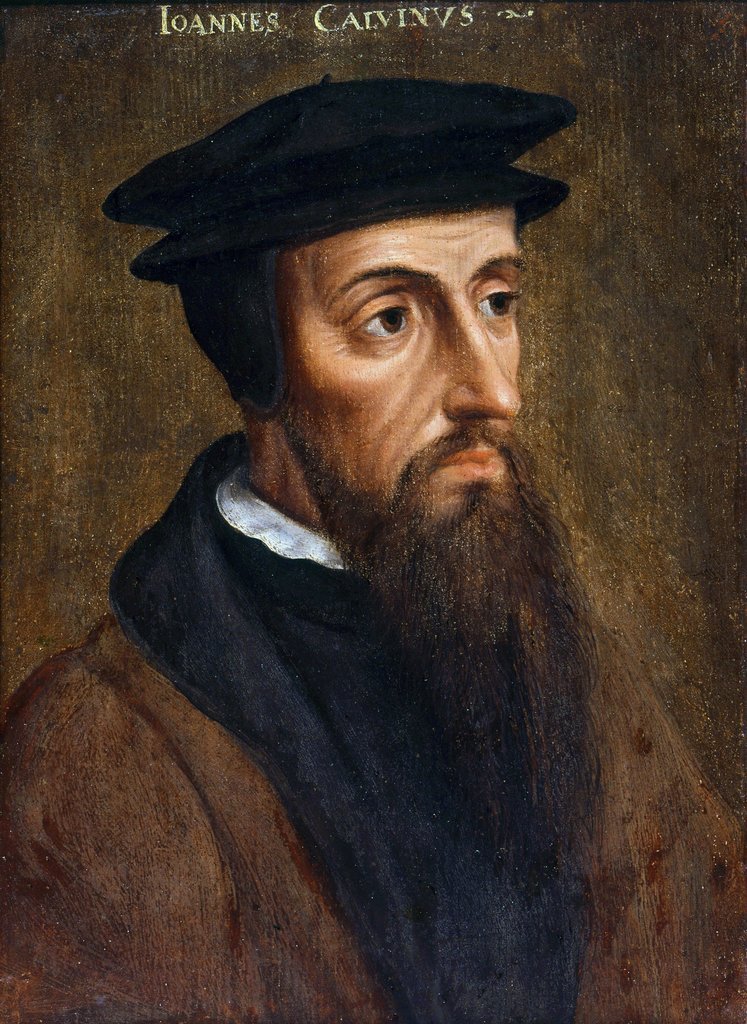
John Calvin | Timeline

John Calvin (French: Jean Calvin; born Jehan Cauvin; 10 July 1509 – 27 May 1564) was a French theologian, pastor and reformer in Geneva during the Protestant Reformation. He was a principal figure in the development of the system of Christian theology later called Calvinism, aspects of which include the doctrines of predestination and of the absolute sovereignty of God in salvation of the human soul from death and eternal damnation, in which doctrines Calvin was influenced by and elaborated upon the Augustinian and other Christian traditions. Various Congregational, Reformed and Presbyterian churches, which look to Calvin as the chief expositor of their beliefs, have spread throughout the world. (Intro from Wikipedia)

July 10, 1509 - Noyon, SW Saint-Quentin, Picardy, France - Jehan Cauvin is born
January(?) 1(?), 1529 - Bourges - Enters the University of Bourges =(START)
January 1, 1532 - Bourges - Calvin receives his licentiate in law and publishes his first book, a commentary on Seneca's "De Clementia"
October 1(?), 1533 - Paris - Calvin moves to Paris and breaks from the Roman Catholic Church
November 1, 1533 - Paris - Calvin addresses the Collège Royal on the need for reform and renewal in the Roman Catholic Church
November 2, 1533 - Paris - Calvin, considered offensive, leaves Paris to hide
November(?) 17(?), 1533 - Angoulême (NE Bordeaux) - Calvin takes refuge in Angoulême
March(?) 1(?), 1534 - Noyon, SW St-Quentin - Calvin switches his place of refuge
August(?) 1(?), 1534 - Orléans - Calvin switches his place of refuge for the second time
October 17, 1534 - Orléans - Calvin is forced to flee France during the "Affair des Placards", an incident where anti-catholic posters appear in Paris and other cities
January(?) 1(?), 1535 - Basel, Switzerland - In Basel, Switzerland, Calvin joins Nicolas Cop, a swiss reformist and rector of the University of Paris in 1533
March 1(?), 1536 - Basel - Publishes the first edition of "Institutio Christianae Religionis"
March(?) 15(?), 1536 - Ferrara, Italy - Serves for some time as secretary for Princess Renée of France
June 1(?), 1536 - Paris - In Paris with his brother. Upon learning of the Edict of Coucy, Calvin decides to leave France
August(?) 1, 1536 - Geneva, Switzerland - Calvin departs for Strasbourg, but due to military maneuvers, he turns to the south
January(?) 1(?), 1537 - Geneva - Calvin, a man of law, begins to serve as "pastor"
January 16, 1537 - Geneva - Calvin and another french reformer, Guillaume Farel present a reorganization of the Church to the city council, which is accepted
November 26, 1537 - Geneva - Calvin and Farel debate again with the Council over the reorganization of the Church. Being french, the two ministers begin to be questioned about their loyalty, as France was seeking an alliance with Geneva
February 3, 1538 - Geneva - Elections for the Council: A coalition of Liberals, "Patriotes" and secret catholics captures the majority
April 23, 1538 - Geneva - Calvin and Farel are deposed by the Council and ordered to leave Geneva in 3 days
September 1(?), 1538 - Strassburg (Strasbourg, France) - Calvin accepts to lead a Church of french refugees in Strassburg by the city's leading reformers
March 1(?), 1540 - Strassburg - His "Commentary on Romans" is published
August 1, 1540 - Strassburg - Calvin marries the widow Idelette Stordeur de Bure
September 21, 1540 - Worms - The Council of Basel contacts Calvin during a conference to settle religious disputes in Worms
June(?) 25(?), 1541 - Strassburg (Strasbourg, France) - Strassburg "lends" Calvin to Geneva for 6 months
September 13, 1541 - Geneva, Switzerland - Calvin arrives in Geneva, with an escort and a wagon for his family
July 28, 1542 - Geneva - Idelette gives birth to a son
March 29, 1549 - Geneva - His wife Idelette dies
February 6, 1564 - Geneva - John Calvin's last sermon
May 27, 1564 - Geneva - John Calvin dies, aged 54 =(END)

Thursday, 27 June 2019

George Clifford, Earl of Cumberland | Timeline

Earl of Cumberland, 1588
(detail: The Queen's glove in his hat)
Sir George Clifford, 3rd Earl of Cumberland, 13th Baron de Clifford, 13th Lord of Skipton, KG (8 August 1558 – 30 October 1605), was an English peer, naval commander, and courtier of Queen Elizabeth I of England. He was notable at court for his jousting, at the Accession Day Tilts, which were highlights of the year at court. Two famous survivals, his portrait miniature by Nicholas Hilliard (c. 1590, now National Maritime Museum) and a garniture of Greenwich armour (now at the Metropolitan Museum of Art), reflect this important part of his life. In contrast, he neglected his estates in the far north of England, and left a long succession dispute between his heirs. (Intro from Wikipedia)

August 8, 1558 - Brougham Castle, Westmorland - George Clifford, is born
January 3, 1569 - Battle, England - Francis Russell, 2nd Earl of Bedford, writes the Queen asking permission to have the wardship of George Clifford in case his father (who was gravely ill) died, and also to marry the boy with one of his daughters
January 8, 1569 - (While in Battle) - While visiting his uncle and aunt in Battle, southern England, His father, Henry Clifford, 2nd Earl of Cumberland, dies back at Brougham Castle
January 12, 1569 - (While in Battle) - Lord Burghley writes a letter to Lord Montague (the boy's uncle) on the Queen's behalf giving ward of the young Earl of Cumberland to the Earl of Bedford
May 9, 1571 - Cambridge - Cumberland matriculates and takes residence in the Trinity College, Cambridge
May 1(?), 1574 - Oxford - Cumberland migrates to the University of Oxford to study geography
November 15, 1576 - Oxford - Cumberland finishes his "M.A. Degree"
June 24, 1577 - St.Mary Overy's Church, Southwark - Cumberland marries Lady Margaret Russell, daughter of the Earl of Bedford, with presence of the Queen
August(?) 1(?), 1577 - Skipton, Yorkshire - After his marriage, Cumberland spends most of his time at his mother's house at Skipton
June 29, 1579 - Skipton - Granted formal authority to enter his estates
January 28, 1580 - Skipton - Granted formal authority to enter his estates
July 30(?), 1581 - Skipton - His mother, Anne Dacre, dies aged 60. Cumberland in full possession of his inheritance
July 31, 1581 - Skipton - Attends his mother's funeral
August 20(?), 1581 - Skipton - Cumberland purchases the manor of Wevendrewath in Westmorland which adjoined his principal residence there, Brougham Castle, for £1,600
September(?) 1(?), 1581 - Brougham Castle, Westmorland - With his mother's death, Cumberland takes residence in Brougham Castle
January(?) 1(?), 1582 - Brougham Castle, Westmorland - Exchanges his manors of East and West Marton in Craven with Christopher Marton for Eshton, a larger property than Marton, at the head of the Aire Valley, bordering Flasby to the south and west
June(?) 1(?), 1583 - London - Cumberland exchanges his residence at Skipton and the environment of his estates for life at Court =(START)
March 1(?), 1584 - Furseys, near Harnham Hall - Shortly after borrowing £400, Cumberland attends a race at the Furseys, near Harnham Hall, with Warwick, Pembroke and Essex, the Howards and Lord Chandos, and wins a golden bell valued at £50 given by the Mayor and City of Salisbury
May 1(?), 1584 - London - Cumberland receives orders from the Privy Council to provide 300 horse soldiers for protection against Scotland
June 1(?), 1584 - London(?) - Authorises his commissioners to sell all the Derbyshire estates
July 1(?), 1585 - London(?) - Empowers his commissioners to sell his manors of Hart and Maltby and his other land at Welham, Sutton Broomfleet, Staynton, Hutton and Idle
August 1(?), 1585 - London(?) - Cumberland mortgages Maltby for £1,000
September 14, 1585 - Chenies, Buckinghamshire - Appears as "chief mourner" at Lord Bedford's funeral
November 27, 1585 - London(?) - Borrows £400 for a year
December 7, 1585 - London(?) - Borrows £900 for eight months
December 31, 1585 - London(?) - Borrows £700
January(?) 1(?), 1586 - London(?) - Begins selling property to meet the large debts with he accumulates while living at Court
March 1(?), 1586 - London(?) - Cumberland sells the manor house of Maltby to his solicitor Anthony Wright for £320 and the manor itself to Edward Stanhope for £1,480
April 19, 1586 - London(?) - Mortgages his manor of Hart for £3,000. Cumberland's debts now rise to £9,000 and the interest on them amounted to £790 a year
April 20, 1586 - London(?) - Redeems Cowthorpe only to pledge it again for a bigger sum, £2,500
June 8, 1586 - London(?) - Borrows £500
June 17, 1586 - London(?) - Borrows £1,000
June 26, 1586 - Gravesend - An expedition financed by Cumberland sails from Gravesend. The ships are the "Red Dragon"(260-tons, 130 men), commanded by Robert Withrington, and the "barke Clifford"(130-tons, 70 men), commanded by Christopher Lister
June 30, 1586 - Gravesen(?) - Borrows £1,000. On the same day mortgages his manor of Gargrave for two years for £1,000
July 24, 1586 - (While in London?) - The expedition reaches Plymouth. There they are joined by the "Roe" (captain Hawes) and the pinnace "Dorothie" (property of Walter Raleigh)
August 17, 1586 - (While in London?) - Facing westerly winds, the expedition doesn't sail until August 17th
August 20, 1586 - (While in London?) - Withrington's fleet meets with 16 Hamburg ships sailing from Lisbon. From their commanders the english learn that there were 7 richly laden ships in Lisbon
August 22, 1586 - (While in London?) - Contrary winds force the fleet to put into Darmouth
August 29, 1586 - (While in London?) - After 7 days at Dartmouth, the expedition sails from England once more
September 17, 1586 - (While in London?) - Withrington reaches the Coast of Morocco
September 21, 1586 - (While in London?) - Withrington lands in Fuerteventura, Canary Islands. There they learn about the taking of Lanzarote by the turks
September 23, 1586 - London(?) - Letter to Lord Burghley, asking if the Queen could lend him £10,000
September 25, 1586 - (While in London?) - Withrington anchors at Rio de Ouro (South coast of Western Sahara)
October 21, 1586 - (While in London?) - Withrington reaches the Coast of Guinea
October 23, 1586 - (While in London?) - Withrington anchors at Sierra Leone to obtain water, wood and fish 
November 4, 1586 - (While in London?) - In Sierra Leone, the english land in a small town in Sierra Leone and burn it, taking 15 tons of rice and other provisions with them
November 17, 1586 - (While in London?) - Withrington sets sail from Sierra Leone directly to the Strait of Magellan
November 24, 1586 - London - At Court, running at the Tilt
January 2, 1587 - (While in London?) - Withrington reaches Brazil, off Desterro (Florianópolis)
January 10, 1587 - (While in London?) - At River Plate, a small portuguese ship is captured by Withrington. Its pilot, one Abraham Cook, is english and the admiral sends him home to London
February 7, 1587 - (While in London?) - The commanders and masters of the ships deliberate about their next destination: It is decided to sail to Bahia, according with Lord Cumberland's instructions
Earl of Cumberland, as the
Queen's tilting champion
April 5, 1587 - (While at Court in London running at the Tilt) - Withrington reaches the coast of Bahia off Camumu (between Ilhéus and Salvador), and is supplied by one of the "most important portugals" in the region
April 11, 1587 - (While in London?) - Withrington sails to Bahia and is received by cannon fire. He finds 8 ships and a caravel at anchor, one of them, a ship from Flushing (Holland) with 24 cannons
April 12, 1587 - (While in London?) - At Bahia, Withrington takes 4 of those 8 ships at anchor
April 18, 1587 - (While in London?) - At Bahia, a storm rises. While the crew is busy trying to keep the cables of their prizes from breaking, two spaniards taken in River Plate escape throught the cabin windows and swim to the shore
April 19, 1587 - (While in London?) - At Bahia, the storm ceases. Withrington moves to Itaparica Island, All Saint's Bay, away from the cannon shots, where he lands on 20th. The carpenters begin assembling a pinnace they had brought aboard
April 23, 1587 - (While in London?) - At Bahia, the indians attack. Some sailors are wounded but none dies
April 26, 1587 - (While in London?) - The pinnace is launched at Itaparica Island. Skirmishes with the portuguese and the indians
May 2, 1587 - (While in London?) - Withrington goes ashore with 14 men and are attacked by 300 indians. They manage to escape with just two dead
May 5, 1587 - (While in London?) - Withrington goes ashore to get supplies, but they are attacked in their ships. The english inflict heavy casualties to the assaulters
May 16, 1587 - (While in London?) - Withrington raids houses and sugar mills at Itaparica Island
May 19, 1587 - (While in London?) - Withrington sails to Bahia anchorage with a flag of truce to try to recover the four english that the portuguese had taken, but he's received with gunfire again
May 23, 1587 - (While in London?) - Withrington sails to an island 12 leagues SW of Bahia (Tinharé Island) to load wood and fresh water
May 26, 1587 - (While in London?) - Withrington takes a portuguese ship hidden in a creek with 14 chests of sugar
June 1(?), 1587 - (While in London?) - Cumberland is named General of a Fleet which was being prepared to relieve Drake at Cadiz, but it did not sail
June 6, 1587 - (While in London?) - While at Tinharé Island, Lister asks Withrington to let him proceed to the Pacific Ocean in the "Barke Clifford" but is denied
June 16, 1587 - (While in London?) - With no condition to return to the Strait, Withrington leaves Bahia, planning to sail to the Azores or the East Indies to obtain the profits for the Earl of Cumberland. He continues voyage to Pernambuco
July 1(?), 1587 - Portsmouth - Departs to Sluys in a frigate, hoping to assist Sir Roger Williams in the defence of that town against the Duke of Parma. Meanwhile, in Brazil, Withrington sails North off Maceió
July 7, 1587 - (While in London?) - Withrington reaches Pernambuco. He is so close that he can see the ships anchored there, however, contrary winds making it impossible to raid the anchorage
July 20, 1587 - (While in London?) - Not far from Natal, the winds make it harder and harder to stay close to Pernambuco, so Withrington decides to return to England
July 24, 1587 - (While in London?) - Not far from Natal, Withrington summons everyone together for consultation about the next course: West Indies or back to England. Most of the crewmembers choose England.
July 26, 1587 - (While in London?) - Withrington briefly sights Fernando de Noronha Island, but is unable to reach it
August 1, 1587 - (While in London?) - In a calm, at 5°North, the Flushing ship is separated from the others and burns by a negligence. Nothing could be done to save the men
September 4, 1587 - (While in London?) - Withrington faces contrary winds North of the Azores
September 29, 1587 - (While in London?) - Withrington returns to Gravesend
July 29, 1588 - Off Gravelines, France - Participates in the Battle of Gravelines, but not on the first line
August 1, 1588 - Tilbury - Cumberland is the first to arrive at Tilbury to give the Queen the news of the victory over the Spanish Armada
October 4, 1588 - Plymouth - Cumberland departs on a small expedition with the "Golden Lion"(560-tons) and captures a ship from Dunkirk
October 23, 1588 - Plymouth - Cumberland runs into storms and decides to return to Plymouth to water
October 29, 1588 - Marlborough - Letter to Sir Francis Walsingham
February 1(?), 1589 - (While in Marlborough?) - Mortgages Nesfield and West Hall for £1,800
June 18, 1589 - Plymouth - Undeterred by his failures, Cumberland departs to the Azores with 4 ships, Monson and Lister as lieutenants. John Davis goes on the expedition. The ships are the "Victory"(694-tons), the "Margaret"(60-tons - a ship which soon had to be sent home for not "being able to endure the Sea"), the "Meg"(60-tons) and a small caravel of 40 tons
June 21, 1589 - W. of Brest - Cumberland captures 3 french ships sailing from Newfoundland. Their cargo of fish is distributed amongst the fleet
July 13, 1589 - Coast of Spain (Portugal?) - Cumberland captures 11 ships after a short fight. These ships were carrying pepper and cinnamon, £4500 property of a jew in Lisbon. Seven of the crew agree to join the english and inform them that they missed nearly £20,000 of goods in the search, but by then, the ships were far
August 1, 1589 - Off St. Miguel Island, Azores - Cumberland captures 3 small merchants laden with wine and olive oil, under the cover of a spanish flag. A while later, another ship is taken, having 30-tons of Madeira wine and textiles aboard
August 7, 1589 - Off Terceira Island - Pursues a ship to Terceira Island
August 14, 1589 - Flores Island, Azores - Cumberland anchors at Flores Island for water and food. They receive information that spanish carracks were at anchor at Terceira Island
August 27, 1589 - Off Faial Island - Off Faial, they sight the ships at anchor in Horta harbour
August 31, 1589 - Off Terceira Island - Arrival at Terceira and rescue 8 englishmen who had escaped the Island on a a small sailing boat
September 9, 1589 - Pico Island - In calms, Cumberland spends two days almost hovering Off Pico Island
September 11, 1589 - Horta, Faial Island - Cumberland captures Horta, in Faial - Without looting and behaving with great restraint towards the town
September 20(?), 1589 - Graciosa Island, Azores - After a ransom of 2,000 ducats is paid, the english capture 58 pieces of iron ordnance. After this, Cumberland invites the inhabitants to dinner aboard the "Victory", but only four accept his invitation. These he entertained handsomely and solemnly dismissed them with "sounde of drumme and trumpets and peale of ordnance", delivering to them all a letter requesting all other englishmen to abstain from molesting them. Cumberland then sails to Graciosa Island to resupply
September 28(?), 1589 - Off Santa Maria Island, Azores - Cumberland captures a ship from Brazil laden with sugar, after a fierce combat - The english loose 2 men and 16 others are wounded, including Cumberland and Lister
October 4(?), 1589 - Off Angra, Terceira Island - Cumberland looks for water at Terceira Island and reconnoiters the ships at Angra
October 17(?), 1589 - St. Jorge Island - Cumberland waters at the Island of St. Jorge, then sets sail to Portugal
October 24(?), 1589 - W. of Lisbon - Cumberland captures another ship bringing 410 chests of sugar and a large quantity of exotic brazilian wood
October 26, 1589 - W. of Lisbon - Cumberland captures a spanish ship from Mexico laden with supplies
November 22, 1589 - On the way to England - After many sailors die, a heavy rain saves the survivors from dying of thirst
December 1, 1589 - Bantry Bay, Ireland - Cumberland arrives almost miraculously at Ireland, after terrible storms
December 20, 1589 - Bantry Bay, Ireland - After watering, Cumberland sails to England
December 25, 1589 - Falmouth - Unable to get out of the storm, they put in Falmouth where they spend Christmas. The 14 prizes that Cumberland took, realised a profit of twice the cost of equipping the expedition
January(?) 1(?), 1590 - London - Spends most of the year of 1590 in London, living at Warwick House, detained in London on account of the business arrangements for paying off the mariners. Cumberland becomes the Paladin of the Queen in tilting tournaments - He starts wearing the queen's glove in his hat in sign of favor
January 5, 1590 - Warwick House, London - Letter to his wife Margaret
January 30, 1590 - Skipton Castle - His daughter Anne is born
February 22, 1590 - Skipton - Baptism of Anne Clifford
April 1, 1590 - London - Letter to his wife Margaret, about the preparations of his fourth expedition in 1591
June 19, 1590 - London - Bath House, London - Letter to Sir Julius Caesar, judge of the Admiralty Court
February 1(?), 1591 - Plymouth(?) - Borrows £2,500
March 1(?), 1591 - Weymouth - The Earl of Cumberland sails to Plymouth with his fleet; the "Tiger"(600-tons, a ship from St.Malo), his ship "Samson", The "Golden Noble", the "Moonshine"(John Middleton) and the "Discovery"(last two ships, both of 50-ton, are sent ahead as a scouting party with "Moonshine"'s captain John Middleton in command)
March 22, 1591 - Plymouth - Still detained for "want of money", since the "a great part of the preparation is at his own charges"
March 23, 1591 - Plymouth - Mortgages Brancepeth for £3,000
May 1(?), 1591 - Plymouth - Cumberland departs in his 4th expedition, with the "HMS Garland"(600-tons), the "Samson"(260-tons, John Morton), the "Golden Noble"(260-tons, Edward Partridge), the "Golden Dragon"(150-tons), the "Allagarta"(a french 80-ton ship captured in Cumberland's "Victory voyage"(Captain Baylie), the frigate "Discovery"(50-tons) and a small pinnace (Nicholas Lynche)
July(?) 1(?), 1591 - Off Cape St Vincent, Portugal - Cumberland reaches his planned area of patrol
July(?) 10(?), 1591 - Off Lisbon, Portugal - Cumberland captures two small dutch ships sailing out of Lisbon, laden with portuguese products
July 15, 1591 - Off Berlengas Islands, Portugal - Battle of the Berlengas - Spanish victory. The "Golden Noble" is captured with 150 sailors and Monson, who is taken to Cascais. Both small dutch ships are also recovered. Cumberland is unable to help the ship due to contrary winds.
July 16, 1591 - Off Berlengas Islands, Portugal - Letter to his wife Margaret. Cumberland sends a pinnace to warn Howard that the spanish were going to the Azores
September 1(?), 1591 - Plymouth(?) - Cumberland and the "HMS Garland" return to England
September 9, 1591 - Plymouth(?) - Letter from Queen Elizabeth I
March 5(?), 1592 - Dartmouth - Ready to depart in Sir Walter Raleigh's fleet, Cumberland is held at port with poor weather
May 6, 1592 - Dartmouth - Cumberland is so disheartened with the prolonged delay that he changes his mind about following the "Moonshine" to the West Indies, transfering the chief command to Captain Norton, and returning to London
June 1(?), 1592 - (While in London?) - John Middleton's "Moonshine" reaches the West Indies
June 22, 1592 - (While in London?) - Burrough sights the galleon "Santa Cruz" with 3 of Cumberland's ships - "Dainty"(John Norton), "Foresight"(Robert Crosse), "Golden Dragon"(Christopher Newport) exchanging broadsides. At night, the portuguese decide to run the ship aground and burn it, however, the english manage to land and extinguish the fire, being able to recover a substancial part of the cargo. The ship's factor is subject to torments and confesses that another 3 ships were sailing from India behind the "Santa Cruz" (only one, as 2 ships were lost at Mozambique)
June 25, 1592 - London - Created Knight of the Garter. On the same day, after 5 week waiting, Burrough takes the 1600-ton "Madre de Deus", one of the biggest galleons ever, after a naval combat in which his "Roebuck" miraculously is not sunk
September 7, 1592 - London - Burrough returns to Dartmouth with the enormous "Madre de Deus", while the other ships slip off to Portsmouth to sell some of the plunder. The "Tiger" and "Samson" escort the "Madre de Deus" to Dartmouth
September 27, 1592 - Oxford - While at Oxford, he is given the degree of M.A. The Queen attends the ceremony
May 1(?), 1593 - Plymouth(?) - Cumberland eventually receives £36,000 from the "Madre de Deus", a small part compared to what he would receive if he was in command. With is investment of £19,000 in preparing the expedition, his profit was £17,000. In May he redeems Nesfield
June 23, 1593 - Plymouth - Cumberland departs for another expedition. Monson as vice-admiral - "Golden Lyon"(560-tons), "Bonaventure", "Samson", "Barke Chalden", "Anthony"(250-tons, James Langton), "Pilgrim"(100-tons, Francis Slingsby), and "Discovery" (last 3 are sent directly to the West Indies)
August 1(?), 1593 - Off Corvo Island, Azores - Cumberland falls sick and Captain Monson lands at Corvo Island to secure a cow to supply milk to the Earl. Meanwhile, the 3 small ships under command of James Langton arrive at Martinique
September 4, 1593 - (While returning to Plymouth?) - Langton's 3 privateers appear off Punta de Araya (Venezuela) after capturing a small portuguese vessel
September 25, 1593 - (While returning to Plymouth?) - Having refreshed on Aruba and Curaçao, Langton appears outside Ríohacha (Colombia), only to find its defenders alerted and all valuables and noncombatants sent inland. He decides to depart northwards two days after
October(?) 1(?), 1593 - Plymouth(?) - The expedition is shortened because of Cumberland's illness and the english return to Plymouth, capturing another ship on the way. However, the Earl makes 3 times more profit than what he had invested
November(?) 1(?), 1593 - While in London(?) - The 3 ships detached from Cumberland's expedition reach Margarita Island and raid the pearl fisheries there. After it, 38 men land at night and pillage the town, capturing £2000 worth of pearls
November(?) 2(?), 1593 - While in London(?) - Next morning they hold the town of El Macanao to ransom, and it was redeemed for more pearls, worth 2,000 ducats. Then the english are forced to retire due to the proximity of spanish ships
December 1(?), 1593 - (While in London?) - After refreshing at Cape Tiburón (SW Haiti) and slowly coasting clockwise around Hispaniola, Langton appears at the Soco River mouth and leads a boat party 12-15 miles upstream to plunder spanish ranches. The English then return to their ships and shift operations to Caucedo Point at the eastern side of Santo Domingo Bay, mounting a two-and-a-half-month blockade that nets nine small prizes
January 15, 1594 - Windsor Castle - Masque in Windsor Castle for the 34th Coronation anniversary. The Earl of Cumberland delivers a speech
February 1(?), 1594 - (While in London?) - In Jamaica, Langton captures two barks laden with hides, which he sends to England (however, one of them is captured on the way by a french catholic league privateer out of Le Havre)
March 10(?), 1594 - (While in London?) - After having separated from Langton's "Anthony" off SW Cuba, the "Pilgrim" sails to England
March 16, 1594 - (While in Plymouth?) - Captain James Langton raids the Port of Puerto Caballos, Honduras, and burns 6 spanish ships
April 6, 1594 - Plymouth - Cumberland's 8th expedition departs from Plymouth. The Squadron consisted of the "Royal Exchange"(250-tons, George Cave), "Mayflower"(250-tons, William Anthony), "Sampson"(260-tons, Nicholas Downton), a caravel and the pinnace "Violet"
April 18, 1594 - Off Cape Finisterre, NW Spain - Cumberland reaches Cape Finisterre
April 25, 1594 - Off Viana do Castelo, Portugal - Cumberland takes a barque laden with galician wine
May 11, 1594 - W. of Lisbon(?) - Cumberland receives intelligence from flemish ships that a spanish fleet was being prepared to sail to the Azores. With that information, Cumberland changes course to the Azores
May 14, 1594 - (While sailing West of Lisbon?) - The "Pilgrim" returns safely to Plymouth
May 15, 1594 - (While sailing West of Lisbon?) - The "Anthony" returns to Plymouth with her prizes
June 12, 1594 - Off St.Miguel Island, Azores - Cumberland sights St.Miguel Island, Eastern Azores
June 22, 1594 - Off Faial Island - Cumberland reaches Faial Island. The "Mayflower" sees a huge carrack and the english pursue it
June 23, 1594 - Off Faial Island - The English approach the ship, none other than the 2,000-tons carrack "Cinco Chagas"(Five Wounds), the biggest ship in the world at the time. The english attack her on all sides with large casualties on both sides. Unable to take her by the cannon, the English take start boarding the ship. In two attempts, captains Anthony and Cave are killed and the four ships in combat begin having fires on board. A while later, the surviving Portuguese have to jump ship when the flames become unextinguishable. Frustrated to lose the wealth of the huge carrack, the English kill everyone in the water except for two nobles: Nuno Velho and Brás Correia. At night, during a desperate last attempt to extinguish the fire and keep the ship afloat, the flames reache the powder magazine of the "Cinco Chagas", killing all who were on board in a big explosion, including at least 35 englishmen
June 29, 1594 - Flores Island, Azores - Letter to Sir Robert Cecil (a letter dated June 29, 1594 is sent to Sir Robert Cecil, probably in the "Violet")
July 9, 1594 - Flores Island, Azores - After 16 days waiting, the english find another huge 1500-tons carrack, the "São Filipe". Initially the english attack her with their 3 ships, but when a shot takes down the foremast of the "Sampson", with such a shortage of men and the 3 ships in poor condition after the fight with the "Cinco Chagas", the english decide to sail to England
August 6, 1594 - River Thames - The "Mayflower" and the "Royal Exchange" arrive in the River Thames, being thoroughly searched when they arrive by the Queens troops, a consequence of the mass theft from the "Madre de Deus" two years earlier
September 1(?), 1594 - Portsmouth - The "Sampson" arrives at Portsmouth
January(?) 1(?), 1595 - Deptford - Launched at Deptford Dockyard for the Earl of Cumberland, a ship of 600-tons with a crew of 202 men. Queen Elizabeth I baptizes her as "Malice Scourge" or "Malescourge". According to Purchas, "this was the best ship that ever before had beene built by any subject"
January 16, 1595 - Deptford, aboard the "Malescourge" - Letter to Sir Robert Cecil
March 1(?), 1595 - London - The Earl of Essex, the Earl of Cumberland and Robert Dudley participate in a tilting tournament
March 28, 1595 - London - The Queen grants Cumberland a commission under Great Seal permitting him "to victual and arm for sea the Malescourge and such other ships and pinnaces"...."not exceeding 6"...and commanding that "all prizes that shall be taken by you or by any person or persons appointed by you are to be brought into the most convenient haven without breaking bulk of making any distribution of shares until our further pleasure is known"
April 1, 1595 - London - The Queen grants Cumberland another commission under Great Seal ordering him "to weaken the force of those who are hostilely disposed against us and to destroy the forces of the subjects of the King of Spain"
May 9, 1595 - London - The Queen grants Cumberland a patent by which she gives him permission "to provide, victual, furnish and arm to sea in hostile and warlike manner the Malice Scourge"..."which he had built at great charge"
June 2, 1595 - Plymouth - Cumberland mortgages his manors of Eshton, Gargrave and Flasby for £4,600
June 6, 1595 - Plymouth - Cumberland takes up loans of £500, £500 and £3,500, and mortgages Nesfield for £1,000
June 9, 1595 - Plymouth - Eight ships of the fleet come into Plymouth with Captain Goddard, one of Cumberland's servants, bringing news that one of the precious carracks had been met at Cape Roca and captured by Hawkins who had secured great treasure. He also said that on the report of Drake's coming, the Canaries and the Azores were being refortified, and all shipping was stayed in Portuguese ports for 3 months
June 30, 1595 - Tavistock - Letter to Sir Robert Cecil - The Queen is informed that a spanish squadron is waiting for Cumberland off Roca Cape and she recalls the Earl when he is about to sail
July(?) 1(?), 1595 - (While travelling to London) - Ninth expedition (Captain Langton with the "Malice Scourge"(600-tons), the "Alcedo"(400-tons), the "Anthony" and the "Frigate". William Monson, who was going to be vice-Admiral under Cumberland, is resented when Langton is chosen to command the expedition
December 1(?), 1595 - Plymouth(?) - Provisioning his ships for another voyage
December 8(?), 1595 - Plymouth(?) - Borrows two separate sums of £1,000
January 16, 1596 - Plymouth - Cumberland is still in port with the "Malice Scourge" and the "Dreadnought"(450-tons), held up by adverse winds
March 1(?), 1596 - Plymouth - Unrelenting bad weather forces Cumberland to cancel his voyage
June 13, 1596 - Plymouth - A powerful fleet of 150 english and dutch ships, with 7,360 soldiers and 6,772 sailors under the command of Charles Howard (of Effingham). Other commanders are Robert Devereux, Earl of Essex, Lord Thomas Howard, Sir Walter Raleigh, Sir George Clifford, Earl of Cumberland and Sir Francis Vere. Letter to Sir Robert Cecil before departing. This time, Cumberland sails in command of the "Quittance"
June 30, 1596 - Cadiz - The powerful english fleet arrives at Cadiz. Combat with the spanish heavy galleons
July 2, 1596 - Cadiz - After 32 ships are sunk, the english take the city and pillage it
July 14, 1596 - Cadiz - The powerful english fleet departs from Cadiz
July 25, 1596 - Faro, Portugal - On its return trip to England, the fleet disembarks at Faro, Portugal, and burns it
August 8, 1596 - Plymouth - Raleigh, Howard of Effingham and Thomas Howard return to England
August 12(?), 1596 - West of England - His health improves and he is able to do some hunting in West England
August 15, 1596 - Tilford, Surrey - Letter to Sir Robert Cecil
August 25, 1596 - Oxford - Reaches Oxford. Letter to Sir Robert Cecil
September 25, 1596 - Letter to Sir Robert Cecil
October 1(?), 1596 - Bath - Reaches Bath
November 28, 1596 - Letter to his wife Margaret
December 21, 1596 - Portsmouth - Letter to Sir Robert Cecil
January 20, 1597 - (While in London?) - State Paper in Burghley's handwriting: "The Earl of Cumberland's offer is to be considered as also a plan by the Earl of Essex for by one of these projects the attempt is to be made. The attempt is specially to be taken in hand to hinder the intended assailing of Ireland by the spaniards"
March 6, 1597 - Plymouth - Cumberland departs in his 10th expedition (5th in person) with the "Malice Scourge" and the "Dreadnought"(450-tons). His preparations were known to the portuguese, who avoid sailing out of Lisbon for that year
March 8(?), 1597 - 40 leagues from Plymouth - In a storm 40 leagues from Plymouth, the "Malice Scourge" looses her main mast and is made unserviceable for the voyage. He sends the "Ascension"(400-tons, 34 guns) under command of Francis Slingsby, looking for ships coming out of Lisbon
March 10(?), 1597 - Plymouth - Cumberland returns to Plymouth aboard the "Dreadnought"
April 26, 1597 - London(?) - Letter to Lord Burghley
May 7, 1597 - London(?) - Comes to an agreement with his creditors after raising over £8,000 from his tenants in Craven
May 14, 1597 - London(?) - Redeems Brancepeth
July 20, 1597 - (While in London?) - Letter from Sir Robert Cecil to the Earl of Essex: "Lord Cumberland is a suitor to go a royal journey in October. The plot is very secret between her Majesty and him; it is to be wished that his spirit which loves action should be well cherished’
September 11, 1597 - London(?) - Redeems Eshton, Gargrave and Flasby
September 13, 1597 - London(?) - Redeems Nesfield
October 23, 1597 - Whitehall, London - Lord Admiral Howard of Effingham is created Earl of Nottingham. The Queen makes a speech and puts on him the sword, cap and gold coronet. Lord Cumberland carried his sword
October 24, 1597 - Westminster Abbey, London - Opening of Parliament. Presence of the Earl of Cumberland
November 17, 1597 - Whitehall, London - Accession Day Tilt tournament
December 20, 1597 - London(?) - Disposes of Brancepeth for £5,200
January 18, 1598 - Southampton - Letter to his wife Margaret
February 1(?), 1598 - Portsmouth - The next expedition begin assembling in Portsmouth
March 6, 1598 - Portsmouth - After the repairs are completed, Cumberland sets Sail for the Caribbean with 20 ships and 1,000 soldiers. Sir John Berkeley as vice-admiral
March 10, 1598 - Plymouth - Stop at Plymouth after trading supplies with a fleet of 12 dutch ships
March 16, 1598 - Berlengas Islands, Coast of Portugal - Cumberland anchors at the Berlengas Islands to fish and strenghten the main mast of the "Malice Scourge" with ropes
March 20, 1598 - Cape Roca (westernmost point of Europe) - Cumberland patrols in wait for the carracks to sail out of Lisbon
April 4, 1598 - Cape Roca (westernmost point of Europe) - Cumberland leaves Cape Roca towards Cape St.Vincent and the Canary Islands
April 8, 1598 - Between Portugal and Canary Islands - Two empty dutch ships are taken but released afterwards
April 13, 1598 - Lanzarote, Canary Islands - Cumberland anchors at Lanzarote
April 22, 1598 - La Gomera Island, Canary Island - Cumberland anchors at La Gomera
April 25, 1598 - La Gomera Island - Cumberland sets sail for the Caribbean
June 1, 1598 - Dominica - Cumberland reaches Dominica with his 20 ships
June 11, 1598 - Virgin Islands - Landing at Virgin Islands
June 16, 1598 - Cangrejos Bay, E San Juan de Puerto Rico - Cumberland lands his troops in the Condado area, near the San Juan Islet’s Eastern side. The next day the English attacked the area where the San Antonio Bridge is, the only land access to the San Juan islet. The Spanish at the Boquerón Battery held the English at bay until the next day. the English were able to silence the defensive outpost and march on San Juan.
June 18, 1598 - San Juan de Puerto Rico - The English are able to silence the defensive outpost and march on San Juan.
August 13, 1598 - San Juan de Puerto Rico - With a huge amount of sick men, Cumberland departs for the Azores to intercept the Mexico Fleet. Sir John Berkeley, too sick to travel, only departs to England on September 23rd
August(?) 30(?), 1598 - Off Flores Island, Azores Islands - Cumberland arrives off the Azores and waits a few days for the rest of his fleet, aswell as for the spanish Mexico fleet (which had passed the Azores already). After 13 days of great calm, Cumberland's fleet is scattered by a storm with "waves like mountains"
September 15, 1598 - Flores Island, Azores Islands - The storm is over. The "Sampson" and a frigate rejoin Cumberland, who sends a portuguese and an african ashore with a flag of truce to purchase food from the islanders under the promise that he would pay for it and not use force. They explain to Cumberland that a few days earlier, a powerful spanish fleet anchored there and depleted almost all the island supplies
September 16(?), 1598 - Flores Island, Azores Islands - With the information that a spanish fleet was close, Cumberland sets sail to England. As he is about to do it, to his great satisfaction, the "Merchant", the "Ascencion",the "Consent" and the "Pegasus" join him
September 23, 1598 - Portsmouth - Cumberland returns to Portsmouth with 15 ships, apparently making a very fast voyage
October 1, 1598 - Blackwall - Cumberland docks at Blackwall
October 8, 1598 - Cambridge - Cumberland is called in to quiet a brawl that arose between the students and some of the merry-makers at Sturbridge Fair. Letter to Lord Burghley reporting it
December 9, 1598 - London(?) - Cumberland buys a 140-ton ship, the "Elizabeth Guiana" for £500 and sends it out to prey on shipping in the Channel.
December 31, 1598 - London - Letter to the Earl of Essex, "from home"
April 18, 1600 - London(?) - Letter to Sir Robert Cecil
May 3, 1600 - London(?) - Cumberland is consulted by the Queen concerning a further expedition
May 5, 1600 - London(?) - Letter to Sir Robert Cecil, about his conversation with the Queen
July 14, 1600 - London(?) - Letter to Sir Robert Cecil, complaining that he got only 1/3 of the Queen's share of the "Madre de Deus" profits
August 2, 1600 - London - Masque at Court. Cumberland takes part under the character of a "pensive and discontented knight"
September 27, 1600 - London(?) - The "Malice Scourge" is offered to the East India Company by Richard Staper, on behalf of Cumberland, at a meeting of the Court
October 3, 1600 - London(?) - At a meeting, it is found that more shipping is needed for the proposed voyage than was at first supposed, it is decided that Lord Cumberland's ship should be taken into the docks, examined and surveyed, and six persons, Captains Lancaster and Middleton and Messrs Burrell, Chambers, Harry son, and Wyseman, with such carpenters as they might deem necessary, are requested to "search into all her defects," and report in due course
October 4, 1600 - London(?) - The Committee must have gone into the matter with extraordinary promptitude, made some enquiries at once and inspected the ship's papers, for at a Court the very next day they were present, and it was stated that "having perused the inventory of the said ship and made some estimate of her value" the Court offered to Lord Cumberland "for the said ship and all her ordnance, sails, cables, anchors and all her furniture, as she is now, the sum of ,£3000." Letter to his wife Margaret, concerning his health
October 7, 1600 - London(?) - The price of the "Malice Scourge" is agreed upon as £3700. 
October 16, 1600 - London - Present at the Court
November 6, 1600 - London - Present at the Court
November 17, 1600 - London(?) - "Speech to the Queen"
November 28, 1600 - London - Present at the Court
December 31, 1600 - Westminster, London - The East India Company is formed by Royal Charter from Queen Elizabeth I
February 13, 1601 - Woolwich - Cumberland invests £1,500 in the First East India Company voyage. James Lancaster sails from Woolwich with 4 ships: "Red Dragon"(600-tons, James Lancaster), "Hector"(300-tons, John Middleton), "Ascencion"(203-tons, William Brand) and the "Susan"(John Heyward). The "Red Dragon" is Lancaster's flagship, with John Davis as Pilot
February 19, 1601 - London - The Earl of Essex is tried before his peers on charges of treason
February 25, 1601 - Tower of London - Cumberland is one of the peers present at the beheading of the Earl of Essex
April 1(?), 1601 - London(?) - Letter to Sir Julius Caesar
September 7, 1601 - Clerkenwell, London - Letter to Sir Robert Cecil
February 23, 1602 - London(?) - Letter to Sir Julius Caesar
July 16, 1602 - Skipton - Letter to Sir Robert Cecil
August 26, 1602 - Skipton - Letter to Sir Robert Cecil: "How I am busied this bearer can inform you; most days doing nothing but making" bargains with my tenants, who now (though it were long ere I could draw them to it) are yielding to so good a course as I hope will effect the purpose I came down for and clear my debts."
September 30, 1602 - Skipton - Letter to Sir Robert Cecil
October 12, 1602 - Skipton - Letter to Sir Robert Cecil, about his return to London. He mentions that he felt from a horse and injured his arm in a way that made it impossible to continue tilting
October 17, 1602 - Skipton - His share of money and goods is delivered from Henry Middleton's last expedition
November 7, 1602 - London - Returns to London
March 14, 1603 - London(?) - Letter to Sir Robert Cecil
March 15, 1603 - London(?) - Letter to the Privy Council
April 5, 1603 - Edinburgh, Scotland - Departs with the royal party to London
April 15(?), 1603 - York - With King James I in York
April 16, 1603 - York(?) - Receives a letter from King James I making him a member of the Privy Council, awarding him "some gifts of profits upon him in part of recompense for the great services he had done for England in his many sea voyages"
May 7, 1603 - London - Arrives with the royal party in London
June 8, 1603 - London(?) - King James appoints the Earl of Cumberland Governor of the Scottish Marches
July 25, 1603 - Westminster Abbey, London - Cumberland and wife attend the coronation of King James I
February 12, 1604 - Whitehall, London - Cumberland participates in the grand procession from the "Tower" to Whitehall
The Earl of Cumberland, 1603
February 19, 1604 - London(?) - He obtains a grant from the Crown, of Nichol Forest in Cumberland, and of three manors, those of Arthuret, Lyddall and Radhng-ton, together with the sole privilege of the fishing in the Esk and "being sore pressed for money," he proceeded to farm these out. 
August 16, 1604 - The position of Governor of the Scottish Marshes is revoked because of the union between the two crowns. In compensation, he is created Lord Lieutenant of the Counties of Westmoreland and Northumberland,  and of the free town and county of Newcastle-upon-Tyne
January 12, 1605 - Assists in the ceremony when Prince Charles is created Knight of the Bath and carries the golden rod before the prince when he is created Duke of York
August 16, 1605 - Grafton (Regis), Northamptonshire - Cumberland entertains King James and Queen Anne in his old house at Grafton, Northamptonshire, until August 20th
August 30, 1605 - Oxford - With King James I in Oxford
October(?) 1(?), 1605 - The Savoy, Middlesex - Cumberland falls ill with "flux"
October 30, 1605 - The Savoy, Middlesex - George Clifford, Earl of Cumberland, dies aged 47 =(END)

Bibliography
HAKLUYT, Richard - "The Principal Navigations, Voyages, Traffiques and Discoveries of the English"
MARLEY, David F - "Wars of the Americas : a chronology of armed conflict in the new world, 1492 to the present"MONTEIRO, Saturnino - "Batalhas e Combates da Marinha Portuguesa", Vol.IV
TURFITT SPENCE, Richard - "The Cliffords, Earls of Cumberland, 1579-1646s a study of their fortunes based on their household and estate accounts", 1959