Showing posts with label Clergyman. Show all posts

Wednesday, 10 November 2021

Bartolomé de las Casas | Timeline

Bartolomé de las Casas
(11 November 1484 – 18 July 1566) was a 16th-century Spanish landowner, friar, priest, and bishop, famed as a historian and social reformer. He arrived in Hispaniola as a layman then became a Dominican friar and priest. He was appointed as the first resident Bishop of Chiapas, and the first officially appointed "Protector of the Indians". His extensive writings, the most famous being "A Short Account of the Destruction of the Indies" and "Historia de Las Indias", chronicle the first decades of colonization of the West Indies. He described the atrocities committed by the colonizers against the indigenous peoples. (Intro from Wikipedia)

November 11, 1484 - Seville, Castile and León - Bartolomé de las Casas is born
March 31, 1493 - Seville - Columbus passes through Seville with seven Indians and exotic birds, and stands near the church of San Nicolás to display them. This was witnessed by 8-year-old Bartolomé de las Casas
September 24, 1493 - Cadiz - His father, also named Bartolomé, sails with Columbus for the New World
January(?) 1(?), 1498 - Salamanca - Goes to Salamanca to study canonical and state Law at the local University
October 18, 1498 - Seville - His father sails for Seville from Santo Domingo. Three hundred Taino indian slaves also traveled on those ships. One of them, renamed "Juanico", was given to Bartolomé by his father, Who had received him as a gift from Columbus
January(?) 1(?), 1499 - near Granada - De las Casas may have gone with the Sevillian militia to help quash a rebellion of Moors in the mountains around Granada
May?) 1(?), 1500 - Salamanca - Stops his studies in Salamanca to join an expedition to the Indies
June 1(?), 1500 - Seville - Francisco de Bobadilla sets sail for Hispaniola, taking with him 14 amerindians who had previously been Columbus' slaves, and who were now being returned to their home, including "Juanico"
December 17, 1500 - Granada - De las Casas witnesses the audience of the Catholic Monarchs to Columbus
September 3, 1501 - Granada - The Catholic Monarchs appoint Nicolás de Ovando to replace Bobadilla as Governor and Captain-General of the Indies. De las Casas and his father were there as merchants and they sign on with Ovando's expedition =(START)
February 1(?), 1502 - Seville - Nicolás de Ovando puts together a fleet of 32 ships and 2,500 men (1,500 colonists, mostly nobles). Sailing down the Guadalquivir River from Seville to Sanlúcar de Barrameda, youngsters Hernán Cortés, Francisco Pizarro, Ponce de León and Bartolomé de las Casas (as a "doctrinero") go on the expedition
February 13, 1502 - Sanlúcar de Barrameda, Castile and León - Bartolomé de las Casas sails to the Indies in Nicolás de Ovando's expedition
April 15, 1502 - Santo Domingo, Hispaniola - Bartolomé de las Casas arrives in Santo Domingo with the Expedition of Nicolás de Ovando
November 1(?), 1506 - Seville, Spain - Returns to Spain =(crossofburgundyflag)
December 1(?), 1506 - Seville - Ordained a deacon in Seville
January 1(?), 1507 - Rome, Papal States - Arrives in Rome
March 3, 1507 - Rome - Bartolomé de las Casas is ordained a secular priest
April 1(?), 1507 - Rome - Departs Rome for Salamanca to complete his studies of canon law
June 3, 1509 - Sanlúcar de Barrameda - Departs for Hispaniola with Diego Columbus, who was replacing Nicolás de Ovando as Governor
July 15(?), 1509 - Santo Domingo, Hispaniola - Returns to Hispaniola
September 1(?), 1510 - Concepción de la Vega, Hispaniola - A group of three Dominican friers led by Father Pedro de Córdoba arrive in Hispaniola. His sermons schock everyone including De las Casas
November 1(?), 1510 - Concepción de la Vega - Sings his first mass in Hispaniola, combining the work of "doctrinero" to his office as "encomendero" (late October or early November)
December 1(?), 1511 - Concepción de la Vega(?) - De las Casas is deeply impressed when a Dominican preacher, Fray Antonio de Montesinos, preaches an impassioned sermon that implicated the colonists in the genocide of the native peoples
February 2, 1512 - While in Hispaniola - Taíno chief Hatuey is captured, then tied to a stake and burned alive at Yara, near Bayamo, Cuba
June(?) 1(?), 1512 - Baracoa, SE of Cuba - Arrives in Cuba and joins the conquistadores Panfilo de Narvaez and Diego Velázquez
October 1(?), 1513 - Caonao, Cuba - Witnesses the massacre of Arawak amerindians in Caonao, during the conquest of Cuba by Diego Velázquez de Cuéllar and Pánfilo de Narváez
December 18, 1513 - Jagua, Cuba - Diego Velázquez de Cuéllar and Bartolomé de las Casas reach the port of Jagua
June 4, 1514 - Sancti Spíritus, Cuba - Diego Velázquez de Cuéllar founds the settlement of Sancti Spíritus
August 15, 1514 - Sancti Spíritus - After studying a passage in the book Ecclesiasticus for a Pentecost sermon and pondering its meaning, De las Casas is finally convinced that all the actions of the Spanish in the New World had been illegal and that they constituted a great injustice. He makes up his mind to give up his slaves and encomienda and informs Diego Velázquez de Cuéllar about it. He starts preaching that other colonists should do the same, starting by delivering a sermon at Sancti Spíritus
October(?) 1(?), 1514 - Santo Domingo, Hispaniola - De las Casas deceives his leader Velázquez de Cuéllar and his spanish companions, saying he was going back to Europe to study in Paris (when in fact he was about to go to the Spanish Court to plead the cause of the indians)
September 15(?), 1515 - Santo Domingo - After speaking with the Dominican Pedro de Córdoba, De las Casas sails for Seville together with Fray Antonio de Montesinos
October 6, 1515 - Seville, Spain - Returns to Seville. Montesinos presents De las Casas to the Archbishop of Seville, Diego de Deza
December 24, 1515 - Plasencia, Extremadura, Spain - Bartolomé de las Casas visits the ill King Ferdinand to discuss the situation in the Indies
January(?) 1(?), 1516 - Seville(?) - Writes "Memorial of Grievances, Remedies and Denunciations"
April 1(?), 1516 - While in Seville - Cardinal Cisneros (Regent of Castile) decides to send three Hieronymite friars to exercise the governorship of Hispaniola. Las Casas is commissioned advisor of the friars and appointed Attorney or "universal protector" of all Indians on the islands of Hispaniola, Cuba, San Juan and Santiago (Jamaica), as well as on the American continent. His mission was to inform the Hieronymite fathers or the rest of the people who understood it of the health and integrity of the Indians. Even the Governor and appointed appellate judges had to keep that power of De las Casas, and disobediences to him would be punished with the payment of 10,000 maravedis
September 16, 1516 - While in Seville - A royal "cédula" from the Regents of Castile in Madrid, orders the officials of the "Casa de Contratación" in Seville to pay the "Procurador de los Indios, Bachiller Bartolomé de las Casas" the cost of his journey to the Indies
November 11, 1516 - Seville - Departs for Hispaniola with the three Hieronymite fathers
December(?) 1(?), 1516 - San Juan, Puerto Rico - The ship has a problem and has to anchor at San Juan for two weeks of repairs
December 15(?), 1516 - Santo Domingo, Hispaniola - Reaches Hispaniola. Las Casas realizes that the encomenderos had won the favor of the Hieronymite fathers
April 6, 1517 - While in Santo Domingo - In Seville, a certificate of payment, from the treasurer of the House of Trade, Doctor Sancho de Matienzo, states that Juan Fernández was paid 10,000 maravedis for the passage and cargo of "Bachiller" Bartolomé de las Casas
May 1(?), 1517 - Santo Domingo - Forced to travel back to spain to denounce to the regent the failure of the Hieronymite reforms
July 1(?), 1517 - Seville, Spain - Returns to Seville
September 11, 1517 - Valladolid - Moves to Valladolid and stays at the Dominican convent of San Pablo
November(?) 1(?), 1517 - Aranda de Duero, N. of Castile and León - Arrives at Aranda de Duero and finds Cardinal Cisneros close to death. He secures an audience, but the Cardinal dies within a few days, on November 8th
November 25, 1517 - Valladolid - The new King, Charles V, arrives in Valladolid. De las Casas plied Charles' largely flemish advisers with his version of the conquest of the New World
February 23, 1518 - Valladolid - Meets Ferdinand Magellan when the portuguese navigator signs a contract with the Spanish Crown, and writes a physical description of him
March 22, 1518 - Valladolid - Leaves the Dominican convent of San Pablo
December 12, 1519 - Molins de Rey, near Barcelona - Audience with Charles V. He begins being addressed as "Licenciado" (Licentiate) in royal documents
March 30(?), 1520 - A Coruña, Galicia, Spain - Follows the Court to A Coruña, where Charles V resided
April 5(?), 1520 - Santiago de Compostela - Las Casas meets the Totonac Indians who were brought before the presence of the new monarch by Alonso Hernández Portocarrero and Francisco de Montejo, both emissaries of Hernán Cortés, conqueror of Mexico
May 19, 1520 - A Coruña - Charles V signs De las Casas's grant of territory (it covered 270 leagues from the Paria Peninsula in the east to near Santa Marta in the West), then departs for Flanders in a fleet of 100 ships, to be crowned Holy Roman Emperor
June 1(?), 1520 - Santiago de Compostela - The Council of Castile adopts the ideas of De Las Casas, convinced that the task of conquering and colonizing America should be carried out peacefully through the announcement and dissemination of the Catholic faith. Thus, the Council of Castile authorizes De las Casas to carry out the project to create a peaceful colony in the territory of Cumaná (Venezuela), so that he could apply his theories consisting of populating the mainland, without shedding blood and announcing the gospel, without clatter of weapons
July(?) 1(?), 1520 - Seville - Travels to Seville carrying letters from the regent Adrian and other influential churchmen
December 7(?), 1520 - Seville - He boards a fleet of 3 small ships with a small group of 70 mutineers, convicted and outlaws picked up along the way,  paying for the venture with money borrowed from his brother-in-law
December 14, 1520 - Sanlúcar de Barrameda, Spain - Sails for Puerto Rico
January 10, 1521 - San Juan, Puerto Rico - Arrives in Puerto Rico and receives the news that the Dominican convent at Chiribichi had been sacked by indians
May 4, 1521 - While in San Juan, Puerto Rico(?) - His mentor Fray Pedro de Córdoba dies
July 30, 1521 - Santo Domingo, Hispaniola - Attends Fray Pedro de Córdoba's funeral
November(?) 15(?), 1521 - Santo Domingo - De las casas sails for Puerto Rico with two caravels (Concepción and Sancti Spiritus)
December 1(?), 1521 - San Juan, Puerto Rico - Goes to ask Santo Domingo for help, after a Guaiqueríes rebellion in Puerto Rico
December 10(?), 1521 - Yáquimo, SW Hispaniola (Jacmel, Haiti) - A huge storm breaks loose and De las Casas's ship is driven to Yáquimo, on the opposite side of Hispaniola
January 10, 1522 - While in Yáquimo - His deputy, Francisco de Soto, takes advantage of De las Casas's absence to organize a slave hunt. The Indians also take advantage of the absence of De las Casas attacking and setting fire to the mission on January 10, 1522, and on their return they kill Francisco de Soto, the Franciscan Fray Dionisio and the artilleryman Artieda, the rest of the Christians being able to escape to the Araya peninsula, from there to Cubagua and then to Santo Domingo
March 18, 1522 - Santo Domingo - De las Casas walks from Yáquimo to Santo Domingo and, upon arrival, learns of the destruction of his mission in Cumaná, falling into depression
April(?) 1(?), 1522 - Santo Domingo - Devastated, he accepts the advice of Fray Domingo de Betanzos and enters the Dominican monastery of Santa Cruz in Santo Domingo as a novice
January(?) 1(?), 1527 - Puerto Plata, NE of Hispaniola - Sent to Puerto Plata, in the northeast of the Island, to found a Dominican house
February(?) 1(?), 1527 - Puerto Plata - Begins working on "History of the Indies"
January(?) 1(?), 1531 - While in Puerto Plata - A complain is sent by the encomenderos of Hispaniola that Las Casas was again accusing them of mortal sins from the pulpit
June(?) 1(?), 1531 - Puerto Plata - Letter to Garcia Manrique, Count of Osomo, protesting against the mistreatment of the indians and advocating a return to his original reform plan of 1516
January(?) 1(?), 1533 - Monte Plata, E. of Hispaniola - Contributes to the establishment of a peace treaty between the spanish and the rebel Taíno band of chief Enriquillo
December(?) 1(?), 1534 - Nombre de Dios, Panama - Attempts to travel to Peru with a small contingent of Dominican friars (led by Tomás de Berlanga - Bishop of Panamá) to observe the first stages of conquest of that region by Francisco Pizarro. His party lands at Nombre de Dios, Panama, but has to turn back due to adverse winds
April 15(?), 1535 - Realejo, Nicaragua - De las casas gives up the voyage and takes passage to Nicaragua instead, arriving to the port of Realejo in a small ship four days later
June(?) 1(?), 1535 - Granada, Nicaragua - Lingering for a while in the Dominican convent of Granada, he gets into conflict with Rodrigo de Contreras, Governor of Nicaragua, when De las Casas vehemently opposes slaving expeditions by the Governor
October 15, 1535 - Granada, Nicaragua - Letter to Bernal Diaz de Luco: "This land of Nicaragua is the heart and soul of all the Indies, and I judge the Indies to be the most opulent in the whole world"
November 1(?), 1536 - Santiago de Guatemala - Las Casas follows a number of friars to Guatemala, where they begin to prepare to undertake a mission among the Maya Indians. They stay in the convent founded some years earlier by Fray Domingo Betanzos and study the K'iche' language with Bishop Francisco Marroquín
December(?) 1(?), 1536 - Oaxaca, Mexico - Before venturing into Tuzulutlan (Verapaz region), De las Casas goes to Oaxaca, Mexico, to participate in a series of discussions and debates among the bishops of the Dominican and Franciscan orders
May 2, 1537 - Santiago de Guatemala - Obtains from the licensed governor Alfonso de Maldonado a written commitment ratified on July 6, 1539 by the viceroy of Mexico Antonio de Mendoza, that the natives of Tuzulutlán (Verapaz region), when they were conquered, would not be entrusted but would be vassals of the Crown
January(?) 1(?), 1538 - Oaxaca, Mexico - Las Casas is recalled from his mission by Bishop Marroquín who wanted him to go to Mexico and then on to Spain to seek more Dominicans to assist in the mission
April(?) 1(?), 1540 - Veracruz, Mexico - Departs for Spain
May 27, 1540 - Seville, Spain - Returns to Spain
December 1(?), 1541 - Valladolid - Moves to Valladolid and begins finalizing his writings from Oaxaca for "Memorial de remedios"
April 4, 1542 - Valladolid - Audience with Charles V
May 22, 1542 - Valladolid - De las Casas leaves Valladolid with Charles V for Monzón
July(?) 1(?), 1542 - Monzón, Aragón - Charles V arrives in Monzón. Bartolomé de las Casas meets Hernán Cortés
October 10, 1542 - Monzón - De las Casas follows Charles V to Barcelona
November 20, 1542 - Barcelona - Charles V signs the "New Laws" with the influence of Bartolomé de las Casas, producing shockwaves across the Indies
December(?) 1(?), 1542 - Valencia - Writes "A short account of the destruction of the Indies"
March 3, 1544 - Seville, Spain - Consecrated Bishop of Chiapas in the Dominican Church of San Pablo
July 11, 1544 - Seville - Sails for Hispaniola
September 8, 1544 - Santo Domingo, Hispaniola - After a brieg stop in San Juan, Puerto Rico, De las Casas returns to Santo Domingo with 30 missionaries. They were received with hostility by the Spaniards in the Americas, for having decreed the New Laws of the Indies
December 14, 1544 - Santo Domingo - Leaves Santo Domingo for Chiapas
December 26, 1544 - Caiman Islands, off Southwestern Cuba - They coast along the Caiman Islands off southwestern Cuba towards the Yucatán peninsula
January 6, 1545 - San Francisco de Campeche - Lands at San Francisco de Campeche, Bay of Campeche
February 3, 1545 - Ciudad Real de los Llanos de Chiapas - De las Casas and the rest of the friars arrive in Chiapas
February 27(?), 1545 - Ciudad Real de los Llanos de Chiapas - Takes office as Bishop of Chiapas
March 20, 1545 - Ciudad Real de los Llanos de Chiapas - In a pastoral letter, De las Casas refuses absolution to slave owners and encomenderos even on their death bed, unless all their slaves had been set free and their property returned to them. All the Spaniards opposed, but Las Casas found the support of the Dominican missionaries and the clergyman Juan de Parera
October 1(?), 1545 - Gracias a Dios (between Honduras and Nicaragua) - Goes to Gracias a Dios to ask for help from the Audiencia, chaired by Alonso Maldonado. De las Casas is ignored and returns to Chiapas
October 20, 1545 - Chiapas - The New Laws are finally repealed and riots brake out against De las Casas, with shots being fired against him by angry colonists
January 12, 1546 - Mexico City - Having been summoned to a meeting among the bishops of New Spain, he left his diocese, never to return. At the meeting, probably after lengthy reflection, and realizing that the New Laws were lost in Mexico, Las Casas presented a moderated view on the problems of confession and restitution of property, Archbishop Juan de Zumárraga of Mexico and Bishop Julián Garcés of Puebla agreed completely with his new moderate stance, Bishop Vasco de Quiroga of Michoacán had minor reservations, and Bishops Francisco Marroquín of Guatemala and Juan Lopez de Zárate of Oaxaca did not object. This resulted in a new resolution to be presented to viceroy Mendoza
May 1(?), 1546 - Mexico City - Arrives in Mexico City with Rodrigo de Ladrada
April 1(?), 1547 - Veracruz, Mexico - Sails for Spain, never to return to the New World
May(?) 1(?), 1547 - Terceira Island, Azores - Stopover in the Azores
June 1(?), 1547 - Lisbon, Portugal - Arrives in Lisbon. Picks up some manuscripts, chronicles and books on the portuguese expansion into the Atlantic and down the African Coast
June 5(?), 1547 - Aranda de Duero, Castile - Returns to Castille by land
April(?) 1(?), 1547 - Valladolid - De las Casas persuades the Emperor (who was in Flanders) to instruct the Council of the Indies to convene a special committee of theologians and jurists to sit in judgement on the specific issue: "Is it lawful for the King of Spain to wage war on the Indians, before preaching the faith to them, in order to subject them to his rule, so that afterward they may be more easily instructed in the faith?"
April 16, 1550 - While in Valladolid - Charles V orders all conquests in the Indies to be suspended, until the "Valladolid Debate" gives an answer to the question whether the indigenous peoples of the Americas were capable of self-governance, during the Spanish colonization of the Americas
August 15(?), 1550 - Valladolid - First session of the "Valladolid Debate" between Bartolomé de las Casas and Juan Ginés de Sepúlveda. De las Casas submits his resignation as bishop of Chiapas and succeeds in having one of his disciples, Fray Tomás Casillas, be appointed to replace him
January(?) 1(?), 1551 - Valladolid - Rents a cell at the College of San Gregorio, where he lives with his assistant and friend Fray Rodrigo de Ladrada
Brevisima relación de la
destrucción de las Indias, 1552
April 1(?), 1551 - Valladolid - Second session of the "Valladolid Debate"
May 1(?), 1551 - Valladolid - Third session of the "Valladolid Debate"
March 10, 1551 - Valladolid - De las Casas is named beneficiary of the inheritance of Don Juan de Écija, and used this money to ensure the maintenance of him and his friend the confessor Rodrigo de Ladrada for the rest of their days at the Dominican College of San Gregorio in Valladolid
January(?) 1(?), 1552 - Valladolid - Publishes "Brevisima relación de la destrucción de las Indias" (a short account of the destruction of the Indies)
January(?) 1(?), 1561 - Valladolid - Finishes writing his "history of the Indies" after 40 years, signing it over to the College of San Gregorio
June(?) 1(?), 1561 - Madrid - Moves to the Dominican monastery at Atocha in Madrid
February 28, 1564 - Madrid - Signs his Last Will and Testament
January 7, 1566 - Madrid - Letter from Rome: "Cardinal Alexader has been named Pope Pius V"
July 18, 1566 - Madrid - Bartolomé de las Casas dies, aged 81 =(END)

Saturday, 15 May 2021

Jules Mazarin | Timeline

Cardinal Jules Mazarin (14 July 1602 – 9 March 1661), born Giulio Raimondo Mazzarino or Mazarini, was an Italian cardinal, diplomat, and politician who served as the chief minister to the kings of France Louis XIII and Louis XIV from 1642 until his death in 1661. In 1654 he acquired the title Duke of Mayenne, and in 1659, 1st Duke of Rethel and Nevers. (Intro from Wikipedia)

July 14, 1602 - Pescina, Abruzzo, Kingdom of Naples - Giulio Raimondo Mazzarino is born
January(?), 1(?), 1608 - Rome - His father becomes a citizen of Rome
September(?) 1(?), 1609 - Rome - 7-year-old Mazzarino is admitted to the Jesuit College in Rome
January(?) 1(?), 1618 - Rome - 16-year-old Mazzarino gives a public lecture on theories explaining Halley's comet (which appeared in that year)
January(?) 1(?), 1619 - Alcalá de Henares, Spain - Studies law in the Complutense University of Madrid
January(?) 1(?), 1622 - Rome - Returns to Rome and chooses a military career, joining Filippo Colonna's regiment in the service of the Pope
January(?) 1(?), 1623 - Valtellina Valley, Lombardy - Mazzarino's regiment is based in Valtellina Valley, close to the swiss border
January(?) 1(?), 1625 - Rome - Returns to Rome to recruit more troops for the regiment and to visit his father, who was being tried on charge of homicide (he would be acquitted)
January(?) 1(?), 1626 - Alessandria - First experience in negotiation and diplomacy, when Torquato Conti, the commander of the papal troops in northern Italy, sends Mazzarino to Alessandria, where a large spanish force was based. He was to meet the general in charge of the spanish army and discuss ways in which they might coordinate their campaign against the french
January 1(?), 1627 - Milan - Torquato Conti sends Mazzarino in a diplomatic mission to Milan to explore with the spanish governor the most effective means of cementing papal-spanish tactics after the Treaty of Monzón
January(?) 1(?), 1628 - Rome - Receives the title of doctor in utroque jure =(START)
June(?) 1(?), 1628 - Rome - Named the secretary to Jean-François Sacchetti, a senior papal diplomat who was trying to prevent the impending War of the Mantuan Succession between Spain and France
September(?) 1(?), 1628 - Milan - Sent to Milan as apostolic nuncio
January(?) 1(?), 1629 - Milan | Mantua | Turin | Casal | France - Shuttles between cities to try to find a solution to the crisis before fighting began
January 29, 1630 - Lyon, France - Mazzarino is sent by the Holy See to negotiate an armistice in Lyon with Cardinal Richelieu
June 15(?), 1630 - Grenoble, France - Second meeting between Richelieu and Mazzarino
October 26, 1630 - Casale Monferrato (Casal), Italy - The mediation of the envoy of Pope Urban VIII, Mazarin, puts an end to hostilities and allows the lifting of the siege by the Marquis de Santa-Croce, successor to Spinola
April 6, 1631 - Cherasco, Piedmont - Treaty of Cherasco: The Emperor and the Duke of Savoy recognize the possession of Mantua and part of Monferrat by Charles Gonzaga and the french occupation of the strategic stronghold of Pinerolo
June(?) 1(?), 1631 - Paris - Sent to Paris by the Pope to work out the final details of the agreement
April 1(?), 1632 - Paris - Returns to Paris (until July)
May 1(?), 1632 - Paris - First interview with Louis XIII and Anne of Austria (He tried to persuade Louis XIII to send a military expedition to capture Geneva, the fortress of the Protestant movement, but the King, who had good relations with the Swiss cantons, rejected the idea)
November 1(?), 1632 - Rome - Returns to Rome
January(?) 1(?), 1634 - Avignon - Named vice-legate at Avignon and given the religious title of prelate
August 19, 1634 - Avignon - Named nuncio extraordinaty to Paris by Pope Urban VII, with the mission of persuading Louis XIII to undertake a grand naval crusade against the turks
November 17, 1634 - Paris - Giulio Mazzarino arrives in Paris to negotiate the return of his estates to the Duke of Lorraine and reconcile France and the Habsburgs
November 26, 1634 - Paris - Takes up his duties
May 19, 1635 - While in Paris - France declares WAR on the habsburg rulers of Austria and Spain
April 7, 1636 - Paris - Departs for Avignon
November 1(?), 1636 - Avignon - Departs for Rome
December 18, 1638 - Rueil-Malmaison, W. of Paris(?) - Jules Mazarin becomes Richelieu's main adviser on the death of François Joseph Le Clerc du Tremblay, Marquis de Maffliers, known as Father Joseph (1577-1638)
April 1(?), 1639 - Paris - Jules Mazarin (Giulio Mazzarino), apostolic nuncio in Paris, is naturalized French by letters patent =(changeflag)
December 14, 1639 - Rome - Departs Rome for the port of Civitavecchia
December(?) 25(?), 1639 - Marseille - Departs for Lyon
January(?) 2(?), 1640 - Lyon - Departs for Paris
January 5, 1640 - Paris - Mazzarino returns to Paris with a letter of naturalization, and from thence he is known as Jules Mazarin
June 1(?), 1641 - Paris - Returns from nine months of voyage to Savoy
December 16, 1641 - Paris(?) - Mazarin becomes cardinal under the protection of Richelieu
March(?) 1(?), 1642 - Valence, S. of Lyon - Richelieu reunites with Mazarin
March 15(?), 1642 - Narbonne - The court settles in Narbonne
June 11, 1642 - Tarascon (Between Arles and Avignon) - Mazarin is presented with evidence that Gaston, Duke of Orléans and the Marquis of Marquis of Cinq-Mars made a secret agreement with Philip IV of Spain, and that even the Queen, Anne of Austria, was involved. He reports immediately to Richelieu
December 5, 1642 - Paris - Cardinal Mazarin heads the King's Council. Some characters disgraced by Cardinal Richelieu resurface
February 28, 1643 - Saint-Germain-en-Laye - Letter to Gustav Horn, in Stockholm
April 10, 1643 - Saint-Germain-en-Laye - François Sublet de Noyers is forced to resign
April 21, 1643 - Saint-Germain-en-Laye - Louis XIV is baptized. Cardinal Mazarin is the sponsor
May 14, 1643 - Saint-Germain-en-Laye - Death of King Louis XIII, aged 41. In his will he instructed that his wife Anne of Austria would not rule in his place as regent
May 18, 1643 - Saint-Germain-en-Laye - Anne of Austria has her husband's will annulled by the Parliament of Paris and becomes Regent of France. She declares that Mazarin would be her chief minister and head of her government
August 7, 1643 - Paris - Letter from Queen Christina of Sweden
August 27, 1643 - Paris - Letter from Count Axel Oxenstierna
August 12, 1644 - Paris - Letter to Constantijn Huygens
May 26, 1645 - Paris - During the Assembly of the clergy which opens in Paris, Gondi gives an offensive speech for the memory of Louis XIII and Richelieu. Anne of Austria and Mazarin rebuke him sharply
December 14, 1645 - Paris - The italian actors brought by Mazarin perform the first opera in France at the Petit-Bourbon: "La Finta Pazza"
March 9, 1646 - Paris - Mazarin is appointed superintendent of education for the king by letters patent registered in the Parliament
June 23, 1646 - Paris - Decision of the Council of State creating the Royal fabric factory in Sedan
August 2, 1647 - Dieppe - Louis XIV, Anne of Austria, Mazarin and the court arrive in Dieppe
August 3, 1647 - Dieppe - The King attends a simulacrum of naval combat
October 12, 1647 - Fontainebleu - Father António Vieira is received by Cardinal Mazarin
November 11, 1647 - Fontainebleu(?) - Condé arrives from Spain. Mazarin meets him and gives him command of the army of Flanders
November 29, 1647 - Fontainebleu(?) - Mazarin announces to diplomats the reestablishment of the king
March 13, 1648 - Paris - Anne of Austria and Mazarin, irritated by the remonstrances, put into effect vexatious measures such as the abolition of officers' wages or that of the Paulette (tax which authorizes the inheritance of offices). Beginning of the Paulette affair
May 18, 1648 - Paris - The Council decides to abolish the annual fee. Mazarin , Prime Minister, deprives parliamentarians of the benefit of the "Paulette" , a measure very badly received by all concerned
August 25, 1648 - Paris - Saint-Louis day. The Council from above (the regent, Monsieur, Mazarin, Séguier , Chavigny ) decides on the arrest of Broussel and several other magistrates. In the tense climate of the beginnings of the Fronde, Gondi, the future cardinal of Retz, delivers a political sermon at Saint-Paul's church the same day, very heated and very seditious
August 26, 1648 - Paris - "Te Deum" at Notre-Dame de Paris in honor of the victory of Lens
August 27, 1648 - Paris - Day of the barricades in Paris - Beginning of the parliamentary Fronde. uprising against Anne of Austria and Mazarin. Led by the first president Molé , the Parliament goes to the Palais-Royal to demand the release of Broussel, "the father of the people". As he obtained nothing, the population forced him, under threat, to take a new step. The insurrection gains the left bank. Blancmesnil was released on the evening of 27th, Broussel the next morning
January 6, 1649 - Saint-Germain-en-Laye - Mazarin secretly takes Louis XIV, Anne of Austria and the court to the safety of Château de Saint-Germain-en-Laye
January 8, 1649 - Saint-Germain-en-Laye - Parliament declares Mazarin enemy of the king and the state and disruptor of public rest. He recruits an army and organizes the resistance
January 12, 1649 - Saint-Germain-en-Laye - Capture of the Arsenal and the Bastille by the Frondeurs
January 16, 1649 - Saint-Germain-en-Laye - With Turenne having revolted, Mazarin gives Jean-Louis d'Erlach the command of the german army
January 25, 1649 - Saint-Germain-en-Laye - Parliament orders the seizure of all of Mazarin's property
January 26, 1649 - Saint-Germain-en-Laye - Auction of Mazarin's property begins
February 27, 1649 - Saint-Germain-en-Laye - Mazarin attracts Rantzau to Saint-Germain-en-Laye, who is arrested
March 11, 1649 - Saint-Germain-en-Laye - Signing of the Peace of Rueil, which puts an end to the Parliamentary Fronde
March 14, 1649 - Paris - Mazarin accepts many of the reforms demanded by the Parliament. In return, the Parliament supporters laid down their weapons and allowed Mazarin, Louis XIV and Anne of Austria to return to Paris
March 17, 1649 - Saint-Germain-en-Laye - Resumption of negotiations between the Court and the Fronde at the Château de Saint-Germain
March 30, 1649 - Saint-Germain-en-Laye - Saint-Germain-en-Laye agreements, accepted by the Parliament of Paris
April 30, 1649 - Saint-Germain-en-Laye - The Court departs for Compiègne
July 13, 1649 - Compiègne - Gondi arrives in Compiègne to invite, on behalf of the Parisians, Anne of Austria and Louis XIV to return to Paris
August 18, 1649 - Paris - Triumphal entry of the king into Paris
September 16, 1649 - Paris - Facade reconciliation between Condé and Mazarin, who gives Pont-de-l'Arche to the Duke of Longueville and agrees not to marry his nieces without having previously agreed with Condé
October 2, 1649 - Paris - New accommodation between Condé and Mazarin. Mazarin pretends to undertake to consult Condé in all
January 14, 1650 - Paris - The queen and Mazarin promise the cardinal's hat to Gondi. It is aquestion of neutralizing the latter while preparing the arrest of the princes
Mazarin, 1650
January 18, 1650 - Paris - Mazarin has Condé, Condé's brother and Henri II d'Orléans, duc de Longueville arrested
February 1, 1650 - Paris - The Royal family and Mazarin depart for Rouen
February 24, 1650 - Rouen - Louis XIV and Mazarin arrive in Rouen
February 24, 1650 - Paris - The Court is back in Paris
March 5, 1650 - Paris - The Court departs for Dijon
April 21, 1650 - Seurre, S. of Dijon - The royal army enters Seurre
May 2, 1650 - Paris - The Court returns to Paris
June 2, 1650 - Paris - The Court departs for Compiègne
June 29, 1650 - Compiègne - Louis XIV and Mazarin leave Compiègne for Paris
July 4, 1650 - Paris - The Court leaves Paris for Guyenne
August 11, 1650 - island of Saint-Georges, upstream of Bordeaux - The royal troops seize the island of Saint-Georges, upstream of Bordeaux
August 26, 1650 - Cenon - Mazarin arrives at camp Cenon and shows the young Louis XIV, the top of a hill, the city of Bordeaux under siege
September 3, 1650 - Cenon(?) - Letter to Hugues de Lionne: "We must get out of the Bordeaux affair"
September 5, 1650 - Cenon(?) - The royal army begins the attack on Bordeaux
September 28, 1650 - Bourg - Peace is signed between the Court and the Bordelais
October 15, 1650 - Bordeaux - The Court leaves Bordeaux
November 7, 1650 - Fontainebleu - The Court arrives in Fontainebleu
November 10, 1650 - Fontainebleu - Reconciliation between Mazarin and Gaston d'Orléans
November 15, 1650 - Paris - The Court arrives in Paris
December 1, 1650 - Paris - Mazarin departs to reach the army of Champagne
December 31, 1650 - Paris - Returns to Paris
February 6, 1651 - Saint-Germain-en-Laye - During the night of 6 to 7th February, Mazarin leaves Paris in disguise for Saint-Germain-en-Laye. From there he leaves for Le Havre
February 7, 1651 - While in Le Havre - The Parliament demands from the Queen a declaration excluding from power "all foreigners or others who have taken an oath to princes other than the King"
February 9, 1651 - While in Le Havre - Parliament issues a judgment ordering Mazarin and his family to leave the kingdom within two weeks
February 13, 1651 - Le Havre - Mazarin releases the princes
March 1, 1651 - Le Havre(?) - Colbert becomes Mazarin's private secretary
April 11, 1651 - Brühl, near Cologne - Mazarin settles in the castle of Brühl, near Cologne
July 18, 1651 - While in Brühl - To appease Condé, Anne of Austria agrees to dismiss three members of the government considered to be Mazarin's servants: Minister Abel Servien , Secretary of State Michel Le Tellier and Hugues de Lionne, secretary of his commandments
September 5, 1651 - While in Brühl - A royal declaration confirms the perpetual banishment of Mazarin
November 13, 1651 - Dinant, Belgium - Mazarin, who gathers troops for his return to France, writes from Dinant to Baron de Pénacors, friend of Gondi , to ask for the latter's support
December 12, 1651 - While in Bouillon, Belgium - Louis XIV recalls Cardinal Mazarin
December 19, 1651 - While in Bouillon - Gondi, Cardinal de Retz urges the Parliament to oppose the return of the deposed minister
December 24, 1651 - Sedan - Mazarin crosses the border and enters Sedan
December 30, 1651 - Rethel - Mazarin enters Rethel
January 2, 1652 - Épernay - Mazarin enters Épernay
January 8, 1652 - While in Épernay - Mazarin's library begins being auctioned
January 18, 1652 - Gien, SE Orléans - Mazarin crosses the Loire River at Gien
January 24, 1652 - While in Gien - Alliance of Condé and Gaston d'Orléans against Mazarin
January 25, 1652 - While in Gien - The Parliament of Paris refuses to unite with Condé and Gaston d'Orléans
January 28, 1652 - Poitiers - Mazarin enters Poitiers in triumph and is welcomed by Queen-Mother Anne of Austria
April 28, 1652 - Saint-Germain-en-Laye - Rohan, Chavigny and Goulas go to the Court in Saint-Germain to request the exile of Mazarin from the queen and the king. But Mazarin refuses to go out during their interview. It confuses visitors who get nothing and make Condé suspect to his own supporters
May 28, 1652 - Étampes - Mazarin brings Louis XIV to Étampes
June 28, 1652 - Saint-Denis - The Court is at Saint-Denis. Mazarin allows bread to be delivered to the Parisians, on condition that they maintain strict neutrality in the battle which will be fought
July 14, 1652 - Saint-Denis - Letter from Nicolas Fouquet explaining the situation in Paris
July 17, 1652 - Pontoise - The Court settles in Pontoise
July 30, 1652 - While in Pontoise - End of the unity of the "Fronde of the Princes", when the Duke of Nemours is killed by his brother-in-law, the Duke of Beaufort, in a pistol duel behind Hôtel de Vendôme
August 12, 1652 - Pontoise - Louis XIV promises to remove Mazarin to restore civil peace
August 19, 1652 - Château-Thierry - To respond to the wish of parliamentarians from Pontoise, eager to remove any pretext for revolt from those in Paris, Mazarin pretends to go into exile again. He goes to Château-Thierry. From there he goes to Bouillon
October 26, 1652 - While in Bouillon - The king decides to recall Cardinal Mazarin
November 26, 1652 - Paris - The king decides to recall Cardinal Mazarin
January 28, 1653 - Vervins - Turenne and Mazarin enter Vervins, taken over from the spanish
February 2, 1653 - While on the road to Paris - Finance minister La Vieuville dies
February 3, 1653 - Paris - Le Bourget - Mazarin returns triumphantly to Paris. Louis XIV meets him at Le Bourget
March 29, 1653 - Paris - Official reception of Mazarin at Hôtel de ville where he was showered with praise even though he had been described as "the greatest junk of the century" in June 1652, less than a year earlier
July 4, 1653 - Paris - Louis XIV and Mazarin attend a fireworks display on the Place de Grève. Banquet offered by the municipality
May 30, 1654 - Paris - The Court leaves Paris for Reims
June 7, 1654 - Reims - Coronation of King Louis XIV in Reims. Gaston d'Orléans refuses to attend
June 24, 1654 - Rethel - Louis XIV and Mazarin attend a preaching by Cosnac in Rethel, who is made bishop of Valence
June 28, 1654 - Rethel - The Court moves to Sedan
August 13, 1654 - Péronne - The Court moves to Péronne
August 14, 1654 - Péronne - Mazarin is informed of de Retz's escape
September 18, 1654 - Paris(?) - Mazarin is informed that de Retz is in Spain
September 21, 1654 - Paris(?) - Mazarin orders Parliament to put Retz on trial as a lèse-majesté criminal
November 3, 1655 - Paris - First treaty between France and England against Spain
May 25, 1656 - Saint-Mandé - Nicolas Fouquet receives the whole court at Saint-Mandé
September 10(?), 1656 - Chantilly - Queen Christina of Sweden meets Cardinal Mazarin at Chantilly
September 16, 1656 - Compiègne - Letter from the Bishop of Le Mans informing Mazarin of the presence of Retz near Besançon
September 30(?), 1656 - Compiègne - Queen Christina is officially received by the Court
March 23, 1657 - Paris - Treaty of Paris between France and England. Mazarin concludes a secret military alliance with Cromwell intended to drive the Spaniards from maritime Flanders in exchange for the city of Dunkirk
August 1, 1657 - Sedan - Anne-Marie-Louise d'Orléans joins the court at Sedan where she is received by Anne of Austria. She obtains the king's pardon after three years of exile and is reconciled with Mazarin
November 11, 1657 - Saint-Martin - Fouquet receives king Louis XIV and Cardinal Mazarin. Fouquet lends 11.8 million livres for Mazarin to pay the Army of the North
March 3, 1658 - Louvre Palace, Paris - Masked ball in Louvre Palace. Queen Christina dresses as a turk and visits Cardinal Mazarin, suffering from gout
September 18, 1658 - Paris - Returns to Paris from Fontainebleu
November 24, 1658 - Lyon - The court arrives in Lyon
December 15(?), 1658 - Lyon - An envoy of the King of Spain, Don Antonio Pimentel, arrives incognito in Lyon. He offers Mazarin to give the hand of the Infanta Maria Teresa (Marie-Thérèse) to Louis XIV
January 13, 1659 - Lyon - The court departs for Paris
January 28, 1659 - Paris - The Court arrives in Paris
June 22, 1659 - Fontainebleu - Mazarin departs for Saint-Jean-de-Luz
June 26, 1659 - Vaux - Stops for a day at Vaux
June 30, 1659 - Chambord - Mazarin is received at Chambord by Gaston d'Orléans
August 19, 1659 - Bordeaux - Mazarin arrives in Bordeaux
August 31, 1659 - Bordeaux - Colbert writes to Mazarin that the finances are in great need of a severe and rigorous Chamber of Justice, that is to say an exceptional jurisdiction responsible for reconsidering the State's debt
October 6, 1659 - Bordeaux - The Court leaves Bordeaux for Toulouse
October 14, 1659 - Toulouse - Louis XIV makes his entrance in Toulouse
October 15, 1659 - Saint-Jean-de-Luz (southeastern corner of France) - Mazarin receives the secret memorandum from Colbert: "Your Eminence will find attached a memorandum which escaped my hands, although I know very well that it only contains shadows of an acquaintance of which Your Eminence has all the lights. If there is something she doesn't like, I beg her to throw it in the fire on the first page. In addition, Your Eminence will see how important it is that it remains secret…"
October 21, 1659 - Saint-Jean-de-Luz - Mazarin sends a letter to Colbert reaffirming his confidence in Fouquet
November 7, 1659 - Isle of Pheasants, French-Spanish Border - Signing of the Treaty of the Pyrenees and the marriage contract of Louis XIV and Maria Teresa of Austria
November 21, 1659 - Toulouse - Mazarin arrives in Toulouse
December 28, 1659 - Toulouse - The court departs for Montpellier
January 5, 1660 - Montpellier - The Court arrives in Montpellier
January 9, 1660 - Nîmes - The Court arrives in Nîmes
January 17, 1660 - Aix-en-Provence - The Court arrives in Aix-en-Provence
February 7, 1660 - Toulon - The Court arrives in Toulon
February 23, 1660 - Aix-en-Provence - The Court returns to Aix-en-Provence
March 8, 1660 - Aix-en-Provence - The Court returns to Aix-en-Provence
March 19, 1660 - Avignon - The Court reaches Avignon
April 1(?), 1660 - Montpellier - The court reaches Montpellier. Mazarin suffers an acute attack of gout
April 5(?), 1660 - Montpellier - The court departs for Narbonne. Mazarin stays behind with an acute attack of gout
May 8, 1660 - Saint-Jean-de-Luz - The Court reaches Saint-Jean-de-Luz
May 10, 1660 - Isle of Pheasants, French-Spanish Border - Conferences begin between Mazarin and Luis de Haro to fix the limits between Roussillon and Catalonia
May 31, 1660 - Isle of Pheasants - Mazarin and Haro agree that the Conflent , plus thirty three villages of Cerdagne be given to France
June 23, 1660 - Bordeaux - The Court arrives in Bordeaux
July 13, 1660 - Fontainebleu - The Court returns to Fontainebleu
February 7, 1661 - Vincennes - Mazarin falls ill and is taken to Vincennes, where the court was
March 3, 1661 - Vincennes - Mazarin signs his Last will and Testament, restoring all his property to the king. He receives viaticum
March 7, 1661 - Vincennes - After whispering to the King "I owe everything to you, sir, but I believe I pay in any way by giving you Colbert", Jules Mazarin dies, aged 58 =(END)

Friday, 16 April 2021

Richelieu | Timeline

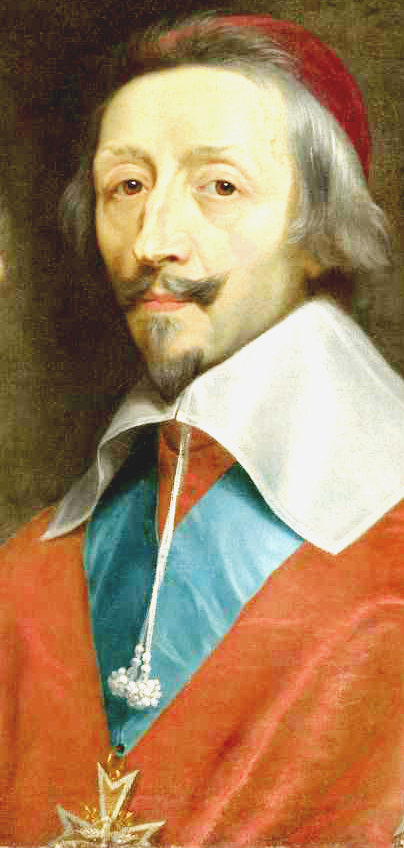
Armand Jean du Plessis, Duke of Richelieu (9 September 1585 – 4 December 1642), commonly referred to as Cardinal Richelieu (French: Cardinal de Richelieu), was a French clergyman and statesman. He was also known as l'Éminence rouge, or "the Red Eminence", a term derived from the title "Eminence" applied to cardinals, and the red robes they customarily wore. (Intro from Wikipedia)

September 9, 1585 – Paris, France - Armand Jean du Plessis is born to a family of the lesser nobility of Poitou
May 5, 1586 – Paris - Baptized at the Saint-Eustache Church in Paris
June 10, 1590 – While in Paris - His father, François IV du Plessis de Richelieu, dies fighting in the French Wars of Religion at Gonesse, leaving the family in dept
September 1(?), 1594 – Paris – At the age of 9, Armand is sent to the College de Navarre in Paris to study Philosophy, Latin, Greek and Hebrew.
January(?) 1(?), 1605 - Paris - Treated for gonorrhea by huguenot physician Théodore de Mayerne
December 18, 1606 – Paris - King Henri IV appoints Richelieu Bishop of Luçon =(START)
April 17, 1607 – Rome, Italy - Richelieu travels to Rome, where he receives the canonical investiture from the hands of Cardinal de Givry
December 15, 1608 – Fontenay-le-Comte - Richelieu meets the chapter of Luçon in Fontenay-le-Comte
July 8, 1611 – Châtellerault, Poitou – Religious conference held in Châtellerault until July 16th. Richelieu assists Father Humblot against Pastor Daniel Chamier of Dauphiné and Minister Le Faucher. The goal of the dispute was to obtain the conversion of a local noblewoman named La foulenne.
January 26, 1612 - While in Poitou - Marie de' Medici announced that Louis (XIII) would marry spanish Princess Anne, and that Princess Élisabeth would take the future spanish King Philip IV as her husband
August 24, 1614 - Luçon - Richelieu is elected deputy of the Poitou clergy to the States-General of Paris with support from Denis Bouthillier, the Queen's private secretary. He becomes the spokesperson for the Assembly
October 27, 1614 - Petit-Bourbon Hall, Paris - The Estates General's 474 delegates gather at the Petit-Bourbon Hall in Paris for weeks of meetings. Richelieu was in the crowd to be close to the political decisions
February 23, 1615 - Petit-Boubon Hall, Paris - Richelieu delivers a speech at the final day of the Estates General conference
August 17, 1615 - Paris - The Royal Family depart to Bordeaux in a convoy of coaches and carriages, to attend wedding ceremonies
September 10(?), 1615 - Poitiers - Richelieu visits the court at Poitiers. Princess Élisabeth had fallen ill with smallpox and Queen Anne of Austria asks Richelieu to take care of her while the convoy continued to Bordeaux
September 20(?), 1615 - Poitiers - Queen Anne of Austria rewards Richelieu by naming him her chaplain
October 7, 1615 - Bordeaux - The court arrives in Bordeaux
November 25, 1615 - Bordeaux - Louis XIII marries Anne of Austria in Bordeaux
September 1, 1616 - Paris - During a visit to the Queen Mother, the Prince of Condé is arrested
September 24, 1616 – Paris – Richelieu is appointed Secretary of State for Foreign Affairs
November 25, 1616 – Paris - Richelieu is appointed Secretary of State for War
January 18, 1617 - Paris - Richelieu drafts a royal declaration that sternly admonished Charles III, duke of Nevers, and others to terminate their rebellion and disband their troops
April 24, 1617 - Paris - 16-year-old King Louis XIII has Chief Minister Concino Concini shot dead at the gate of the Louvre, terminating his rule and the regency of the Queen Mother Marie de' Medici. Richelieu finds the king in the Louvre but he is dismissed as Secretary of State in front of the nobility: "Well, Luçon, finally I am free from your tyranny!"
April 25, 1617 - Paris - The people of Paris gather on the Pont-Neuf (New Bridge) to hear about the coup d'état. For the majority of people, Concini was responsible for the political turmoil following King Henri IV's assassination in 1610. Richelieu looks for advice from the papal envoy. As his carriage crossed the Pont-Neuf, he shouts "long live the King" and the crowd lets him pass
May 3, 1617 - Paris - After a meeting with King Louis XIII and Luynes at the Royal Palace, Marie de' Medici leaves with Richelieu for the Chateau de Blois. Days before, Richelieu spotted an opportunity and saved his political career by mediating the situation and negotiating an arrangement that was satisfactory for both sides
June 11, 1617 - Blois - Richelieu departs to Luçon and Coussay after receiving a letter from his brother in Paris, informing him that the royal council had deliberated on sending him away from Marie de' Medici's court
June 15, 1617 - Coussay - Letter from King Louis XIII, approving of his decision to settle in Coussay
October 1(?), 1617 - Luçon - Thinking that Richelieu was still too close to his mother's court, Louis XIII relegates him to episcopal duties in Luçon
April 7, 1618 - Luçon - Richelieu receives a letter from King Louis XIII ordering him to retire to Avignon
May 16, 1618 – Avignon - Richelieu arrives in Avignon
February 8, 1619 - Avignon - Letter to the cathedral's ecclesiastics in Luçon, telling them where he wanted to be buried, and what they should do with the silverware and tapestries that decorated his private chapels in Coussay and Luçon
March 7, 1619 - Avignon - Richelieu receives a letter from the royal council inviting him to rejoin Marie de' Medici's court, to mediate the conflict between the King and the Queen-Mother. He leaves for Angoulême on the same day
March 15(?), 1619 - Vienne - While on his way to Angoulême, Richelieu is arrested at Vienne but the incident is quickly resolved
March 27, 1619 - Angoulême - Richelieu arrives in Angoulême
April 30, 1619 - Angoulême - Marie de' Medici signs the Peace of Angoulême
July 8, 1619 - While in Angoulême - His brother Henri is killed in a duel in Angers
September 5, 1619 - Château de Couzières, Veigné (S. of Tours) - Marie de' Medici and Richelieu reach the Château de Couzières, near Tours, to meet with the King
July 7, 1620 - While in Angoulême - The king joins his army and threatens the garden valley of the Loire with armed conflict
July 30(?), 1620 - La Flèche - Marie de' Medici and Richelieu move to La Flèche
August 7, 1620 - Angers - The king's envoys reach Angers with a peace offer
August 10, 1620 - Angers - Richelieu convinces Marie de' Medici to accept his son's peace offer
August 14, 1620 - near Angers - Reconciliation between Louis XIII and his mother, in a small town near Angers, in the presence of Luynes, Richelieu and Condé
August 22, 1620 - While in Angers - Louis XIII sends a letter to the Pope asking him to consider the Bishop of Luçon for the next promotion of cardinals
September 6, 1620 - While in Angers - The king's emissary arrives at the Vatican
January 1(?), 1621 - Paris - After settling in Paris, Richelieu receives the news that the Holy See had passed him over
July 1, 1621 - Blaye - Louis XIII part ways with Marie de' Medici on good terms
December 15, 1621 – While in Poitou – The Duke of Luynes, Constable of France, dies of scarlet fever in Monheurt (NW of Agen), opening the way to the rise of Richelieu 
April 19, 1622 – Paris - Ordained Cardinal by Pope Gregory XV, proposed by King Louis XIII
August 29, 1622 - Paris - Richelieu is elected Principal of the Sorbonne
September 5, 1622 - La Pacaudière - Resting in the village of La Pacaudière (on his way to meet the king). A messenger arrives with the news that he had been made cardinal
December 10, 1622 - Lyon - The court moves to Lyon. Louis XIII gives Richelieu the red biretta of Cardinal at the episcopal palace of Lyon and in presence of the court
April 28, 1624 - Compiègne - Louis XIII speaks to Richelieu and decides to admit him to his council
April 29, 1624 – Compiègne - Richelieu becomes a member of the Royal Council of ministers. He begins conspiring against the chief minister, the Duke of La Vieuville
June 10, 1624 – Compiègne - Richelieu signs the Treaty of Compiègne, a mutual defence alliance between France and the Dutch Republic
August 12, 1624 – Rueil-Malmaison, W. of Paris - The court leaves Paris to visit Richelieu's new estate in the village of Rueil. The Duke of La Vieuville is arrested on charges of corruption
August 13, 1624 – Rueil-Malmaison - Richelieu becomes Chief Minister on the next day
May 27, 1625 - Luxembourg Palace, Paris - Richelieu celebrates a political success by hosting a reception at the Luxembourg Palace for an english delegation that came to fetch the new english queen, headed by George Villiers, Duke of Buckingham
June 2, 1625 - Paris - Princess Henriette Marie leaves Paris with Marie de' Medici and the Duke of Buckingham. Louis XIII and Richelieu remain in Paris
May 11, 1626 - Fontainebleu - Richelieu is informed of a plot to kill him: Gaston confesses his envolvement but hands over the Count of Chalais to save himself. Richelieu retires to his country house in Limours
July 31, 1626 - Nantes - Nantes declaration ordering the razing of all the fortresses and city walls which are not placed on the borders, made at the request of the deputies of the states of Brittany. Richelieu orders the destruction of the castles and puts down the nobles
August 5, 1626 - Nantes - Richelieu celebrates the prince's engagement with Mademoiselle de Montpensier
August 6, 1626 - Nantes - Attends the wedding ceremony of Gaston, Duke of Orléans and the Duchess of Montpensier.
August 9, 1626 - Nantes - The conspirator Comte the Chalais is captured
August 18, 1626 - Nantes - The commission finds the Comte de Chalais guilty of lèse-majesté, and decree that he was to be decapitated and quartered
August 19, 1626 - Nantes - The Comte de Chalais is gruesomely executed by an unskilled man, condemned to death himself, who needed 34 blows to sever the count's head
September 27, 1626 - Paris(?) - Creation of Richelieu's personal guard
September 28, 1626 - Paris - After the death of François de Bonne de Lesdiguières, Richelieu extinguishes the post of constable of France
September 30, 1626 - Paris - Richelieu founds the "Compagnie de Saint-Christophe" for the colonization of the Antilles
October 20, 1626 - Paris - Richelieu receives the title of Grand Maître, Chef et Surintendant Général de la Navigation et Commerce de France (Grand Master and General Superintendent of Sailing and Commerce)
March 20, 1627 - Paris - Richelieu secures another treaty with Spain, garanteeing their help in case of english attack
April 29, 1627 - Paris - Creation of the "Compagnie des Cent-Associés de la Nouvelle-France", for the colonization of New France (Canada)
July 15, 1627 – Paris(?) - Richelieu allows Duquesne's father “to equip and arm a patache to help and promote French trade and run against the pirates”. This patache was the 70-ton "Petit-Saint André" aboard which Duquesne set sail for the first time
July 20, 1627 - While in Versailles(?) - An english fleet led by the Duke of Buckingham appears off the Island of Ré
August 1, 1627 – While in Versailles – French royal forces led by Richelieu and Charles of Angoulême lay siege to La Rochelle
August 13, 1627 - Versailles - Richelieu orders the Duke d'Angoulême to take his position on La Rochelle's bay
September 10, 1627 – While in Versailles – Soldiers in La Rochelle fire cannon shots at workers of the royal army. They had chosen the english side
September 11, 1627 – While in Versailles – Richelieu donates to the Duquesnes everything they brought back from a business trip to England, except for a tenth reserved for him
September 30(?), 1627 - Versailles - Fully recovered, Louis XIII departs for La Rochelle with Richelieu
October 15(?), 1627 - Richelieu - Richelieu stops at Richelieu and meets the Prince of Condé. He gives Condé the mission to tackle the protestant Duke of Rohan
October 30, 1627 - While in Richelieu(?) - The first french contingent lands at Ré a few miles from Saint-Martin
Cardinal Richelieu at the siege of La Rochelle,
Henri-Paul Motte
November 6, 1627 - La Rochelle - Richelieu arrives at La Rochelle
November 30(?), 1627 - La Rochelle - Richelieu launches the project to close off La Rochelle's bay and separate it from the Atlantic Ocean
January 1(?), 1628 - La Rochelle - On his way to Madrid, Ambroglio Spinola stops at La Rochelle to inspect the grandiose work
February 1(?), 1628 - La Rochelle - The two branches of the bulwark jutted out in the harbor, tens of yards out into the sea
February 10, 1628 - La Rochelle - Louis XIII leaves the camp at La Rochelle, supposedly to inspect his other army stationed in Champagne. Actually he goes back to Versailles, leaving Richelieu in command of the army
February 19, 1628 - La Rochelle - Richelieu formally demands the surrender of La Rochelle
March 12, 1628 - La Rochelle - Royalist forces begin attacking the gate of La Rochelle
March 21, 1628 - La Rochelle - An english ship manages to pass between the two bulwarks and reaches La Rochelle unscathed
April 8, 1628 - Laleu - Richelieu boards his carriage and goes to see Maréchal de Bassompierre at his quarters in Laleu
September 1(?), 1628 - La Rochelle - Up to 300 people die of starvation everyday in La Rochelle
October 3, 1628 - La Rochelle - A powerful english fleet of 120 ships appear before La Rochelle, led by the Earl of Lindsey
October 14, 1628 - La Rochelle - After eleven days of fights between the english ships and shore batteries, the english send an envoy to Richelieu - Lord Montague
October 28, 1628 – La Rochelle – Unconditional surrender of La Rochelle
November 1, 1628 - La Rochelle - Celebrates mass in La Rochelle on All Saints' Day
December 26, 1628 - Luxembourg Palace, Paris - Grand Council with Louis XIII, Richelieu, Marie de' Medici and members of the government at the Luxembourg Palace to decide the affairs on Italy after the victory at La Rochelle. Two parties are opposed: Richelieu, Schomberg and the Secretaries of State, in favor of an immediate intervention to settle the succession of Mantua; Bérulle, Marillac and Marie de Médicis opposed to the conflict with Spain. The king decides in favor of war.
January 13, 1629 - Paris - Meeting with King Louis XIII and Marie de' Medici. In Richelieu's "Notice given to the king after the capture of La Rochelle for the sake of his business", the Cardinal proposes to Louis XIII to initiate a policy of hegemony in Europe
March 5, 1629 - Chiomonte, W. of Turin, Italy - A messenger from King Louis XIII arrives
March 6, 1629 - Susa, W. of Turin, Italy - The royal army of Louis XIII and Richelieu force its passage through the Pass of Susa, in Piemont
April 28, 1629 - Susa - Louis XIII leaves the camp at Susa
May 14, 1629 - Privas, S. of Lyon - Louis XIII lays siege to Privas
May 30, 1629 - Privas, S. of Lyon - Letter to Marie de' Medici
June 15, 1629 - Alès, France - Richelieu prevents the Duke of Rohan from saving Alès
June 17, 1629 - Alès - Alès surrenders
June 28, 1629 - Alès - Louis XIII signs the Grace of Alès, which declared peace with the king's protestant subjects and agreed to uphold their liberty of conscience and some of their rights
August(?) 1(?), 1629 - Nîmes, France - Richelieu enters Nîmes without his entourage
August 21, 1629 - Montauban - Richelieu enters Montauban by foot, followed by his guards in red tabards
September 14, 1629 - Fontainebleu - Richelieu reaches the Royal Château of Fontainebleu
November 21, 1629 – Paris - Richelieu is officially appointed President of the Council of Ministers
November 26, 1629 – Paris - Created Duke of Richelieu and a Peer of France
December 28, 1629 - Paris - Richelieu offers a banquet to the royal family at his mansion on the Rue Saint-Honoré
December 29, 1629 - Louvre, Paris - Richelieu bids farewell to the royal family
January 15(?), 1630 - Lyon - Richelieu begins preparations to cross the Alps for the second time
January 29, 1630 - Lyon - Meeting with Giulio Mazzarino (Jules Mazarin), sent by the Holy See to negotiate an armistice
March 29, 1630 - Pinerolo, S. of Rivoli, Italy - Richelieu takes Pinerolo
April 13, 1630 - Pinerolo - Letter to Louis XIII: "one will need to attack Savoy at the earliest, and the soonest one will do will always be too late"
May 10, 1630 - Grenoble - Louis XIII and Richelieu meet in Grenoble to discuss the invasion of Savoy
June 1(?), 1630 - Maurienne Region - Louis XIII and Richelieu set camp in the Maurienne region
August 17, 1630 - Maurienne Region - Richelieu departs for Lyon
September 30, 1630 - Lyon - In his deathbed, Louis XIII bids farewell to everyone and asks for forgiveness for any wrong doings. He wouldn't survive until next morning. During that time, intense plotting was going on, specially from the King's mother, Marie de' Medici, who was preparing to order the arrest of Richelieu as soon as the king expired
October 1, 1630 - Lyon - Seeming like a miracle, Louis XIII's intestinal abcess bursts, and by the end of the day the king rises from his bed and walks around his bedroom
November 10, 1630 – Luxembourg Palace, Paris – Day of the Dupes (La journée des Dupes): Richelieu is summoned to Luxembourg Palace for a meeting with Queen Mother Marie de Medici and King Louis XIII. Marie de Medici demands Richelieu’s dismissal, declaring that the King had to choose between the cardinal and his own mother.
November 11, 1630 – Versailles – Louis XIII retires to his hunting lodge in Versailles. Richelieu, thinking that his career was over, follows him. There, the King assures him of his support
January 23, 1631 - Paris - Gets the Treaty of Bärwalde, which offers money for 36,000 swedish soldiers
January 30, 1631 - Paris - Prince Gaston d'Orléans declares war to Richelieu, saying: “As long as I thought you could serve me well I was content with loving you. Now that you are reneging on everything you promised, I’ve come to tell you that I am taking back my word that I would care for you”. He leaves the court for Orléans
May 30, 1631 - While in Rueil-Malmaison(?) - Gaston d'Orléans launches a manifesto against Richelieu from Nancy
July 19, 1631 - Paris - Richelieu discovers Marie de' Medici's plot
September 4, 1631 - Paris - Richelieu receives the dignity of Duke and Peer of the french kingdom. The next day he is received by the Parliament of Paris
September 16, 1631 - Paris - The king appoints Richelieu Governor of Brittany
December(?) 1(?), 1631 - Paris - Louis XIII and Richelieu depart to wage war against Charles de Lorraine
December 27, 1631 - Metz - Louis XIII (and Richelieu?) reach Metz on the day that Moyenvic falls
January 6, 1632 - Moyenvic, W-NW of Nancy, Lorraine - Treaty of Vic: Lorraine becomes a subject of France
May 10, 1632 - Paris - Marshal of France Louis de Marillac is decapitated at the Place de Glève
July 7, 1632 – Paris - After Marshal Antoine Coiffier de Ruzé, Marquis d'Effiat, dies in Alsace, Richelieu takes his 12-year-old son Henri Coiffier de Ruzé under his protection
September 15, 1632 - Pont-Saint-Esprit, Languedoc - Louis XIII and Richelieu join the royal army in the Languedoc
September 29, 1632 - Béziers - Gaston d'Orléans signs an agreement that grants him a pardon. Louis XIII and Richelieu turn their attention to the Duke of Montmorency
October 12, 1632 - Béziers - Diplomat Louis Deshayes de Courmemin is tried and executed for conspiring against Richelieu
October 22, 1632 - Toulouse - Louis XIII, Anne of Austria and Richelieu solemnly enter into Toulouse
October 30, 1632 – Toulouse - Henri II, Duke of Montmorency is beheaded in Toulouse's town hall by a guillotine, as a warning to the rest of the plotting nobility
December(?) 1(?), 1632 - Bordeaux - Seeks refuge in Bordeaux, where his health deteriorates further
January 3, 1633 - Rochefort-en-Yvelines, SW of Paris - Richelieu meets Louis XIII at the Château at Rochefort-en-Yvelines: “As soon as he saw the king, the Cardinal threw himself at the feet of his His Majesty, who, while he lifted him up with one hand, embraced him with the other one, doubling his gestures of tenderness so much that tears starting
flowing in all those attending. All confessed to having never seen such testimony of a master’s more cordial kindness, or the testimony of a more respectful affection from any subject.”
September 22, 1633 - Rueil-Malmaison - A man named Alpheston confesses under torture that he had the mission of killing Richelieu. He his broken on the wheel
October 1(?), 1633 - Rueil-Malmaison - Bout of prostate problems. A plot to poison Richelieu is discovered
May 1(?), 1634 - Rueil-Malmaison - Bout of prostate problems
October 21, 1634 - Saint-Germain-en-Laye - Gaston d'Orléans returns to Paris and swears to the king "to love the cardinal (Richelieu) as much as I hate him". Richelieu arrives from Rueil later that day
November 28, 1634 - Paris(?) - Organizes the marriage of the Duc de Puylaurens with his niece Mademoiselle de Pontchâteau
January 6, 1635 - Paris - Letter from Count Axel Oxenstierna, in Mainz
February 8, 1635 - Paris - The French renew their treaty with the Dutch Republic
February 14, 1635 - Paris - At the house of Séguier (Minister of Justice), with Condé and two of Gaston's closest confidants, du Fargis and Coudray-Montpensier
February 22, 1635 - Paris - At the behest of Richelieu, Louis XIII authorizes the Académie Française to cultivate the purity and elegance of the french language
March 28, 1635 - Paris - Richelieu sends for Grotius to discuss the unratified treaty with Sweden
May 1(?), 1635 - Paris - Lays the first stone for the chapel at the Sorbonne
May 11, 1635 - Paris - Letter from Count Axel Oxenstierna
November 3, 1635 - Rueil-Malmaison - St.Chaumont finds Richelieu at Rueil in a very bad mood, accusing Sweden of negotiating for a separate peace.
February 19, 1636 - Paris - Richelieu entertains Odoardo Farnese, Duke of Parma
September 1(?), 1636 - Paris - Louis XIII and Richelieu depart from Paris, leaving Gaston in command of the capital's defences
September 9, 1636 - Amiens - Louis XIII and Richelieu reach Amiens. The siege of Corbie (E. of Corbie) begins
October 25, 1636 - Amiens - Failure of an attempt by Gaston d'Orléans and the Comte de Soissons, assisted by their favorites Montrésor and Saint-Ibal, against Richelieu
November 10, 1636 - Amiens(?) - Corbie capitulates
May 5, 1637 - Rueil-Malmaison - Letter from Louis XIII: "If tomorrow she (Louise-Angélique Motier de La Fayette) persists in her resolution…I shall leave on Monday for Versailles or Chantilly to try to forget my affliction, which from time to time takes a hold of me with extreme force, especially when I am alone. It’s not worth your coming here. I hope God will give me consolation.”
August 11, 1637 - Paris - The Queen's valet, La Porte, is kidnapped and arrested by Richelieu's agents, with compromising papers and letters, including pamphlets agains the Cardinal and the codes used by the Queen to correspont with her friends
August 17, 1637 - Paris - Anne of Austria asks to see Richelieu and confesses she had written to the Cardinal-Infant in the Spanish Netherlands. Louis XIII forgives her
December 9, 1637 - Paris - Visit by Father Caussin. During the conversation, King Louis XIII arrives and Richelieu hides the Father until he is gone
December 10, 1637 - Paris - Richelieu dismisses Father Caussin as confessor to the king after he tries to influence him in favor of peace with Spain
January 9, 1638 - Paris - Letter from Queen Christina of Sweden
April 29, 1638 - Paris - Letter from Léon le Bouthillier, in Paris
May 14, 1638 - Paris - Richelieu has Jean Duvergier de Hauranne, abbot of Saint-Cyran, arrested and taken to Vincennes, for supporting a violet pamphlet written by Cornelius Jansen, opposed to Richelieu's foreign and religious policy
June(?) 10(?), 1638 - Abbeville - Louis XIII and Richelieu set up camp in Abbeville
June 29, 1638 - Abbeville(?) - Hesdin surrenders
September 5, 1638 - Saint-Germain-en-Laye - Louis Dieudonné, Dauphin of France, is born
December 18, 1638 - Rueil-Malmaison(?) - Jules Mazarin becomes Richelieu's main adviser on the death of François Joseph Le Clerc du Tremblay, Marquis de Maffliers, known as Father Joseph (1577-1638)
February 12, 1639 - Paris - Polish prince Jean Casimir Vasa, future king of Poland, accused of conspiring against France with Spain, is locked up, by order of Richelieu, in the keep of the citadel of Sisteron
February 26, 1640 - Paris - Polish prince Jean Casimir Vasa is released by orders of Richelieu
June(?) 1(?), 1640 - Amiens - Richelieu joins Louis XIII in Amiens
January 14, 1641 - Paris - Richelieu presents Desmarets de Saint-Sorlin's new play "Mirame" for the opening of his theater at the Palais-Cardinal
February 11, 1641 - Palais-Royal, Paris - 20-year old Condé is forced by his father to marry 13-year old Claire-Clémence de Maillé-Brézé, niece of Cardinal Richelieu
March 6, 1641 - Rueil-Malmaison - Cardinal Richelieu summons the former Consul Saint-Pé and orders him to leave for Lisbon, to declare that the French Government was ready not to enter into any treaty with Spain, without Portugal being included in it.
March 27, 1641 – Paris - A portuguese embassy is warmly received by Louis XIII and Richelieu
June 1, 1641 - Paris - Treaty of Alliance between France and Portugal
August 9, 1641 - Rueil-Malmaison - Cardinal Richelieu orders the French governor of Lorraine Du Hallier to reoccupy the places returned to Duke Charles.
September 4, 1641 - Rueil-Malmaison - Letter to John IV of Portugal, confirming the favorable reception of his proposal and notifying that he was going to send the precise orders to the Marquis de Maillé-Brezé, commander of the French Squadron
December 16, 1641 - Paris(?) - Mazarin becomes cardinal under the protection of Richelieu
February 3, 1642 - Fontainebleu - Louis XIII and Richelieu depart for a voyage to the spanish border
March(?) 1(?), 1642 - Valence, S. of Lyon - Richelieu reunites with Mazarin
March 15(?), 1642 - Narbonne - The court settles in Narbonne
April 1(?), 1642 - Narbonne - Richelieu falls ill with an inflammation on his right arm that makes it impossible for him to write
May 3, 1642 - Narbonne - Letter to Sublet de Noyers: "I can’t be carried from one bed to another one without hurting extraordinarily"
May 6, 1642 - Narbonne - "There is new inflammation in my arm, and the older opening that God and nature created has now reopened and pus oozes in great quantity. Only to console me the doctors speak of playing with their knives again; it will be hard for me to accept, because I have no courage or strength left. I pray for God to give me some so that I can submit to His will"
May 12, 1642 - Narbonne - “I am always in the same state: one day I hope, the next I’m in doubt, and all nights are bad. God will give what is necessary, and what He has prescribed is what I want.”
May 23, 1642 - Narbonne - Richelieu dictates his Last Will and Testament to his secretary
May 27, 1642 - Narbonne - Richelieu departs from Narbonne
June 11, 1642 - Tarascon (Between Arles and Avignon) - Letter to Sublet de Noyers: "God assists the king with marvelous discoveries”
June 28, 1642 - Tarascon - Louis XIII reunites with Richelieu
July 3, 1642 - While at Tarascon - Marie de' Medici dies in Cologne. The French fleet under Maillé-Brézé is victorious off Barcelona
August 20, 1642 - Tarascon - Departs for Lyon by boat along the Rhône, to avoid the discomfort of traveling by carriage
September 3(?), 1642 - Lyon - Richelieu arrives in Lyon after two weeks
September 12, 1642 – Outside Lyon - While leaving Lyon for Paris, Henri Coiffier de Ruzé, Marquis of Cinq-Mars is imprisoned and beheaded in the Place des Terreaux in Lyon, aged 22
October 13, 1642 - Fontainebleu - Louis XIII and Richelieu reunite in Fontainebleu
October 17, 1642 - Paris - Richelieu returns to Paris after 18 months
October 30, 1642 - Rueil-Malmaison - Richelieu receives Anne of Austria in Rueil
November 19, 1642 - Paris - Richelieu asks his servants to lift him off his bed and to take him to his theater, where comedians were staging a private dress rehearsal of Desmarets de Saint-Sorlin's "Europe" for him
Richelieu on his deathbed
November 20, 1642 - Paris - Letter from Louis XIII: "I have nothing to say to my cousin Cardinal Richelieu, other than he knows too well what the malice, the imposture, and the artifice of Cinq-Mars were while he was by my side; to give credence to anything Cinq-Mars said would disprove the friendship I have for my said cousin and the esteem in which I hold his person.”
November 28, 1642 - Paris - Attends the performance of Desmarets de Saint-Sorlin's "Europe"
December 2, 1642 - Paris - Louis XIII visits the dying Richelieu on his bedroom. The Cardinal recommends Mazarin to the king
December 3, 1642 - Paris - Louis XIII visits Richelieu for the last time
December 4, 1642 – Paris - Cardinal Richelieu dies, aged 57 =(END)