Showing posts with label Portuguese Maritime Expansion. Show all posts

Monday, 17 January 2022

Prince Henry the Navigator (Infante D. Henrique)

The "real" Henry the Navigator
Dom(*) Henrique of Portugal, Duke of Viseu (4 March 1394 – 13 November 1460), better known as Prince Henry the Navigator (Infante Dom Henrique), was a central figure in the early days of the Portuguese Empire and in the 15th-century European maritime discoveries and maritime expansion. Through his administrative direction, he is regarded as the main initiator of what would be known as the Age of Discovery. Henry was the fourth child of the Portuguese King John I, who founded the House of Avis. After procuring the new caravel ship, Henry was responsible for the early development of Portuguese exploration and maritime trade with other continents through the systematic exploration of Western Africa, the islands of the Atlantic Ocean, and the search for new routes. He encouraged his father to conquer Ceuta (1415), the Muslim port on the North African coast across the Straits of Gibraltar from the Iberian Peninsula. He learned of the opportunities offered by the Saharan trade routes that terminated there, and became fascinated with Africa in general; he was most intrigued by the Christian legend of Prester John and the expansion of Portuguese trade. He is regarded as the patron of Portuguese exploration. (Intro from Wikipedia)

(*) honorific prefix used in Portugal during the time of the Monarchy, equivalent of the english "Sir"

March 4, 1394 - Porto, Portugal - Infante D. Henrique (Prince Henry) of Portugal is born
March 2, 1408 - Évora, Portugal - John I settles in Évora for the Courts of Évora
April 7, 1408 - Évora - The court obtains a series of revenues to allow the 3 eldest children to set up their own Houses, with autonomy and each one having an individualized body of servants.
April 17, 1411 - Viseu, Portugal - Moves to live with the Court in Viseu
October 31, 1411 - While in Viseu - In Ayllon, representatives of Portugal and Castile sign a peace agreement between the two countries
August(?) 1(?), 1414 - Torres Vedras, Portugal - Council with Nun'Álvares Pereira, former Constable of Portugal during the wars of 1383-1385 =(START)
July 18, 1415 - Odivelas, Portugal - His mother, Philippa of Lancaster, receives communion and later at night has a vision "of our Lady to give her strength to accomplish the journey". She gives the last blessing to the infants, names them knights of Christ and offers them the swords with which they should fight on the journey to Ceuta
July 19, 1415 - Odivelas - Philippa of Lancaster dies, aged 55
Prince Henry in armour
with his trademark beard
and Arms of Duke of Viseu
(Jerónimos Monastery)
July 25, 1415 - Lisbon, Portugal - An army of 19,000 to 20,000 knights and soldiers (including english, galician and biscay) sail to Ceuta
July 28, 1415 - Lagos, Portugal - Stopover at Lagos, south coast of Portugal. The Prince and the men are informed that the objective of the expedition is the conquest of Ceuta
August 2, 1415 - Faro, Portugal - After setting sail from Lagos, the fleet is hit by a violent storm and is forced to anchor at Faro for 7 days
August 13, 1415 - Off Ceuta | Algeciras - The fleet appears for the first time off Ceuta, but incomplete, as a storm dispersed part of its units. Armada regroups in Algeciras
August 19, 1415 - Algeciras, Spain - The surprise effect was lost and Ceuta had received considerable reinforcements, however John I could not return to the kingdom in such an inglorious way because that would bring him discredit throughout Christendom. Assembling the Council, the King announces that they would return to Ceuta
August 21, 1415 - Ceuta - The portuguese armada arrives at Ceuta and the army lands
August 22, 1415 - Ceuta - Ceuta falls in portuguese hands - The three princes of the "Illustrious generation" - Duarte, Henry and Peter, are armed as knights
September 1(?), 1415 - Tavira, Portugal - King John lands at Tavira. He names Prince Peter as Duke of Coimbra and Prince Henry as Duke of Viseu
September 5(?), 1415 - Lisbon - King John I and the Princes return to Lisbon
October 23, 1415 - Lisbon - Letter to the Duke of Bourbon politely refusing the invitation for the princes and 16 other knights to participate in a tournament with him, because it was hoped to launch a new offensive in North Africa against the Moors of Fez soon
February 16, 1416 - Lisbon(?) - The King grants him the mayorship of Viseu. The documents of that day already refer to him as "Duke of Viseu and Lord of Covilhã"
February 18, 1416 - Lisbon(?) - He is charged of the government of Ceuta. It was up to him to organize, in the kingdom, the maintenance of that stronghold in Morocco
October 24, 1416 - Batalha - Transfer of the body of Philippa of Lancaster from Odivelas to the Batalha Monastery
January(?) 1(?), 1418 - Ceuta - Returns to Ceuta
January(?) 1(?), 1419 - While in Ceuta(?) - Prince Henry is appointed governor of the Southern Province of Algarve
May 25, 1420 - Tomar, Portugal - A representative of John I presents in Florence the application for the attribution of the Government of the Order of Christ to Prince Henry. He gains appointment as the Grand Master of the Military Order of Christ, the Portuguese successor to the Knights Templar, which had its headquarters at Tomar, in central Portugal. Prince Henry held this position for the remainder of his life, and the Order was an important source of funds for his ambitious plans, especially his persistent attempts to conquer the Canary Islands, which the Portuguese had claimed to have discovered before the year 1346
October 20, 1420 - Tomar - Obtains from the crown an authorization to hold a free fair in Tomar
November 24, 1420 - While in Tomar - Pope Martin V issues a Bull giving perpetual character to the appointment
January 18, 1424 - While in Tomar - The King gives him the Lordship of Alcáçovas
January 21, 1424 - While in Tomar - The King donates houses and land in Ribeira de Santarém, where the Duke of Viseu would install a soap-works
April 15, 1426 - Tomar - Letter to the judges and good men of Tomar on the norms to be observed in the collection of firstfruits and tithes
May 19, 1426 - Tomar - Gathers the General Chapter of the Military Order of Christ in Tomar
June 9, 1426 - Tomar - Letter to Pope Martin V
January(?) 1(?), 1427 - While in Tomar - Diogo de Silves discovers Santa Maria Island, Azores Archipelago
April 22, 1427 - While in Tomar - Prince Peter visits the English Court
April 18, 1428 - Lisbon - Buys houses in Lisbon, in the Parish of São Nicolau
September 22, 1428 - Coimbra - Attends the marriage of his older brother (and future King) Duarte
December 15, 1428 - Estremoz (near the castilian border) - Reception for the bride of the heir to the Portuguese Crown
January 12, 1429 - Avis - John I receives envoys from Philip, Duke of Burgundy to ask for Princess Isabel's hand in marriage. The famous painter Van Eyck paints the King and the Princess
June 4, 1429 - Sintra - The envoy of the Duke of Burgundy arrives with authorization for the marriage
July 25, 1429 - Palace of Alcáçova, Lisbon - Celebration of the marriage of Princess Isabel and the Duke of Burgundy by proxy in the Palace of Alcáçova (inside St.Jorge castle)
September 26, 1429 - Lisbon - Farewell parties (until the 28th)
September 30, 1429 - Lisbon - Accompanies Princess Isabel to the ship that would take her to Flanders
January(?) 1(?), 1431 - Lisbon(?) - He donates houses for the "General Study" to reunite all the sciences—grammar, logic, rhetoric, arithmetic, music, and astronomy—into what would later become the University of Lisbon. For other subjects like medicine or philosophy, he ordered that each room should be decorated according to each subject that was being taught
April 1, 1431 - Carmo Convent, Lisbon - King John I (and Prince Henry) visits his old comrade-in-arms Nun'Álvares Pereira, former Constable of Portugal, at his deathbead
October 12, 1431 - Lisbon - Buys houses in Lisbon and donates them to the University of Lisbon
October 30, 1431 - While in Lisbon(?) - The Peace Treaty of Medina del Campo is signed between Portugal and Castile
January 27, 1432 - Almeirim - Ratification of the Peace Treaty between Portugal and Castile
August 1(?), 1433 - Alcochete - The King (with Prince Henry) departs for Alcochete on advice of the doctors and princes, seeking to get better
August 11, 1433 - Lisbon - Feeling downcast, the king asks to be taken to Lisbon to die in his best home. He does charities at the Cathedral and asks to be shaved so he doesn't die ugly and misshapen
August 14, 1433 - Lisbon - King John I dies, aged 76
September 26, 1433 - Lisbon - Letter of Donatory Captaincies (Inauguration of the system)
October 25, 1433 - Lisbon - King John's body is taken from the Cathedral of Lisbon to the Monastery of Batalha
November 6, 1433 - Lisbon(?) - Appointed Curator of the Prince
November 17, 1433 - Sintra - Swearing-in ceremony for 20-months-old Afonso V
November 25(?), 1433 - Santarém - Courts of Santarém (until the end of the year)
January 20, 1434 - Pombal - Participates in a "composition" made in Pombal, at his inn, where he intervenes in disputes between his subjects
August 18, 1434 - Batalha - The remains of King John and Philippa of Lancaster are enclosed in the mausoleum that the king had built, a conjugal tomb
March 7, 1436 - Estremoz - Signs his will, taking his nephew Ferdinand as "Son and heir"
March 22, 1436 - Évora - Courts of Évora (until March 30th)
July 3, 1437 - Lisbon - Prince Henry takes command of the Armada prepared for the conquest of Tangier. The nobility do not join the expedition en masse as in 1415
July 12, 1437 - Lisbon - Processions and visit of the royal family to the tomb of Constable Nuno Álvares Pereira. Prince Henry takes the Constable's banner with him
August 17, 1437 - Lisbon - Solemn ceremony at the Lisbon Cathedral - Prince Henry receives the Royal standard from the King
August 22, 1437 - Belém, Lisbon - The portuguese fleet departs Tagus River for Tangier, with Henry the Navigator and Prince D.Fernando aboard
August 27, 1437 - Ceuta - The fleet arrives in Ceuta. Prince Henry decides to continue rather than wait for the troops left behind due to lack of transport. Initially, an expedition of 14,000 men was expected, but only 43% of that landed, about 6,000
September 9, 1437 - Ceuta - Prince Henry's overland column leaves Ceuta
September 13, 1437 - Tangier, Morocco - The army reaches Tangier
September 20, 1437 - Tangier - The first assault to Tangier fails when the portuguese have to withraw with too few (and short) scaling ladders
September 30, 1437 - Tangier - The King of Fez arrives with a relief army
October 3, 1437 - Tangier - While the Portuguese are concentrated to face the army of the King of Fez, the Tangier garrison leaves in a sortie against the siege camp but are defeated by a Portuguese reserve force
October 5, 1437 - Tangier - A second assault to Tangier also fails, even with improved scaling ladders, a new siege tower and two large ordenance cannons shipped in from Ceuta
October 9, 1437 - Tangier - A second and huge Moroccan relief army arrives, made up of "many kings" (Fez, Marrakech, Sijilmassa, Velez, etc.). They soon charge violently against the Portuguese, relieving the pressure on Tangier and encircle them in their camp, effectively cutting them off from their ships. Prince Henry's horse is killed under him and the prince is rescued by a small group of guards when he is already in the midst of the Moroccan cavalry.
October 10, 1437 - Tangier - The moroccans launch another attack on the siege camp but are repelled. The situation for the portuguese becomes critical, with food and water running out and the army reduced to half
October 12, 1437 - Tangier - A truce is called and negotiations are opened
October 17, 1437 - Tangier - A treaty is signed by Prince Henry and Salah ibn Salah, emir of Tangier. The portuguese are allowed to return to their ships unmolested, but had to leave all their equipment behind, from horses and artillery to personal weapons. Also, Prince Henry promises to deliver Ceuta to the moroccans and commits Portugal to 100 years of Peace with the North African muslim States. As part of the agreement, both parts swap hostages. Salah ibn Salah hands over his son to the portuguese and in return, the portuguese leave four nobles with the moroccans. As a guarantee of fulfillment of the treaty terms, Prince Ferdinand remains as a hostage of Salah ibn Salah until Ceuta is returned
October 19, 1437 - Tangier - The fleet sets sail to Portugal, via Ceuta. Order of the Garter knight Álvaro Vaz de Almada and marshal Vasco Fernandes Coutinho are the last men to leave the beach. When the embarcation is complete, Prince Henry decides not to release Salah ibn Salah's son. In response, Salah ibn Salah dispatches the four portuguese nobles as prisoners to Asilah.
October 21(?), 1437 - Ceuta - Prince Henry lands in Ceuta and plunges into depression
January 25, 1438 - While in Ceuta - King Duarte summons the Courts of Leiria
February 25, 1438 - Beja, Portugal - Prince Henry meets King Duarte in Beja, then returns to Algarve
April 21, 1438 - Faro, Algarve - Letter from Faro, Algarve
May 25, 1438 - While in Faro - Prince Ferdinand is transfered from Asilah to Fez
June 1(?), 1438 - Portel, Algarve - King Duarte, his older brother, dies in Tomar, aged 47. Henry's nephew and sucessor to the throne, Afonso V, was only 6-years-old, so the Queen consort of Portugal, Eleanor of Aragon, is appointed Regent of Portugal
September 30(?), 1438 - Tomar - Arrives in Tomar
The traditional Prince Henry
in "Chronicles of Guinea" (1455)
is actually King Duarte
in courtly clothes
December 24, 1439 - Lisbon - Courts of Lisbon - The princes overcome the Queen's opposition, bringing the child Afonso V to the National Assembly, for the solemn act of confirmation of the regent by the monarch
May 8, 1440 - Lisbon(?) - The Prince signs the Captaincy letter granted to Tristão Vaz Teixeira for the Captaincy of Machico, Madeira
February 12, 1441 - Lamego - The troops of the Duke of Coimbra (Prince Peter) join those of the Duke of Viseu (Prince Henry)
May 1(?), 1441 - Torres Vedras - Courts of Torres Vedras
February 10, 1442 - Letter to the Pope
May 25, 1442 - Óbidos - Formal commitment ceremony of the marriage of Afonso V and Lady Isabel, daughter of the Duke of Coimbra (both minors)
October 18, 1442 - His younger brother, Prince John, Constable of Portugal, dies at Alcácer do Sal, aged 42
April(?) 1(?), 1443 - Lagos - Returns to Lagos in the Spring
June 5, 1443 - While in Lagos - Prince Ferdinand dies in captivity in Fez at age 40, henceforth known as the "Holy Prince"
The only painting of Prince Henry
made during his lifetime, as Master
of the Order of Christ,
on the panels of São Vicente (1450s).
Without his trademark beard but
with the white hair he's had since his 20s,
an Order of Christ necklace
and an Order of Garter belt
August 23, 1443 - Letter to the University of Lisbon
October 22, 1443 - Letter from the King granting him the exclusive navigation south of Cape Bojador (Western Sahara)
October 27, 1443 - The Crown grants him, for life, the area of Cape St.Vincent and the surrounding area within a radius of one league
September 1(?), 1444 - Lagos - In Lagos until the end of the year
April 17, 1445 - Tentúgal - Prince Henry arrives early at Tentúgal for a Council meeting
April 25, 1445 - Tentúgal - Council meeting to decide on sending a host to Castile to help Castilian Constable D. Álvaro de Luna. Confers the honor of Constable to Prince Peter in Coimbra
August 28, 1445 - Receives a donation from the Woad dyeing (Isatis tinctoria) monopoly, an industry that he himself had introduced in the Kingdom
September 28, 1445 - Coimbra - Attends the marriage of the daughters of Prince John
February 3, 1446 - Obtains from the Crown the exclusivity of navigation to the Canary Islands
June 23, 1446 - Raposeira, Algarve - At Raposeira, Algarve
August 8, 1446 - Lagos, Portugal - Arrival of the first 235 slaves in Portugal
November 1, 1446 - Sagres - The Prince signs the Captaincy letter granted to Bartolomeu Perestrelo for the Captaincy of Porto Santo, Madeira Archipelago
March 1(?), 1447 - Évora - Courts of Évora
April 1(?) 1447 - Lisbon - Resides in Lisbon until June
May 6, 1447 - Santarém - Attends the marriage of King Afonso V and Isabel of Coimbra (both 15 years old)
June 1(?), 1447 - Lisbon - Leaves Lisbon
March 9, 1448 - Completes the purchase of the Island of Lanzarote (Canary Islands) from Maciot de Bethencourt
March 25, 1448 - The Duke grants 10 silver marks a year to the University of Lisbon "forever", paid by him and his heirs
July 11, 1448 - While in Algarve - King Afonso V assumes the government of the Kingdom
August 1(?), 1448 - Lisbon - Travels from Algarve to Lisbon
October 1(?), 1448 - Coimbra - Conference with Prince Peter
February 1(?), 1449 - Santarém - King Afonso V and Prince Henry set out to Santarém
The traditional Prince Henry
in the "panels of St.Vincent" (1450s)
is again King Duarte
in courtly clothes
April 1(?), 1449 - Santarém - Council meeting
April 27, 1449 - Coimbra - Afonso V tries to attack Coimbra but Prince Peter leaves the city on May 5
May 16, 1449 - Alcoentre - Skirmishes between forces of King Afonso V and Prince Peter
May 20, 1449 - Vialonga, Alverca, near Lisbon - Battle of Alfarrobeira - Prince Peter is killed along with the Count of Avranches, Álvaro Vasques de Almada, knight of the Order of Garter
May 24, 1449 - Lisbon - After spending three days on the battlefield, Prince Henry returns to Lisbon with the King
May 27, 1449 - Lisbon - Afonso V appoints Prince Henry Governor of the Military Order of
Avis
November 4, 1449 - Lisbon(?) - Receives the donation of Baleal and the Berlengas Islands
January 15, 1450 - The Crown grants him the exclusive rights of coral fishing in the seas of the Kingdom for 5 years and its sale
February 3, 1450 - The Prince signs the Captaincy letter granted to Jacob van Brugge (Jácome de Bruges) for the Captaincy of Terceira Island, Azores Archipelago
November 1, 1450 - The Prince signs the Captaincy letter granted to João Gonçalves Zarco for the Captaincy of Funchal, Madeira
May 18, 1451 - Lisbon(?) - Authorized to build windmills in the Tagus River Valley
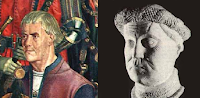
The incredible similarity between
he painting of the São Vicente Panels
and the effigy on his tomb.
July 31, 1451 - Vila Franca de Xira - Receives the ambassadors of Emperor Frederick III in Vila Franca
August 9, 1451 - Lisbon - Arrives in Lisbon with the ambassadors
December 8, 1452 - Letter to João Gonçalves Zarco, in Madeira
April 1(?), 1454 - Afonso V donates the Coast of Guinea to Prince Henry
May 1(?), 1455 - Sagres - Spends the month of May in Sagres
December 2, 1455 - Évora - The young Queen Isabel dies at the age of 23, with suspicion of poisoning
January 2, 1456 - Batalha - Deposit of the bones of Queen Leonor next to King Duarte in Batalha Monastery
January 1, 1457 - Obtains the mayorship of Silves, in Algarve
December 26, 1457 - Sagres - Donation of 5% of the profits from the Guinean business to the Order of Christ
September 30, 1458 - Lisbon - King Afonso V (and Prince Henry) sail for Morocco with an embarked army of 25,000 men
October 3, 1458 - Sagres - The fleet anchors at Sagres
October 17, 1458 - Lagos - The fleet sails from Lagos
Prince Henry's effigy
(note the arms of Duke of Viseu)
October 21, 1458 - Alcácer Ceguer (Ksar es-Seghir, Morroco) | Ceuta - 
Conquest of Alcácer Ceguer. Then the King and the Prince go to Ceuta
November 16, 1458 - Ceuta - Prince Henry and the King sail for Algarve
January 1(?), 1459 - Évora - Travels to Évora to stay with the Court
July 2, 1460 - While in Sagres - Afonso V deliberates that the town of Lagos would not be given to anyone else after the death of Prince Henry and that it would revert to the Crown
September 1(?), 1460 - Sagres - Testamentary letters
October 28, 1460 - Sagres - Last Will and Testament
November 13, 1460 - Sagres - Prince Henry the Navigator dies, aged 66 =(END)

Tuesday, 21 December 2021

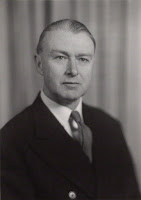
Charles Ralph Boxer | Timeline

Sir Charles Ralph Boxer FBA GCIH (8 March 1904 – 27 April 2000) was a British historian of Dutch and Portuguese maritime and colonial history. In Hong Kong he was the chief spy for the British army intelligence in the years leading up to World War II. (Intro from Wikipedia)

There is only one book on the market about the life of Charles R. Boxer, a large book but very incomplete as far as dates and places are concerned. I was in doubt whether I would publish this incomplete timeline, but in the end I decided to do so with the hope of finding more details over time and getting the help that readers can also give. For now, some key moments in Boxer's life will sit in my file waiting for precise dates and locations.

March 8, 1904 - Sandown, Isle of Wight, England - Charles Ralph Boxer is born
September 21, 1905 - Tolpuddle - Beryl Alice, sister of Charles Boxer, is born 
January(?) 1(?), 1910 - Gibraltar - Hugh Boxer’s battalion was order to Gibraltar and his family accompanied its head to the Rock. At the age of six he became the only male pupil in the Catholic convent school. He also began his lifelong interest in travelling during the family’s four-year sojourn in Gibraltar, accompanying his parents on extended visits to Spain and Tangiers
June 16, 1915 - While in Shanklin, Isle of Wight - Lieutenant-Colonel Hugh Boxer, Charles' father, is mortally wounded by German artillery in Flanders. His body was never found
March(?) 1(?), 1918 - Crowthorne, Berkshire - During the Lent term, Charles enrolls at the venerable Wellington College in Berkshire, having obtained a scholarship offered to the sons of Wellingtonians killed in the war
June(?) 1(?), 1921 - Crowthorne - Wins the Parsons Prize on Speech Day at his graduation, for the best oral recitation of a selected text
July 1(?), 1921 - Tidworth Pennings - Becomes a member of "B" Company and spends July at an Officer Training Corps camp in Tidworth Pennings
December 31(?), 1921 - Crowthorne, Berkshire - Charles leaves Wellington College impressively ranking 30th out of some 200 Cadets
January(?) 1(?), 1922 - Sandhurst, Berkshire - Charles enters the Royal Military Academy of Sandhurst as a “Gentleman Cadet” and among the many graduates who preceded him were Winston Spencer Churchill and Sir Bernard Montgomery, who played prominent roles in World War II
January(?) 1(?), 1923 - Sandhurst - Charles becomes a member of the Hakluyt Society
January 31, 1924 - Sandhurst, Berkshire - Charles Boxer, shortly before reaching 20-years-old, is commissioned as a second lieutenant in His Majesty’s Lincolnshire Regiment =(START)
March 31, 1924 - Lincoln(?) - Two months later he joined his first battalion. The same year, he also made his first serious efforts to equip himself to pursue another career, that of a historian, not of Britain but of distant empires that had belonged to its rivals, Holland and Portugal
June(?) 1(?), 1924 - Lincolnshire - Charles learns the Portuguese history and language and begins teaching himself Portuguese. The same year he starts to study the Dutch language as well
June(?) 1(?), 1925 - Lisbon | Évora, Portugal - Charles visits Portugal for the first time and explores resources of Lisbon’s Biblioteca Nacional (the National Library) and the Torre do Tombo (the National Archives), as well as those of the renowned Public Library of Évora, holder of an invaluable manuscript collection concerning the old State (Estado) of India
August(?) 1(?), 1925(?) - Aldershot, SW of London - Assigned temporarily to Aldershot Military Depot
October(?) 1(?), 1925(?) - Holywood, near Belfast, N.Ireland - Stationed at Holywood, near Belfast, Northern Ireland
January 31, 1926 - Lincoln(?) - Promoted to Lieutenant
September 1(?), 1926 - London - Publication of the article "O 24 de Junho de 1622: Uma façanha dos portugueses" i.e. "the 24th of June 1622: a portuguese feat of arms" in a new scholarly portuguese bulletin
January 1(?), 1927 - London - Publication of the article "Relação da perda da Nau 'Madre de Deus' no porto de Nagasaki em Janeiro de 1610" (Report of the loss of the ship 'Madre de Deus' in the port of Nagasaki in January 1610)
January 27, 1927 - London - Charles Boxer begins his long career as a public lecturer with the first of several talks before the Japan Society
June(?) 1(?), 1927 - Amsterdam, Netherlands - Goes to Amsterdam for the first time. Meets the director of the Naval Museum, Willem Voorbeytel-Cannenburg. Meets Captain Johan Carel Marinus Warnsinck
June 24, 1927 - Lincoln - Letter to J.C.M.Warnsinck
August 27, 1927 - Lincoln - Letter to J.C.M.Warnsinck
September 7, 1927 - London(?) - Meets Sir William Foster, editor of "The English Factories in India" series
September 8, 1927 - Lincoln - Letter to J.C.M.Warnsinck
January 8, 1927 - Lincoln - Letter to J.C.M.Warnsinck
January 18, 1928 - Lincoln - Letter to J.C.M.Warnsinck: "I hope to write more about the anglo-dutch wars in [Europe?] and elsewhere, and prove...what a tough struggle the 'Hogen-mogens' really gave us!"
January(?) 1(?), 1929 - London - Charles Boxer enrolls at the School of Oriental Studies at the University of London, then the only British institution offering the study of the Japanese language
June 15, 1929 - While in London - In her fifty-third year, Jeannie Boxer, Charles' mother, commits suicide at a nursing home in Weymouth, fourteen years after the loss of her husband
December 20, 1929 - London - Letter to J.C.M.Warnsinck, informing him that he was about to embark to Japan
January 24, 1930 - London - Charles departs for Japan aboard the Ocean liner "Atsuta Maru"
January 30(?), 1930 - Gibraltar - Port call at Gibraltar
February 2, 1930 - Marseille, France - Port call at Marseille
February 3, 1930 - Chateau d'If - Visit to Chateau d'If
February(?) 8(?), 1930 - Naples, Italy - Port call at Naples
February(?) 15(?), 1930 - Port Said, Egypt - Port call at Port Said
February(?) 23(?), 1930 - Colombo, Sri Lanka - Port call at Colombo
March(?) 1(?), 1930 - Singapore - Port call at Singapore
March 3, 1930 - Hong Kong - Port call at Hong Kong
March 7, 1930 - Shanghai, China - The "Atsuta Maru" reaches Shanghai
March 11, 1930 - Kobe, Japan - The "Atsuta Maru" reaches Kobe and there Charles boards a train for Tokyo
March 12, 1930 - Tokyo - Reaches Tokyo and reports to the Military Attaché at the British Embassy to begin his duties
April 18, 1930 - Tokyo - Letter to J.C.M.Warnsinck
May 26, 1930 - Tokyo - Letter to J.C.M.Warnsinck
July 1(?), 1930 - Nikko | Kyoto | Kobe | Deshima - Visits to Nikko (N. Of Tokyo) and Kyoto, Kobe and the island of Deshima
August 10, 1930 - Tokyo - Letter to J.C.M.Warnsinck, informing him he was about to travel to Formosa (Taiwan)
October 15(?), 1930 - Formosa (Taiwan) - Enjoying a visit to Formosa
November 15(?), 1930 - Tokyo - Returns to Tokyo, via Kobe and Nara
June(?) 1(?), 1931 - Kyoto, Japan - Boxer moves from Tokyo to Kyoto where he becomes attached to the 38th Nara Infantry Regiment as a LO (Language Officer) and lives with his Japanese hosts in their barracks
September 31, 1931 - Tenri, Nara, Japan - Visit to Tenri University with Minister Pabst
June(?) 1(?), 1932 - Nagoya, Japan - Boxer has a new assignment at Toyohasi Non-Commissioned Officers school in Nagoya
May 5, 1933 - Tokyo(?) - Farewell lunch with Malcolm Kennedy and George Sansom
May 7, 1933 - Shanghai, China - Boxer ends his assignment and begins a leisurely trip down the coast of China with Pabst, visiting Shanghai, Amoy, Hong Kong, Canton, Macao, Manila and the spice islands of the eastern end of the archipelago of Indonesia, always examined the city’s national libraries and inspected some of its rarities
June(?) 25(?), 1933 - Java | Jakarta - Boxer spends two and half week in Java, principally in Batavia (Jakarta)
July 12, 1933 - Jakarta, Indonesia - Boxer boards a dutch ship to Genoa, Italy
July 28, 1933 - Port Said, Egypt(?) - Boxer and Pabst sign "Merkwaerdige Moluxche Hofreis ofte"
August 2, 1933 - Genoa, Italy - The dutch ship arrives in Genoa
September(?) 1(?), 1933 - Lincolnshire - After a short period of home leave, Boxer rejoines the second battalion of the Lincolns, then stationed in Yorkshire
January 25, 1934 - London - Reads a paper at a meeting of the Japan Society
July 21, 1934 - Jaffa Lines, Catterick Camp, Yorkshire - Letter to Edgar Prestage
January 1(?), 1935 - London - Boxer is assigned to the intelligence division of the War Office in London
March 21, 1935 - While in London - His sister Alice dies
March 27, 1935 - While in London - His brother Myles, grief-stricken with her sister's death, commits suicide with a shotgun
October 1(?), 1935 - The Hague - Boxer returns to Holland at the invitation of the Netherlands Geographical Society and delivered two lectures, the first in The Hague 
October 5(?), 1935 - Amsterdam - Second lecture, in Amsterdam
November 14, 1935 - London - Reads a paper at a meeting of the Japan Society
December 1(?), 1935 - London - Boxer learns that his next assignment is in Hong Kong
December 5, 1935 - London - Letter to Edgar Prestage
June(?) 1(?), 1936 - Portugal - Boxer spends two weeks in Portugal with his sister Beryl
October 1(?), 1936 - Moscow, Soviet Union - Encounter between Charles and Beryl at the principal Moscow railroad station to cross the Eurasian continent via the famous Trans Siberian railroad
January 1, 1937 - Aberdeen, SW Hong Kong - Charles separates of Beryl and take charge at the fishing village of Aberdeen, where the Royal Navy Base was situated
February(?) 1(?), 1937 - Macao - Boxers begins spending long weekends in Macao, the Portuguese outpost that he had visited briefly on his way home from Japan in 1933
April 13, 1937 - China - By car, bus, boat and train, Boxer travels through five of China’s southern provinces with a driver and a Mandarin interpreter
July 7, 1937 - While in Hong Kong - War in the Far East begins with a clash between Japanese and Chinese troops at Lukouchiao bridge, near Beijing
May 13, 1938 - Hong Kong - Boxer sets out from Hong Kong unaccompanied to a China excursion
August 1, 1938 - Shanghai, China - Boxer undertakes another trip to China to the famous city of Shanghai to liaise with fellow intelligence officers. He meets Emily Hahn, a famous writer and correspondent of The "New Yorker’s" in China, better known as "Mickey". Both were contributors to the "T’ien Hsia Monthly", a new English newspaper with the purpose of building cultural bridges between readers
June 8, 1939 - Hong Kong - Charles Boxer and Ursula Norah Anstice Tulloch, a woman born in England in 1909 commonly called the most beautiful in Hong Kong, are married in a fashionable military wedding in Hong Kong’s Episcopal cathedral
June 13, 1939 - Japan - Honeymoon in Japan, where they spend three weeks (13 June to 7 July) visiting Kyoto, Kobe, Tokyo and Nikko. Charles Boxer combines business with pleasure and consults old friends, including Dutch and Portuguese ministers.
October 10, 1939 - Chungking, China - Boxer meets with the Generalissimo Chiang Ki-shek and hands him a memorandum that he had prepared about what the Japanese were planning to do next
September 27, 1940 - While in Hong Kong - Japan announces its signature of the Tripartite Pact with Italy and Germany
October 27, 1940 - Hong Kong - Mickey Hahn takes residence in May Road in Hong Kong next door to Boxer’s house. By that date and probably before, the two were quite openly involved in one of World War II’s most publicized love affairs
January(?) 1(?), 1941 - Hong Kong - Boxer is promoted to Major and becomes Hong Kong’ s senior intelligence officer
October 17, 1941 - Hong Kong - Daughter Carola Militia Boxer is born
November 1(?), 1941 - Hong Kong - The General Officer Commanding Hong Kong informs the War Office in London about the recent increase in Japanese naval activities which had completed a virtual encirclement of Hong Kong
December 8, 1941 - Hong Kong - Hong Kong experiences the first of many air raids, and in a few hours, Japanese forces occupiy the New Territories and Kowloon in the mainland
December 13, 1941 - Hong Kong - A launch with a white flag of truce leaves Kowloon with two Japanese officers aboard and heads for Queen's Pier in Hong Kong Island, where they were met by Major Charles Boxer. The japanese request the british surrender
December 17, 1941 - Hong Kong - Hong Kong suffers a particularly heavy air raid, followed by a severe shelling. About 9:30 a.m. that activity largely ceases and another peace launch leaves Kowloon for the Queen’s Pier, at the Hong Kong island, with a second demand for surrender. Again, Major Boxer receives the Japanese delegation
December 18, 1941 - Hong Kong - In the morning, Hong Kong is bombarded by continuous artillery, mortar and dive-bombing, which damages hospitals, destroys gun emplacements, water mains, rice storage facilities and barracks. That evening, a japanese invasion force of 7,500 men is launched
December 20, 1941 - Hong Kong - Boxer is shot in the back by an unseen sniper. He lays grievously wounded for hours before he is found and rushed to Queen Mary Hospital and placed in its morgue
December 25, 1941 - Hong Kong - Governor Mark Young, after consulting advisors, orders General Maltby to arrange a cease-fire, which officially begins at 3:25 p.m. 
January 21, 1942 - Hong Kong - Boxer is transferred to Bowen Road Military Hospital
May 23, 1942 - Hong Kong - A japanese official parades the Bowen Road Military Hospital patients and the staff and require them to sign the parole. Boxer refuses
September 23, 1942 - Hong Kong - Carola Boxer and Mickey Hahn depart for the Philippines and Mormugão, a neutral Portuguese port in Goa on the former French liner "Teia Maru" as the result of a programme of exchanges of Japanese and foreign nationals
October 15, 1942 - While in Hong Kong - Carola Boxer and Mickey Hahn arrive at Mormugão and board the swedish hospital-ship "Gripsholm"
October 22, 1942 - While in Hong Kong - The "Gripsholm" leaves Mormugão
November 13, 1942 - While in Hong Kong - The "Gripsholm" reaches Rio de Janeiro
December 1, 1942 - While in Hong Kong - Carola Boxer and Mickey Hahn arrive in New York
June 28, 1943 - Shamshuipo Gendarmerie Station - The gendarmerie begins arresting and torturing the conspirators. Boxer is implicated and sent to the Argyle Street Camp
October 19, 1943 - Stanley, Hong Kong - Boxer and others are marched to the prison assembly hall, where a japanese tribunal assembled
October 21, 1943 - Stanley Prison, Hong Kong - Boxer and others POWs are transferred to Stanley Prision after accusations of disobedience and conspiracy. Some of them are executed
October 29, 1943 - Stanley Prison - 32 prisoners are sentenced to death by a japanese tribunal and beheaded
November 5, 1943 - While in Stanley Prison - While Boxer is in Stanley Prision, in Colombo - Sri Lanka, Ursula petitions for divorce in Britain’s High Court of Justice in Colombo concerning Boxer’s infidelities with Mickey Hahn
December 1, 1943 - Stanley Prison - Officers Ford, Gray and Newnham are sentenced to death by a japanese tribunal
December 18, 1943 - Stanley Prison - Officers Ford, Gray and Newnham are executed with a shot in the back
December 23, 1943 - Stanley Prison - Boxer receives his sentence, expecting months of solitary confinement and starvation rations
April 1(?), 1944 - Stanley Prison - Conditions in stanley Prison improve
June 22, 1945 - Tungshan jail, Hebei Province, NW of China - Taken by train to Kowloon, then to Tungshan jail
August 16, 1945 - While in Tunshan jail - Surrender of Japanese forces
August 22, 1945 - Kowloon, Hong Kong - Train to Kowloon, escorted by japanese soldiers
August 29, 1945 - Hong Kong - British carrier planes fly over Hong Kong to announce the proximate arrival of a formidable fleet under command of Admiral Sir Halliday Harcourt
September 16, 1945 - Hong Kong - Two weeks after the Japanese government’s surrender aboard the battleship "USS Missouri", the oft-postponed Japanese surrender of Hong Kong takes place
September 25(?), 1945 - Hong Kong - Provides sworn deposition concerning his knowledge of the arrest, trial and execution of Col.Newnham, Capt.Ford and Flight-Lt.Gray
October 23, 1945 - Hong Kong - Boxer leaves Hong Kong on board the "Shirrabank" directly for San Francisco. It was the first (of many) visits to the United States
November 28, 1945 - New Haven, United States - Boxer and Emily or Mickey Hahn get married in New Haven’s courthouse
December 26, 1945 - New York - Boxer flies from New York to Honolulu and Japan as a member of the British Far Eastern Commission
December 27(?), 1945 - Honolulu, Hawaii - Arrives in Hawaii and boards the communication ship "Mount McKinley"
January 14, 1946 - Tokyo, Japan - Meeting with Koda Shigetomo in the Shorin Esseido bookstore
February 1(?), 1946 - Japan - Returns to Japan as a member of the British Far Easter Comission, a post in which he serves until 1947
May 1(?), 1946 - While recovering in Halloran Hospital, Staten Island - Sir William R. Halliday, principal of King’s College London invites Boxer to reconstitute the Camoens Department of Portuguese which had been suspended during the war. The Camoens chair was the first of its kind anywhere in the English-speaking world
June 1, 1946 - Halloran Hospital, Staten Island - Examined in Halloran Hospital
July 28, 1946 - New York City - Sails for Southampton on board the "RMS Queen Mary"
August 2, 1946 - Southampton - "RMS Queen Mary" arrives in Southampton
August 3(?), 1946 - Conygar (or Coneygar), Dorset, England - Taxi directly to Conygar
August 15(?), 1947 - London - Provides sworn deposition concerning his knowledge of the arrest, trial and execution of Col.Newnham, Capt.Ford and Flight-Lt.Gray
October 31, 1947 - London - Boxer presents his inaugural lecture at the King’s College, University of London, on three of the great chroniclers of Portugal’s eastern empire entitled “Three Historians of Portuguese Asia (Barros, Couto and Boccaro)"
December 23, 1947 - London - Boxer retires on disability just over a month short of having completed twenty-three years of military service
January(?) 1(?), 1948 - London - Charles Boxer publishes "Fidalgos in the Far East, 1550–1770". Fact and Fancy in the History of Macao
October 20, 1948 - New York City - Daughter Amanda is born. Boxer visits the Hispanic Society
November 1(?), 1948 - London(?) - Publishes the article "Salvador Correia de Sá e Benavides and the Reconquest of Angola in 1648"
January(?) 1(?), 1949 - São Paulo | St.Luis, Pará, Brazil - Visits to research
January(?) 1(?), 1950 - Utrecht, Netherlands - Boxer is awarded a honorary doctorate by the University of Utrecht
October 1(?), 1950 - Washington D.C. - Luso-Brazilian colloquium in Washington D.C.
January(?) 1(?), 1951 - London - Boxer publishes "The Christian Century in Japan"
September 1(?), 1951 - Goa, Portuguese India - Stays for a month in Goa. Flies to Diu for a visit
December 7, 1951 - Hong Kong - Rendezvous with Mickey in Hong Kong
December 25, 1951 - Conygar (or Coneygar), Dorset, England - Christmas in Conygar
January(?) 1(?), 1952 - Lisbon, Portugal - Charles is awarded with a honorary doctorate by the University of Lisbon
December 1(?), 1952 - London(?) - "Salvador de Sá and the Struggle for Brazil and Angola 1602-1686" is published
January 26, 1954 - Recife, Brazil - Celebrations of the 300th anniversary of the surrender of Dutch Forces in Northeast Brazil
July 1(?), 1954 - Salvador, Brazil - Researching the city's archives
August 1(?), 1954 - Pernambuco, Brazil - Researching the city's archives
January(?) 1(?), 1955 - St.Tomé, West Coast of Africa - Visit to the Island of St.Tomé
February(?) 1(?), 1955 - Luanda, Angola - Visit to Angola. Surveys the resources of the city's archives
January(?) 1(?), 1956 - London(?) - Boxer finishes writing "The Dutch in Brazil"
January(?) 1(?), 1957 - London - Boxer publishes "The Dutch in Brazil"
June(?) 1(?), 1957 - São Paulo, Brazil - Visits to Sao Paulo, Belo Horizonte and Iguaçú waterfalls
September 1(?), 1957 - Lisbon, Portugal - Participates in a Portugal-Brazil colloquium
September 15(?), 1957 - Mombasa, Kenya - Travels to Kenya to advise Gulbenkian Foundation concerning the merits of funding a proposal to repair and rehabilitate the fortress of Fort Jesus in Mombasa
January(?) 1(?), 1959 - London - Boxer publishes "The Great Ship from Amacao"
January 30(?), 1959 - Rio de Janeiro | Belo Horizonte, Brazil - Travels to Rio de Janeiro, then to Belo Horizonte to conduct research
August 1(?), 1959 - Salvador, Brazil - Attends a conference in Bahia and spends time at the city's local archives. Honorary Doctorate from Universidade Federal da Bahia
April 30(?), 1960 - Johannesburg, South Africa - Four lectures at Witwatersrand University
August 6, 1960 - Lagos | Sagres, Algarve - Portugal - Boxer participates in three-day commemorations the Fifth Centenary of Prince Henry the Navigator's death and witnesses the political nature of the event with the presence of the Portuguese President Américo Thomaz and the President of Brazil Juscelino Kubitschek. C.R.Boxer speaks on behalf of the British representatives at the congress, citing a similar event in London at the British Museum (1960), entitled "Prince Henry the Navigator and the Portuguese Maritime Enterprise" (Catalogue of an Exhibition at the British Museum, 1960)
September 1(?), 1960 - Lisbon, Portugal - Week-long international conference on the history of the discoveries at the University of Lisbon
November 13, 1960 - Batalha, Portugal - Culmination of the Henrican celebrations at the Batalha Monastery
February 15, 1961 - London - Gives the 43rd annual Raleigh Lecture on History at a gathering of the British Academy
March 25, 1961 - Ringshall, England - Returns to Ringshall after 5 weeks in Angola
June(?) 1(?), 1961 - Manila, Philippines - 10-day trip to Manila, Philippines
January(?) 1(?), 1962 - London - Boxer publishes "The Golden Age of Brazil, 1695–1750"
September 1(?), 1962 - Utrecht, Netherlands - Historical conference in Utrecht
November 25, 1962 - London - Departs for lectures in the United States
November 28(?), 1962 - Charlottesville, Virginia, United States - Three conferences at the University of Virginia - "Morocco and West Africa", "Mozambique and India" and "Brazil and Maranhão"
December 3, 1962 - Ithaca, New York - Lecture at Cornell University in Ithaca, New York
December 5, 1962 - Cambridge, Massachusetts - Lectures at Harvard University (5th and 6th)
August 1(?), 1963 - Rio de Janeiro, Brazil - Participation in a conference at Brazil's Instituto Histórico
December 27, 1963 - While in Ringshall(?) - Lisbon's "Diário Popular" publishes the first of four articles by Armando Cortesão under the title "The Insidious book". The subtitle read "From an honest lusophile to a lusophobe of bad faith or the volte-face of Professor Boxer"
September 1(?), 1964 - Madison, Wisconsin - Lecture at the University of Wisconsin
October 1(?), 1964 - Madison, Wisconsin - Lecture at the University of Wisconsin
October 1(?), 1965 - London - Boxer publishes "The Dutch Seaborne Empire"
August(?) 25(?), 1966 - Kuala Lumpur, Malaysia - Attends the Congress of Asian Historians of 1966
April 1(?), 1967 - London(?) - Boxer receives an offer from the Department of International Relations at the Australian National University
May 9, 1967 - Oxford - Lecture at Oxford University
June 30(?), 1967 - London - Boxer retires from King's College and writing and begins an intense collaboration with the main American universities, namely Yale, Harvard and Indiana. Meeting with friends at the Braganza Restaurant in London
October 1, 1967 - Bloomington, Indiana - Arrives in Bloomington
October 12, 1968 - Bloomington - Meeting with Howard R.Lamar, chairman of Yale University
November 1(?), 1968 - Lawrence, Kansas - Lectures at the University of Kansas
November 8, 1968 - While in Bloomington - Yale's executive council and provost approve the appointment of C.R.Boxer
December(?) 1(?), 1968 - Minnesota, Minneapolis - Lectures at the University of Minnesota
January(?) 1(?), 1969 - London - Boxer publishes "The Portuguese Seaborne Empire"
September 15(?), 1969 - New Haven, Connecticut - Boxer holds a personal chair in the history of European Overseas Expansion at Yale University
November 1(?), 1969 - Chicago - Travels from New Haven to Chicago where he becomes keynote speaker at the Newberry Library Conference on Colonial Brazil
April(?) 1(?), 1970 - Angra, Terceira Island, Azores - Surveys the archives of Terceira Island, Azores, during the Spring
November 30(?), 1970 - Puerto Rico - Four days in Puerto Rico celebrating the 25th anniversary of his marriage
March 1(?), 1971 - Hong Kong - Flies to Hong Kong and Macao for a week of meetings. Honorary doctorate, University of Hong Kong
March 14, 1971 - New Haven, Connecticut - Returns to New Haven
April 1(?), 1971 - Lawrence, Kansas - Lectures at the University of Kansas
April 8, 1971 - New Haven, Connecticut - Returns to New Haven
June 15(?), 1971 - Ringshall, England - Returns to England
September(?) 1(?), 1971 - Bloomington, Indiana - Returns to Bloomington in the Autumn for 4 months
October 1(?), 1971 - New Haven, Connecticut - Spends a weekend in New Haven
October 15(?), 1971 - Antigua - Spends 4 days in Antigua
November 1(?), 1971 - New Haven - Annual meeting of the Society of the Discoveries
November 25, 1971 - New Haven - Thanksgiving
December 25, 1971 - Ringshall, England - Christmas in Ringshall
January(?) 1(?), 1972 - São Paulo, Brazil - Trip to São Paulo, Brazil
April(?) 1(?), 1972 - Ponta Delgada, S.Miguel Island, Azores - Examines the archives of St.Miguel Island during the Spring
October 25, 1972 - Near Philadelphia, Pennsylvania - Spends 4 weeks at the Bryn Mawr College and delivers 4 lectures until November 15th
December(?) 1(?), 1972 - New Haven, Connecticut - Retires from Yale University
January(?) 1(?), 1973 - Bloomington, Indiana - Returns to Bloomington to teach
January 15(?), 1974 - Charlotesville, Virginia - From mid january to mid-May he teaches at the University of Virginia
June(?) 1(?), 1974 - Ringshall, England - Summering in Ringshall
September 1(?), 1974 - St.Louis, Missouri - Boxer travels to St.Louis to teach at the University of Missouri
July(?) 1(?), 1975 - Bloomington, Indiana - Teaching at the University of Indiana during the second semester of 1975
November 1(?), 1975 - While in Bloomington - Mickey establishes her permanent residence in New York to avoid british taxes
March 1(?), 1976 - Baltimore, Maryland - Delivers James Schouler lectures at John Hopkins University
April(?) 1(?), 1976 - Bloomington, Indiana - Returns to Bloomington in the Spring
January(?) 1(?), 1977 - Bloomington, Indiana - Teaching at the University of Indiana
February 1, 1977 - Bloomington, Indiana - Letter to Frank Lequin
November 29, 1977 - Lisbon, Portugal - At his friend Armando Cortesão's deathbed
January 5, 1978 - Ann Harbor, Michigan - At the University of Michigan until May 5th
December 17, 1978 - Little Gaddesden, Hertfordshire - Letter to Frank Lequin
January 3, 1979 - Little Gaddesden - Departs for Indiana
May 1(?), 1979 - Bloomington, Indiana - Retires from teaching in Indiana
July 25, 1979 - Melbourne, Australia - Public Lecture at La Trobe University on the "Iberian Dutch World War 1600-1650"
August 15, 1979 - Perth, Australia - Conference on the Indian Ocean in Perth (until 22th)
August 25, 1979 - Sydney, Australia - Leaves Australia for Britain
August 27(?), 1979 - Ringshall, England - Returns to England
November 1(?), 1979 - Lisbon, Portugal - Spends 5 days in Lisbon
November(?) 15(?), 1979 - Ringshall, England - Returns to England
December(?) 1(?), 1979 - Abu Dhabi | Muscat, Oman - 10-day conference that included a visit to Muscat
February 1(?), 1980 - Japan - Spends a month visiting Japan, Hong Kong, Sri Lanka and Goa
March 1(?), 1980 - Peradeniya, Sri Lanka - Honorary doctorate, University of Peradeniya
April 22, 1980 - Little Gaddesden, Hertfordshire - Letter to Frank Lequin
May 1(?), 1980 - United States
June 1(?), 1980 - Amsterdam | Leiden | Groningen | The Hague
July 1(?), 1980 - Kuala Lumpur, Malaysia
October 1(?), 1980 - Lisbon, Portugal
November 1(?), 1980 - Muscat, Oman - Spends 12 days in Oman
September 1(?), 1981 - Macao, Portugal (today China) - Returns to Macao
January(?) 1(?), 1982 - Beijing, Guangzhou, China - Spends a month visiting China at the invitation of China's academy of sciences
May 1(?), 1982 - Alto Minho, Northern Portugal - Spends two weeks in Alto Minho with a family of friends, the Wilsons
June 14, 1982 - Leiden, Netherlands - Attends Frank Lequin's "promotie" in Leiden
January(?) 1(?), 1983 - Stockholm, Sweden - Visits an exhibit of chinese porcelain in Stockholm
January(?) 1(?), 1985 - New York City - Travels to New York for meetings
January(?) 1(?), 1986 - Rio de Janeiro, Brazil - Gold Medal from the "Instituto Historico e Geografico Brasileiro"
January 1(?), 1987 - Florence, Italy - Visit to Harold Acton, an old China friend. Invited for a Seminar
February(?) 1(?), 1987 - Pisa, Italy - Invited for a Seminar
May 1(?), 1987 - Paris , France - Lecturing at the "École des Hautes Études en Sciences Sociales"
August(?) 1(?), 1987 - New York City - Travels to New York for meetings
January(?) 1(?), 1989 - New York - Travels to New York for meetings
March 8, 1989 - While in London(?) - Letter from the President of Portugal, Mário Soares, congratulating Professor Boxer on his birthday, thanking him for his important work on the Portuguese Expansion and informing him of the decision to award him with the Grand Cross of the Military Order of Santiago da Espada, whose badges will be imposed on him in a timely public ceremony....
July 25, 1989 - Greenwich, London - Awarded the Caird Medal of the National Maritime Museum
December (?) 1(?), 1989 - Funchal, Madeira Island - Portugal - International conference in Funchal
January(?) 1(?), 1990 - Lisbon, Portugal - Charles R.Boxer is decorated with the Grand Cross of the Order of Prince Henry the Navigator and the Grand Cross of the Military Order of Santiago da Espada (St.James of the Sword)
January(?) 1(?), 1991 - Tenri, Nara, Japan - Spends 3 weeks in Japan at the invitation of Tenri University
January 1(?), 1992 - Macao, Portugal (today China) - Receives another honorary Doctorate from the University of Macao
June(?) 1(?), 1992 - Florence, Italy - Last trip abroad to give his final seminar at the invitation of K.N.Chaudhuri, holder of the Vasco da Gama chair at the European University in Florence
January(?) 1(?), 1993 - Little Gaddesden, Hertfordshire - Boxer starts going blind
March 8, 1994 - Little Gaddesden - 90th anniversary celebrations in a pub in Little Gaddesden
January(?) 1(?), 1995 - Manchester - Publishes "The Golden Age of Brazil. Growing Pains of a Colonial Society, 1695-1750" - Manchester
April 26, 1996 - While in Little Gaddesden - His first wife, Ursula Churchill-Dawes, dies
February 18, 1997 - While in Little Gaddesden - Mickey Hahn dies in New York, 10 days after suffering a serious fall
April 27, 2000 - St.Albans, Hertfordshire - Charles Ralph Boxer dies, aged 96 =(END) 

~Work in Progress~