Showing posts with label Reformation. Show all posts

Saturday, 22 April 2023

Pyotr Stolypin | Timeline

Pyotr Arkadyevich Stolypin
(14 April 1862 – 18 September 1911) was a Russian politician and statesman. He served as the third prime minister and the interior minister of the Russian Empire from 1906 until his assassination in 1911. Known as the greatest reformer of Russian society and economy, his reforms caused unprecedented growth of the Russian state, which was halted by his assassination. (Intro from Wikipedia)

April 14, 1862 - Dresden, Germany - Pyotr Arkadyevich Stolypin is born
May 24, 1862 - Dresden - Baptized in the Dresden Orthodox Church. The family moves to Moscow region
January(?) 1(?), 1869 - Kalnaberžė, Lithuania (Russian empire) - The Stolypin family moves from Moscow region to Kalnaberžė, Lithuania
January(?) 1(?), 1874 - Vilna (Vilnius, Lithuania) - Enrolled in the second grade of the Vilna Gymnasium
January(?) 1(?), 1876 - Vilna - The Stolypin family moves to Vilna, where Pyotr is enrolled at grammar school
January(?) 1(?), 1879 - Oryol - Transfered to the Oryol Gymnasium with his brother, when the 9th Army Corps under the command of his father moves from Bulgaria to that russian city
June 3, 1881 - Oryol - Graduates from the Oryol Gymnasium
August 31, 1881 - Saint-Petersburg - Begins studying agriculture at St.Petersburg University
October 27, 1884 - Saint-Petersburg - Enlisted in the Ministry of Internal Affairs while still a student =(START)
December(?) 1(?), 1884 - Saint-Petersburg - Marries Olga Borisovna von Neidhart
October 7, 1885 - Saint-Petersburg - Graduates from the Saint-Petersburg University (Physics and Mathematics, with final work on economics). On the same day he is granted the rank of "collegiate secretary". First daughter Maria is born
January 27, 1887 - Saint-Petersburg - Becomes assistant clerk of the Department of Agriculture and Rural Industry
January 1, 1888 - Saint-Petersburg - Granted the rank of "Chamber Junker of the Court of His Imperial Majesty"
October 7, 1888 - Saint-Petersburg - Promoted to "Titular advisor"
January(?) 1(?), 1889 - Saint-Petersburg - Promoted to Collegiate
March 18, 1889 - Kovno (Kaunas, Lithuania) - Becomes marshal of the Kovno Governorate (until 1902)
January(?) 1(?), 1890 - Kovno - Appointed honorary "Justice of the Peace" (empowered to perform the functions of a judge)
January(?) 1(?), 1891 - Kovno - Promoted to "Collegiate Assessor"
December 15, 1892 - Kalnaberžė - Second daughter Elena is born
January(?) 1(?), 1893 - Kovno - Awarded the first "Order of St.Anna"
March 20, 1894 - Kalnaberžė - Third daughter Natalya is born
January(?) 1(?), 1895 - Kovno - Promoted to Court Councilor
August 19, 1895 - Kovno - Fourth daughter Olga is born
January(?) 1(?), 1896 - Kovno - Receives the court rank of Chamberlain
September 30, 1897 - Kalnaberžė - Fifth daughter Alexandra is born
January(?) 1(?), 1901 - Kovno - Promoted to State councilor
May 15(?), 1902 - Bad Elster, Saxony, Germany - Stolypin takes his family "to the waters" of Bad Elster, Germany
May 30, 1902 - While in Bad Elster - Appointed Governor in Grodno Governorate
June 21, 1902 - Grodno (western Belarus) - Arrives in Grodno
July 20, 1903 - Grodno - First son Arkady is born
February 15, 1904 - Saratov - Becomes Governor of Saratov
January 1(?), 1905 - Saratov - Surpresses strikers and peasant unrest in Saratov
April 20(?), 1906 - Tsarkoe Selo, Saint-Petersburg - Summoned to Tstarkoe Selo by the Czar
April 26, 1906 - Saint-Petersburg - Becomes Minister of the Interior of the Russian Empire
July 21, 1906 - Saint-Petersburg - Ivan Goremykin resigns. Nicholas II dissolves the First State Duma and appoints Interior Minister Pyotr Stolypin also as Prime-Minister
August 25, 1906 - Aptekarsky Island, Saint-Petersburg - Stolypin and his children are wounded when three assassins from the Union of Socialist Revolutionaries maximalists bomb a public reception Stolypin was holding at his dacha on Aptekarsky Island. 28 people are killed
October 16, 1906 - Saint-Petersburg - Letter from Nicholas II of Russia
November 9, 1906 - Saint-Petersburg - Agrarian reform decree: "On supplementing some of the provisions of the current law concerning peasant land ownership and land use" - It proclaimed a wide range of measures to destroy the collective land tenure of rural society and create a class of peasant owners of the land
March 13, 1907 - Saint-Petersburg - Speech before the Second Duma
May 7, 1907 - Saint-Petersburg - Stolypin publishes in the Duma a "Government report on a conspiracy" discovered in the capital and aimed at committing terrorist acts against the Czar, Grand Duke Nikolai and himself
June 8, 1907 - Saint-Petersburg - Stolypin dissolves the second Duma
November 7, 1907 - Saint-Petersburg - A Third Duma is elected, dominated by gentry, landowners and businessmen
November 17, 1907 - Saint-Petersburg - In a Duma session, Kadet party member Fedor Rodichev refers to the gallows as "Stolypin's efficient black Monday necktie". Outraged, Stolypin challenges Rodichev to a duel, but Rodichev apologizes to avert it.
January 20, 1910 - Saint-Petersburg - Stolypin issues a circular order to close and to stop the registration of "foreign" societies foreign on the basis of "national interests" (Ukrainian, jewish, german, religious, cultural and educational societies)
June 14, 1910 - Saint-Petersburg - Stolypin's land reforms came before the Duma as a formal law, including a proposal to spread the "zemstvo" system to the southwestern provinces of Asian Russia. Stolypin's political opponents narrowly defeat it.
August 19, 1910 - Kolonets, SE of Moscow - Visit to Kolonets before departing for an Inspection trip to Siberia with Mr.Krivoshein, Chief Administrator of Agriculture and Land Settlement
Stolypin (on the left) in Kiev
shortly before his death
March 5(?), 1911 - Saint-Petersburg - In a fit of anger stating that he no longer commanded the imperial confidence, Stolypin asks to be relieved of his office
August 25(?), 1911 - Kiev - Stolypin travels to Kiev for the unveiling of a statue to Alexander II
August 30, 1911 - Kiev - Stolypin presents a jewish delegation to the Czar
September 14, 1911 - Kiev - Nicholas II, his daughters Olga and Tatyana, and various dignataries visit the Kiev Opera House for a performance of Rimsky-Korsakov's "The tale of the Tsar Saltan". During the intermission, Prime-minister Stolypin is shot four times
September 18, 1911 - Kiev - Prime-Minister Stolypin dies of his wounds, aged 49 =(END)

Saturday, 6 July 2019

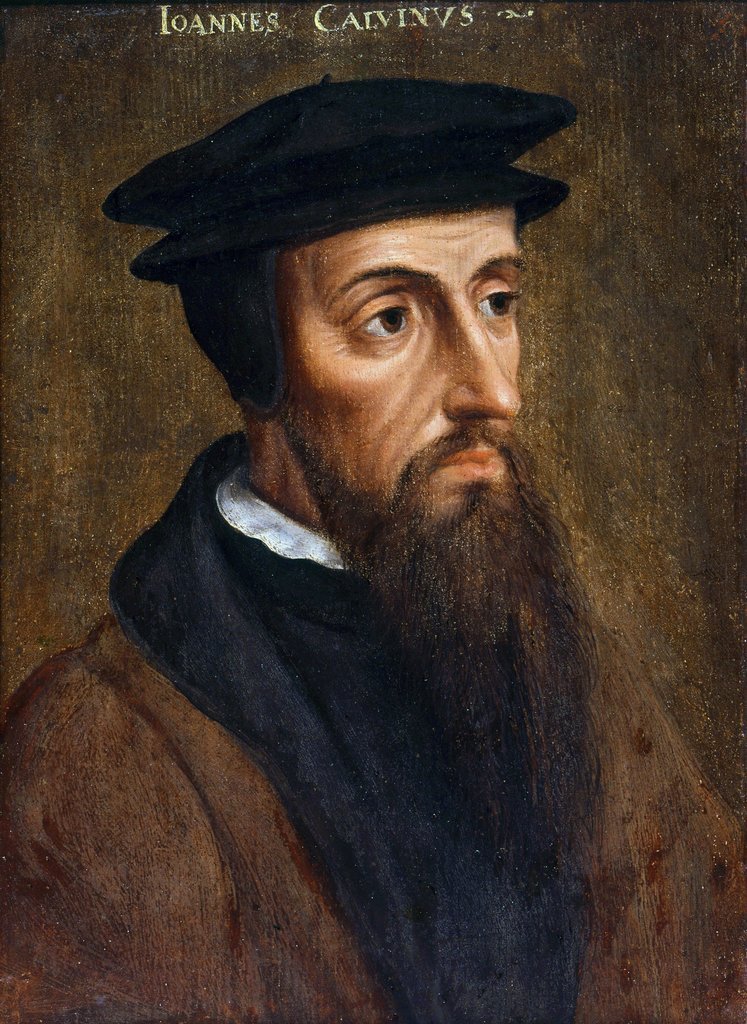
John Calvin | Timeline

John Calvin (French: Jean Calvin; born Jehan Cauvin; 10 July 1509 – 27 May 1564) was a French theologian, pastor and reformer in Geneva during the Protestant Reformation. He was a principal figure in the development of the system of Christian theology later called Calvinism, aspects of which include the doctrines of predestination and of the absolute sovereignty of God in salvation of the human soul from death and eternal damnation, in which doctrines Calvin was influenced by and elaborated upon the Augustinian and other Christian traditions. Various Congregational, Reformed and Presbyterian churches, which look to Calvin as the chief expositor of their beliefs, have spread throughout the world. (Intro from Wikipedia)

July 10, 1509 - Noyon, SW Saint-Quentin, Picardy, France - Jehan Cauvin is born
January(?) 1(?), 1529 - Bourges - Enters the University of Bourges =(START)
January 1, 1532 - Bourges - Calvin receives his licentiate in law and publishes his first book, a commentary on Seneca's "De Clementia"
October 1(?), 1533 - Paris - Calvin moves to Paris and breaks from the Roman Catholic Church
November 1, 1533 - Paris - Calvin addresses the Collège Royal on the need for reform and renewal in the Roman Catholic Church
November 2, 1533 - Paris - Calvin, considered offensive, leaves Paris to hide
November(?) 17(?), 1533 - Angoulême (NE Bordeaux) - Calvin takes refuge in Angoulême
March(?) 1(?), 1534 - Noyon, SW St-Quentin - Calvin switches his place of refuge
August(?) 1(?), 1534 - Orléans - Calvin switches his place of refuge for the second time
October 17, 1534 - Orléans - Calvin is forced to flee France during the "Affair des Placards", an incident where anti-catholic posters appear in Paris and other cities
January(?) 1(?), 1535 - Basel, Switzerland - In Basel, Switzerland, Calvin joins Nicolas Cop, a swiss reformist and rector of the University of Paris in 1533
March 1(?), 1536 - Basel - Publishes the first edition of "Institutio Christianae Religionis"
March(?) 15(?), 1536 - Ferrara, Italy - Serves for some time as secretary for Princess Renée of France
June 1(?), 1536 - Paris - In Paris with his brother. Upon learning of the Edict of Coucy, Calvin decides to leave France
August(?) 1, 1536 - Geneva, Switzerland - Calvin departs for Strasbourg, but due to military maneuvers, he turns to the south
January(?) 1(?), 1537 - Geneva - Calvin, a man of law, begins to serve as "pastor"
January 16, 1537 - Geneva - Calvin and another french reformer, Guillaume Farel present a reorganization of the Church to the city council, which is accepted
November 26, 1537 - Geneva - Calvin and Farel debate again with the Council over the reorganization of the Church. Being french, the two ministers begin to be questioned about their loyalty, as France was seeking an alliance with Geneva
February 3, 1538 - Geneva - Elections for the Council: A coalition of Liberals, "Patriotes" and secret catholics captures the majority
April 23, 1538 - Geneva - Calvin and Farel are deposed by the Council and ordered to leave Geneva in 3 days
September 1(?), 1538 - Strassburg (Strasbourg, France) - Calvin accepts to lead a Church of french refugees in Strassburg by the city's leading reformers
March 1(?), 1540 - Strassburg - His "Commentary on Romans" is published
August 1, 1540 - Strassburg - Calvin marries the widow Idelette Stordeur de Bure
September 21, 1540 - Worms - The Council of Basel contacts Calvin during a conference to settle religious disputes in Worms
June(?) 25(?), 1541 - Strassburg (Strasbourg, France) - Strassburg "lends" Calvin to Geneva for 6 months
September 13, 1541 - Geneva, Switzerland - Calvin arrives in Geneva, with an escort and a wagon for his family
July 28, 1542 - Geneva - Idelette gives birth to a son
March 29, 1549 - Geneva - His wife Idelette dies
February 6, 1564 - Geneva - John Calvin's last sermon
May 27, 1564 - Geneva - John Calvin dies, aged 54 =(END)

Tuesday, 9 January 2018

William Bradford | Timeline

William Bradford (c. 19 March 1590 – May 9, 1657) was an English Separatist originally from the West Riding of Yorkshire. He moved to Leiden in Holland in order to escape persecution from King James I of England, and then emigrated to the Plymouth Colony on the Mayflower in 1620. He was a signatory to the Mayflower Compact and went on to serve as Governor of the Plymouth Colony intermittently for about 30 years between 1621 and 1657. His journal Of Plymouth Plantation covered the years from 1620 to 1657 in Plymouth. (Intro from Wikipedia)

March 19, 1590 - Austerfield, Yorkshire - William Bradford is born (baptism date)
January(?) 1(?), 1591 - Austerfield(?) - William's father dies
January(?) 1(?), 1594 - Austerfield(?) - Alice Bradford, his mother, remarries, and William is sent to live with his grandfather
January(?) 1(?), 1596 - Austerfield(?) - William's grandfather dies and he returns to live with his mother and stepfather
January(?) 1(?), 1597 - Austerfield(?) - Alice Bradford, his mother, dies, leaving the 7-year old William an orphan. He is sent to live with two uncles
April(?) 1(?)., 1602 - Babworth | Scrooby Manor - William is invited to attend a sermon by Rev. Richard Clyfton, 10 miles away from Austerfield. He starts attending the sermons and meeting with William Brewster, a bailiff and postmaster, which tells him stories about church reform and lends him books
January(?) 1(?), 1607 - Scrooby Manor (4 miles from Austerfield) - Secret meetings begin at Scrooby Manor with 50 reformists being led by Richard Clyfton. They decide to sever all ties with the Church of England
June(?) 1(?), 1607 - London(?) - The congregation departs to Holland, but is betrayed by the ship's captain who turns them to the authorities. Bradford is arrested for some time
August 1(?), 1608 - Amsterdam - 18-year old Bradford arrives in Amsterdam =(START)
May 1(?), 1609 - Leiden - After nine months, the group chooses to relocate to the smaller city of Leiden
January(?) 1(?), 1611 - Leiden - Bradford is able to claim his family inheritance. He buys his own house and sets up a workshop as a fustian weaver, and earns a reputable standing
January(?) 1(?), 1613 - Leiden - Civil marriage with Dorothy May, the daughter of a well-off english couple living in Amsterdam
January(?) 1(?), 1617 - Leiden - With their children being influenced by dutch customs and language, the congregation begins planning the establishment of their own colony in the Americas
January(?) 1(?), 1619 - Leiden - Bradford sells his house in Leiden
March 1(?), 1620 - Aldgate, London - Bradford is taxed for personal property at the Duke's Place, Aldgate, an area of London known to be residence of numerous dutch merchants, as well as many religious dissenters
July 15(?), 1620 - Rotherhithe, London - 65 passenger embark the "Mayflower" on the Thames River
July 22, 1620 - Southampton Water - At the south coast of England, the "Mayflower" waits for a rendezvous with the "Speedwell", which was coming from Holland with another 50 english puritan separatists
August 5, 1620 - Southampton Water - The "Mayflower" and the "Speedwell" set sail to America
August 10(?), 1620 - Dartmouth - "Speedwell" starts leaking and the two ships have to stop at Dartmouth for repairs
September 5(?), 1620 - Plymouth - After both ships resume their voyage, the "Speedwell" springs another leak (possible sabotage). The ship has to be abandoned and later sold. Some passengers join the "Mayflower" and others return to Holland
September 16, 1620 - Plymouth - Bradford departs from Plymouth aboard the "Mayflower", with 130 people aboard (102 passengers)
November 19, 1620 - Off Cape Cod - After two months at sea, the colonists spot Cape Cod Hook
November 21, 1620 - Provincetown Harbor (Cape Cod Hook) - They plan to sail south to the Colony of Virginia, but after two days of strong winds, they are forced to return to the harbor at Cape Cod Hook, where they anchor. The settlers write and sign the "Mayflower Compact"
December 6, 1620 - Plymouth Bay - Bradford departs from the "Mayflower" and locates present-day Plymouth Bay
December 17, 1620 - (While in Plymouth Bay) - Dorothy May falls from the deck of the "Mayflower" (possibly slipped) and drowns
December 20, 1620 - Plymouth Bay - The "Mayflower" arrives in Plymouth Bay
December 25, 1620 - Plymouth Bay - The colony's first house begins building on Christmas
January 11, 1621 - Plymouth, Massachusetts - An epidemic starts, and Bradford falls sick while helping to build houses. Although it was feared that he would not last the night, he recovers
March 16, 1621 - Plymouth - First meeting with the Native Americans. Samoset, an abenaki, walks into the settlement as a representative of Massasoit and greets the settlers in english (which he had learned from english fishermen)
March 21, 1621 - Plymouth - After spending Winter aboard the "Mayflower", the 53 survivors disembark and build huts ashore
March 22, 1621 - Plymouth - Massasoit, the leader of the Wampanoag tribe, visits the settlement and signs a treaty with John Carver, Governor of Plymouth
April 5, 1621 - Plymouth - Captain Christopher Jones departs to England on the "Mayflower" as soon as his crew recovers from the same diseases that were felling the pilgrims
April 10(?), 1621 - Plymouth - Governor John Carver dies a few days after collapsing in the fields on a hot day. The Settlers choose Bradford as the new Governor
September 29, 1621 - Plymouth - First Thanksgiving, likely around Michaelmas (Sept.29) (according to James Baker, the Plimoth Plantation vice-president of research). The 53 surviving pilgrims celebrate for three days, accompanied by 90 natives
June 30, 1623 - Plymouth - First Civil Thanksgiving (According with William DeLoss). For the first time, the order to recognize the event comes from Civil Authority (William Bradford) and not the church
August 14, 1623 - Plymouth - Governor Bradford marries Alice Southworth
Excerpt from "Of Plymouth Plantation"
January(?) 1(?), 1624 - Plymouth - The leadership structure of Plymouth Colony is changed. Instead of an assistant governor, Bradford begins being advised by a council of five assistants or magistrates
June 17, 1624 - Plymouth - Bradford and Alice's first son, William, is born
May 22, 1627 - Plymouth - Mercy, the first daughter, is born
January(?) 1(?), 1630 - Plymouth - Second son, Joseph, is born. Bradford begins writing an account of the life of the pilgrims called "Of Plymouth Plantation"
January(?) 1(?), 1651 - Plymouth - Last entry in "Of Plymouth Plantation"
May 9, 1657 - Plymouth, Massachusetts - William Bradford dies, aged 67 =(END)

Bibliography

Doherty, Kieran - "William Bradford: Rock of Plymouth"

Schmidt, Gary D. - "William Bradford: Plymouth's Faithful Pilgrim"

Whitehurst, Susan - "William Bradford and Plymouth: A Colony Grows"

Thursday, 20 July 2017

Martin Luther | Timeline

Martin Luther (10 November 1483 – 18 February 1546), was a German professor of theology, composer, priest, monk and a seminal figure in the Protestant Reformation. (Intro from Wikipedia)

November 10, 1483 - Eisleben - Martin Luther is born
January(?) 1(?), 1484 - Mansfeld - Luther family moves to Mansfeld, where Martin's father was a leaseholder of copper mines and smelters and served as one of four citizen representatives on the local council
January(?) 1(?), 1497 - Magdeburg - Hans Luther sends his son to the Latin School in Magdeburg
January(?) 1(?), 1498 - Eisenach - Hans Luther sends his son to study in Eisenach
January(?) 1(?), 1501 - Erfurt - At the age of 19, Martin Luther enters the University of Erfurt (which he later described as a beerhouse and whorehouse)
January(?) 1(?), 1505 - Erfurt - Martin Luther receives his master's degree
July 2, 1505 - Erfurt - Returning to university on horseback after a trip home, during a thunderstorm, a lightning bolt strikes near him. He was terrified of death and divine judgment, and cried out, "Help! Saint Anna, I will become a monk!". He came to view his cry for help as a vow he could never break =(START)
July 17, 1505 - Erfurt - Luther sells his books, leaves law school and enters St.Augustine's Monastery
April 3, 1507 - Erfurt - Luther is ordained priest by Jerome Scultetus, Bishop of Brandenburg, in Erfurt Cathedral
January(?) 1(?), 1508 - Erfurt - Von Staupitz, first dean of the newly founded University of Wittenberg, sends for Luther, to teach theology
March 9, 1508 - Erfurt - Luther receives a bachelor's degree in Biblical studies
January(?) 1(?), 1509 - Luther receives a bachelor's degree in the "sentences" by Peter Lombard (XII century)
October 19, 1512 - Wittenberg - Luther is awarded his Doctor of Theology
October 21, 1512 - Wittenberg - Luther is received into the senate of the theological faculty of the University of Wittenberg, having succeeded Staupitz as chair of theology
October 31, 1517 - Wittenberg - Luther writes to his bishop, Albert of Mainz, protesting the sale of indulgences
October 5, 1518 - Nuremberg - Luther, accompanied by two of Elector Frederick's advisors, come through Nuremberg on their way to the Diet at Augsburg. He meets with Albrecht Dürer's neighbor, Lazarus Spengler, the secretary to the Nuremberg Council
October 12, 1518 - Augsburg - Over a three-day period, Luther defends himself under questioning by papal legate Cardinal Cajetan
January 1(?), 1519 - Altenburg - The Papal Nuncio Karl von Miltitz adopts a more conciliatory approach. Luther makes certain concessions to the Saxon, who was a relative of the Elector, and promised to remain silent if his opponents did.
July 1(?), 1519 - Leipzig - Luther is invited to speak in a public debate. Johann Eck tries to expose his doctrine
June 15, 1520 - Wittenberg(?) - The Pope warns Luther with the papal bull (edict) "Exsurge Domine" that he risks excommunication unless he recants 41 sentences drawn from his writings, including the Ninety-five Theses, within 60 days
October 1(?), 1520 - Wittenberg(?) - Luther sends the Pope a copy of "On the Freedom of a Christian"
November 12, 1520 - (While at Wittenberg)(?) - News of a papal bull ordering the burning of Luther's books arrive in Cologne
December 10, 1520 - Wittenberg - Luther publicly burns the papal bull (edict) and decretals
January 3, 1521 - Wittenberg - Luther is excommunicated by Pope Leo X, in the bull "Decet Romanum Pontificem".
April 18, 1521 - Worms - Luther appears as ordered before the Diet of Worms
May 1, 1521 - Wartburg Castle, Eisenach - Luther is taken to the Castle of Wartberg by Frederick III to save his life
August 1, 1521 - Wartburg Castle, Eisenach - Letter to Philip Melanchthon (German lutheran reformer)
December 1(?), 1521 - Wittenberg - Luther visits Wittenberg, in disguise
March 1, 1522 - Wartburg Castle, Eisenach - End of Luther's stay at Wartburg Castle, after translating the "New Testament"
March 6, 1522 - Wittenberg - Luther secretly returns to Wittenberg
March 9, 1522 - Wittenberg - Luther restarts preaching his sermons - Eight sermons in eight days, which became known as the "Invocavit sermons"
April 1(?), 1523 - Nimbschen Convent, Grimma, SE Leipzig - Luther helps twelve nuns escape from a Cistercian convent at Nimbschen, including Katharina von Bora, his future wife, when he arranges for them to be smuggled out in herring barrels
June 13, 1525 - Wittenberg - Luther marries Katharina von Bora
January 1, 1526 - Wittenberg - Luther starts reorganizing the practises of the Church in depth
October 1, 1529 - Marburg - Beginning of the Marburg Colloquy, convoked by Philipp I, Landgrave of Hessen
October 4, 1529 - Marburg - End of the Marburg Colloquy
January(?) 1(?), 1536 - Wittenberg - Luther begins suffering from kidney and bladder stones, and arthritis
December 1(?), 1544 - Wittenberg - Luther begins feeling the effects of angina
February 15, 1546 - Eisleben, W. of Halle - Luther's last sermon
February 18, 1546 - Eisleben - Martin Luther dies, aged 62 =(END)