Friday, 13 August 2021

SS Normandie (1935) | Timeline

The
SS Normandie was a French ocean liner built in Saint-Nazaire, France, for the French Line Compagnie Générale Transatlantique (CGT). She entered service in 1935 as the largest and fastest passenger ship afloat, crossing the Atlantic in a record 4.14 days, and remains the most powerful steam turbo-electric-propelled passenger ship ever built.
Normandie's novel design and lavish interiors led many to consider her the greatest of ocean liners. Despite this, she was not a commercial success and relied partly on government subsidy to operate. During service as the flagship of the CGT, she made 139 westbound transatlantic crossings from her home port of Le Havre to New York City. Normandie held the Blue Riband for the fastest transatlantic crossing at several points during her service career, during which the RMS Queen Mary was her main rival.
During the Second World War, Normandie was seized by U.S. authorities at New York and renamed USS Lafayette. In 1942, the liner caught fire while being converted to a troopship, capsized onto her port side and came to rest on the mud of the Hudson River at Pier 88, the site of the current New York Passenger Ship Terminal. Although salvaged at great expense, restoration was deemed too costly and she was scrapped in October 1946. (Intro from Wikipedia)

October 1(?), 1929 - Saint-Nazaire, France - Work begins on a new drydock at the Penhoët shipyard, projected to build the ocean liner "SS Normandie"
January 26, 1931 - Saint-Nazaire - Laid down - Chantiers de Penhoët, Saint-Nazaire, France
October 29, 1932 - Saint-Nazaire - "SS Normandie" is launched in front of 200,000 spectators and French President Albert Lebrun
March 27, 1935 - Saint-Nazaire - Moved into her dry dock for installation of her propeller set and rudder, examination of her underwater parts and a final paint job before her maiden voyage
May 5, 1935 - Glénan Islands - Sails for sea trials near the Glénan Islands
May 11, 1935 - Le Havre - SS Normandie arrives from sea trials to her new homeport
May 29, 1935 - Le Havre | Southampton, England - Voyage#1: "SS Normandie" sets sail to New York on her maiden voyage, with 50,000 people watching her off. First stop at Southampton on the same day =(START)
May 30, 1935 - Off Scilly Islands - SS Normandie passes off the Scilly Islands
June 3, 1935 - Pier 88, New York City - "SS Normandie" reaches New York after 4 days, 3 hours and 2 minutes, averaging 29-knots, with 100,000 spectators lined at the harbor
June 7, 1935 - Pier 88 - Sets sail to Le Havre
June 12, 1935 - Plymouth, England | Le Havre - Stopover at Plymouth (With Walt Disney and Richard Dix), crossing the Atlantic even faster than the that of the outward voyage. Arrives at Le Havre on the same day
June 15, 1935 - Le Havre - Voyage#2: SS Normandie sets sail to New York, via Southampton
June 20, 1935 - Pier 88, New York City - Arrives in New York
SS Normandie arrives in New York
June 22, 1935 - Pier 88 - Sets sail to Le Havre
June 27, 1935 - Le Havre - Arrives in Le Havre
July 10, 1935 - Le Havre - Voyage#3: Sets sail to New York
July 15, 1935 - Pier 88, New York City - Arrives in New York
July 19, 1935 - Le Havre - Voyage#4: Sets sail for a cruise to southern England
July 20, 1935 - The Solent (between Portsmouth and the Isle of Wight) - SS Normandie anchors in the Solent
July 22, 1935 - Le Havre - Returns from the cruise
August 25(?), 1935 - Le Havre - An electromagnetic obstacle detector (ancestor of radar) is installed. SS Normandie is the first liner to have it
August 28, 1935 - Le Havre - Sets sail to New York
October 2, 1935 - Le Havre - Voyage#8: Sets sail to New York via Southampton
October 7, 1935 - Pier 88, New York City - Arrives in New York
October 9, 1935 - Pier 88 - Sets sail back to France
October 14, 1935 - Le Havre - Arrives in Le Havre
October 16(?), 1935 - Le Havre - Voyage#9: SS Normandie sets sail to New York via Southampton
October 21(?), 1935 - Pier 88, New York City - Arrives in New York
October 23(?), 1935 - Pier 88 - Sets sail back to France
October 28, 1935 - Le Havre - Arrives in Le Havre. End of the season after eight crossings between Le Havre and New York
April 1(?), 1936 - Le Havre - New propellers arrive and begin being installed. Tonnage increases from 79,280 to 83,423
April 28, 1936 - Island of Ouessant/Ushant - Sea trials until April 30th
May 5, 1936 - Le Havre - On the eve of her 10th trip, a during a dive to check the condition of the propellers, a diver notices the disappearance of the propeller on the central port side. There were only 3 propellers left ... Canceling the next day's voyage would be disastrous in terms of communication as the ship is nearly full. SS Normandy enters dry dock. Due to the lack of a spare 4-blade propeller before departure for New York, the ship was fitted with two 3-blade propellers, old model, with central shafts and two 4-blade propellers with side shafts. The technical teams work tirelessly so that the next day the ship can go back to sea.
May 6, 1936 - Le Havre - SS Normandy, according to schedule, resumes transatlantic service to New York. After the stopover in Southampton, at full speed the vibrations reappear almost as intense as before. The proof is thus made that they come from the propellers with 3 blades, but the passengers are furious
May 10(?), 1936 - Pier 88, New York City - Arrives in New York
May 12(?), 1936 - Pier 88 - Sets sail back to Le Havre
May 16(?), 1936 - Le Havre - Arrives in Le Havre
May 20, 1936 - Le Havre - Sets sail to New York with new 4-blade propellers
May 24(?), 1936 - Pier 88, New York City - Arrives in New York
May 26(?), 1936 - Pier 88 - Sets sail back to Le Havre
May 30(?), 1936 - Le Havre - Arrives in Le Havre
June 22, 1936 - Off Ryde Pier, Isle of Wight - Sets sail from Le Havre - Stopover at Southampton - a Blackburn Baffin, S5162 of A Flight, RAF Gosport, flown by Lt Guy Kennedy Horsey on torpedo-dropping practice, buzzes SS Normandie a mile (2 km) off Ryde Pier and collides with a derrick which was transferring a motor car belonging to Arthur Evans, MP, onto a barge alongside the ship. The aircraft crashes onto SS Normandie's bow. The pilot is taken off by tender, but the wreckage of the aircraft remains on board SS Normandie as she had to sail due to the tide. It was carried to Le Havre
June 26(?), 1936 - Pier 88, New York City - Arrives in New York
July 1, 1936 - Pier 88 - Sets sail back to Le Havre
July 6(?), 1936 - Le Havre - Arrives in Le Havre
July 8(?), 1936 - Le Havre - SS Normandie sets sail to New York via Southampton
July 12(?), 1936 - Pier 88, New York City - Arrives in New York
July 15, 1936 - Pier 88 - Sets sail back to Le Havre
July 20(?), 1936 - Le Havre - Arrives in Le Havre
October 14, 1936 - Pier 88 - Sets sail back to Le Havre, via Southampton
October 19, 1936 - Southampton, England | Le Havre - Arrives in Southampton. Sails to Le Havre. Arrives in the afternoon
December 3(?), 1936 - Le Havre - Sets sail to New York
December 7, 1936 - Pier 88, New York City - SS Normandie arrives in New York (with Salvador Dalí aboard)
December 9(?), 1936 - Pier 88 - Sets sail back to Le Havre
December 14(?), 1936 - Le Havre - Arrives in Le Havre
March 11, 1937 - Le Havre - Resumes service after an overhaul, which included new engines and propellers. Sets sail to New York After being held up for 15 hours by a French shipping strike
March 18, 1937 - Le Havre - Voyage#25: Sets sail to New York
March 23, 1937 - Pier 88, New York City - Arrives in New York
March 25(?), 1937 - Pier 88 - Sets sail back to Le Havre
March 30(?), 1937 - Le Havre - Arrives in Le Havre
July 29, 1937 - Le Havre - Sets sail to New York
August 1, 1937 - Pier 88, New York City - Arrives in New York in 3 days and 23 hours. Regains the Blue Riband with an average of 32-knots
August 4, 1937 - Pier 88 - Sets sail back to Le Havre
August 8, 1937 - Le Havre - Arrives in Le Havre - SS Normandie crosses the Atlantic in 3 days, 22 hours and 07 minutes, improving its previous record
August 9, 1937 - Le Havre - Underwater inspection finds erosion and deformation at the ends of the propellers
August 26(?), 1937 - Le Havre -
 Sets sail to New York
August 30(?), 1937 - Pier 88, New York City - Arrives in New York
September 1, 1937 - after leaving New York - After leaving New York, the lateral starboard propeller bends and the speed of rotation is reduced
September 6, 1937 - Le Havre - The center port propeller disappears with the cone of the propeller shaft on which it was fitted. Arrives in Le Havre
September 8, 1937 - Le Havre - Unable to postpone the departure, SS Normandie sets sail to New York with just 3 propellers
November 3, 1937 - Le Havre - Sets sail to New York, via Southampton
November 7(?), 1937 - Pier 88, New York City - Arrives in New York
November 9(?), 1937 - Pier 88 - Sets sail back to Le Havre
November 14(?), 1937 - Le Havre - Arrives in Le Havre
January 1(?), 1938 - Le Havre - Technical pause in antecipation of the Rio de Janeiro cruise
January 29, 1938 - Le Havre - Voyage#43: Sets sail to New York
February 3, 1938 - Pier 88, New York City - Arrives in New York
February 5, 1938 - Pier 88 - Sets sail to Rio de Janeiro
February 8(?), 1938 - Nassau, Bahamas - Stop in Nassau, Bahamas
February 12(?), 1938 - Port of Spain, Trinidad - Stop in Port of Spain, Trinidad
February 16, 1938 - Rio de Janeiro, Brazil - SS Normandie arrives in Rio's Guanabara Bay
February 18, 1938 - Rio de Janeiro - Sets sail to New York
February 24, 1938 - Fort-de-France, Martinique - Stops in Fort-de-France to refuel
February 27, 1938 - Pier 88, New York City - SS Normandie arrives in New York
March 2(?), 1938 - Pier 88 - Sets sail back to Le Havre
March 7(?), 1938 - Le Havre - Arrives in Le Havre
March 23, 1938 - Le Havre - Sets sail to New York, via Southampton
March 28, 1938 - Pier 88, New York City - Arrives in New York
March 31, 1938 - Pier 88 - Sets sail back to Le Havre
April 5, 1938 - Le Havre - Arrives in Le Havre
April 7, 1938 - Le Havre - Enters drydock until April 26th to install a new set of propellers
April 27, 1938 - Le Havre - Sets sail to New York, via Southampton
May 2, 1938 - Pier 88, New York City - Arrives in New York
May 4, 1938 - Pier 88 - Sets sail back to Le Havre
May 9, 1938 - Le Havre - Arrives in Le Havre
May 11, 1938 - Le Havre - Voyage#46: Sets sail to New York, via Southampton
May 16, 1938 - Pier 88, New York City - Arrives in New York
May 18, 1938 - Pier 88 - Sets sail back to Le Havre
May 23, 1938 - Le Havre - Arrives in Le Havre
May 25, 1938 - Le Havre - Sets sail to New York, via Southampton
May 30, 1938 - Pier 88, New York City - Arrives in New York
June 1, 1938 - Pier 88 - Sets sail back to France
June 6, 1938 - Le Havre - Arrives in Le Havre
June 8, 1938 - Le Havre - Sets sail to New York, via Southampton
June 13, 1938 - Pier 88, New York City - Arrives in New York
June 15, 1938 - Pier 88 - Sets sail back to Le Havre
June 20, 1938 - Le Havre - Arrives in Le Havre
June 22, 1938 - Le Havre - Departs for New York, via Southampton
June 27, 1938 - Pier 88, New York City - Arrives in New York
June 29, 1938 - Pier 88 - Sets sail back to Le Havre
July 4, 1938 - Le Havre - Arrives in Le Havre
July 6, 1938 - Le Havre - Sets sail to New York
July 11, 1938  - Pier 88, New York City - Arrives in New York
July 13, 1938 - Pier 88 - Sets sail back to Le Havre
July 18, 1938 - Le Havre - Arrives in Le Havre, reaching her 100th Atlantic crossing
July 27, 1938 - Le Havre - Sets sail to New York, via Southampton
August 1, 1938 - Pier 88, New York City - Arrives in New York
August 3, 1938 - Pier 88 - Sets sail back to Le Havre
August 8, 1938 - Le Havre - Arrives in Le Havre
August 10, 1938 - Le Havre - Sets sail to New York, via Southampton
August 15, 1938 - Pier 88, New York City - Arrives in New York
August 17, 1938 - Pier 88 - Sets sail back to Le Havre
August 22, 1938 - Le Havre - Arrives in Le Havre
August 24, 1938 - Le Havre - Sets sail to New York, via Southampton
August 29, 1938 - Pier 88, New York City - Arrives in New York
August 31, 1938 - Pier 88 - Sets sail back to Le Havre
September 5, 1938 - Le Havre - Arrives in Le Havre
September 7, 1938 - Le Havre - Sets sail to New York, via Southampton
September 12, 1938 - Pier 88, New York City - Arrives in New York
September 14, 1938 - Pier 88 - Sets sail back to Le Havre
September 19, 1938 - Le Havre - Arrives in Le Havre
September 21, 1938 - Le Havre - Sets sail to New York, via Southampton
September 26, 1938 - Pier 88, New York City - Arrives in New York
September 28, 1938 - Pier 88 - Sets sail back to Le Havre
October 3, 1938 - Le Havre - Arrives in Le Havre
October 5, 1938 - Le Havre - Sets sail to New York, via Southampton
October 10, 1938 - Pier 88, New York City - Arrives in New York
October 12, 1938 - Pier 88 - Sets sail back to Le Havre
October 17, 1938 - Le Havre - Arrives in Le Havre
November 5, 1938 - Le Havre - Sets sail to New York, via Southampton
November 10, 1938 - Pier 88, New York City - Arrives in New York
November 12, 1938 - Pier 88 - Sets sail back to Le Havre
November 17, 1938 - Le Havre - Arrives in Le Havre
November 19, 1938 - Le Havre - Sets sail to New York, via Southampton
November 24, 1938 - Pier 88, New York City - Arrives in New York
November 26, 1938 - Pier 88 - Sets sail back to Le Havre
December 1, 1938 - Le Havre - Arrives in Le Havre
December 3, 1938 - Le Havre - Departure to New York cancelled due to a strike by sailors
December 8, 1938 - Pier 88, New York City - Arrives in New York
December 10, 1938 - Pier 88 - Sets sail back to Le Havre
December 15, 1938 - Le Havre - Arrives in Le Havre
December 17, 1938 - Le Havre - Sets sail to New York, via Southampton
December 22, 1938 - Pier 88, New York City - Arrives in New York
December 26, 1938 - Pier 88 - Sets sail back to Le Havre
December 31, 1938 - Le Havre - Arrives in Le Havre
January 29(?), 1939 - Le Havre - Sets sail to New York, via Southampton
February 2(?), 1939 - Pier 88, New York City - Arrives in New York
February 4, 1939 - Pier 88 - Sets sail to South America
February 6, 1939 - Nassau, Bahamas - One day is spent in Nassau
February 9, 1939 - Port of Spain, Trinidad - Arrives in Port of Spain. Continues voyage on February 10th
February 12, 1939 - Line of the Equator - Crosses the Line of the Equator
February 15, 1939 - Rio de Janeiro, Brazil - "SS Normandie" docks in Rio, bringing businessman Lee Shubert and Norwegian figure skater and film star, Sonja Henie
February 19, 1939 - Rio de Janeiro - Sets sail to New York
February 24, 1939 - Bridgetown, Barbados - Visit to Bridgetown, Barbados
February 25, 1939 - Fort de France, Martinique - Visit to Fort de France, Martinique
February 28, 1939 - Pier 88, New York City - SS Normandie returns to New York
March 2(?), 1939 - Pier 88 - Sets sail back to Le Havre
March 7(?), 1939 - Le Havre - Arrives in Le Havre
March 25, 1939 - Le Havre - Sets sail to New York (with Frida Kahlo aboard)
March 30, 1939 - Pier 88, New York City - Arrives in New York
April 10, 1939 - Pier 88 - Sets sail back to Le Havre
April 16, 1939 - Le Havre - Arrives in Le Havre. Enters drydock for its annual maintenance
April 18, 1939 - Le Havre - While at her berth in Le Havre, SS Paris catches fire and capsizes, temporarily preventing SS Normandie from exiting her dry dock
April 26, 1939 - Le Havre - Voyage#62: The mast of SS Paris is cut so that SS Normandie can join its quay for departure. Sets sail to New York, via Southampton and Plymouth
May 1, 1939 - Pier 88, New York City - Arrives in New York
May 3, 1939 - Pier 88 - Sets sail back to Le Havre
May 8, 1939 - Le Havre - Arrives in Le Havre
August 9, 1939 - Le Havre - Voyage#69: Sets sail to New York
August 14, 1939 - Pier 88, New York City - Arrives in New York
August 16, 1939 - Pier 88 - Sets sail back to Le Havre
August 21, 1939 - Le Havre - Arrives in Le Havre
August 23, 1939 - Le Havre - Voyage#70 (139th crossing): SS Normandie departs for New York with 1,417 passengers (mostly americans rushing back to the US in the face of an imminent opening of hostilities in Europe)
August 24, 1939 - Off Scilly Islands(?) - SS Normandie overtakes the ocean liner "Bremen" of the Norddeutscher Lloyd
August 28, 1939 - Pier 88, New York City - Arrives in New York
August 30, 1939 - Pier 88 - With 350 passengers aboard, Captain Payen de la Garanderie receives orders to postpone the departure
September 1, 1939 - Pier 88 - WWII breaks out in Europe
September 3, 1939 - Pier 88 - American authorities intern the ship
September 4, 1939 - Pier 88 - SS Normandie and RMS Queen Mary are together for the first time, side by side in New York
September 6, 1939 - Pier 88 - It is decided to keep the ship in New York for safety reasons. 1,327 crewmember are aboard
September 8, 1939 - Pier 88 - A first contingent of 650 crewmembers is repatriated by the liner "De Grasse", via Halifax
September 11, 1939 - Pier 88 - A second contingent of 165 crewmembers is repatriated by the liner "Champlain"
October 21, 1939 - Pier 88 - A third contingent of just under 400 crewmembers is repatriated. 113 crewmembers stay to keep the ship in working order and in good maintenance
May 15, 1941 - Pier 88 - The Treasury Department orders 150 coast guardsmen to board SS Normandie to guard against sabotage
May 16, 1941 - Pier 88 - Additional 8 officers and 105 men occupy the liner
December 8, 1941 - Pier 88 - Captain Huédé is told that SS Normandie will welcome an additional contingent of 940 coast guards at the expense of the Compagnie Générale Transatlantique
December 12, 1941 - Pier 88 - The US Maritime Commission orders the seizure of SS Normandie with a promise of compensation. The tri-color flag is lowered and all but 11 of the french crew removed =(changeflag)
December 23, 1941 - Pier 88 - A contract is awarded to "Robins Dry Dock and Repair Co." to convert the ship into a troopship, with completion date set for January 31st, 1942
December 24, 1941 - Pier 88 - 2,400 workers, two-thirds belonging to the main contractor, arrive to begin the convertion of the ship into a troop carrier capable of transporting 15,000 troops
January 1, 1942 - Pier 88 - SS Normandie is renamed USS Lafayette. Gray camouflage paint begins being applied to the hull
February 6, 1942 - Pier 88 - A request is submitted to the Assistant Chief of Naval Operations for a 2-week extension of the first sailing date
February 7, 1942 - Pier 88 - Orders arrive to abandon the superstructure reduction and sail
February 9, 1942 - Pier 88 - USS Lafayette is heavily damaged in a catastrophic fire, started when a welding torch ignite stacks of flammable life vests. This ship lists 10 degrees to port
February 10, 1942 - Pier 88 - Admiral Andrews orders USS Lafayette to be abandoned and at 2:45am - 12 hours after the fire began - the ship rolls over gently forming a 79-degree angle
February 21, 1942 - Pier 88 - Twelve days after the disaster, salvage operations to bring USS Lafayette to an even keel begin
March 18, 1942 - Pier 88 - Fire breaks up again in the wreckage of the ship
August 3, 1943 - Pier 88 - The pumps are tested
August 4, 1943 - Pier 88 - The water level in the hull is lowered by nine-feet and signs were apparent that the ship was trying to right herself; Water-jets were directed to the bottom of the hull in order to reduce suction (between the hull and the mud/slit) as the ship began to right itself
August 7, 1943 - Pier 88 - Pumping continues and the ship rotates to 67 degrees
August 8, 1943 - Pier 88 - More than 11,000 tons of water are removed and the ship rotates to 45 degrees
September 15, 1943 - Pier 88 - SS Normandie/USS Lafayette lays at her Pier 88 berth nearly at an even keel
October 27, 1943 - Pier 88 - The Supervisor of Salvage turns SS Normandie/USS Lafayette over to the commandant of the Third Naval District
November 3, 1943 - East of Bayonne, New Jersey - The ship is towed from Pier 88 to a dry dock in the Navy Yard Annex, where it is found that the hull damage was greater than expected, and her engines were ruined. A refit was estimated to cost $50 million and take 18 months. It was deemed unacceptable by the Navy
January 11, 1944 - Brooklyn, New York - The hull is taken to Brooklyn to be moored there at a pier rented by Todd Shipyards
September 20, 1945 - Brooklyn - By executive order, President Truman authorizes the disposal of SS Normandie and the ship is officially put up for sale by the US government
September 7, 1946 - Brooklyn - Scrap sale - France declares that it not take possession of the wreck - A New York salvage firm "Lipsett Inc." wins the bid at $161,680
November 28, 1946 - Port Newark, New Jersey - The hull is towed by 12 tugs to Port Newark, New Jersey
January 7, 1947 - Port Newark, New Jersey - USS Lafayette (SS Normandie) begins being cut-up for scrap =(END)

Sunday, 8 August 2021

Ville de Paris (1764) | Timeline

The Ville-de-Paris was a French warship, in service from 1764 to 1782. It was a first-rate ship of the line, carrying 90 to 104 cannons on three decks. It was released in the period of patriotic explosion that followed the defeats of the Seven Years War. It was also one of the rare three decks built under the reign of Louis XV, a time when, for financial reasons, French arsenals mainly launched two decks of 64 to 80 guns. She was actively involved in the American War of Independence. Captured by the British at the Battle of Saintes, she sank during the 1782 Central Atlantic Hurricane with the loss of all 500 hands but one.

May 29, 1757 - Rochefort, France - Ordered to Shipwright François-Guillaume Clairain des Lauriers as "Impétueux"
October(?) 1(?), 1757 - Rochefort - Keel laid down at the Rochefort Dockyard
January 1(?), 1762 - Rochefort - Renamed "Ville de Paris" in honor of the city that provided the funds for the building of the ship
January 19, 1764 - Rochefort - 90-gun Second-rate "Ville de Paris" is launched
May 1(?), 1764 - Rochefort - "Ville de Paris" is commissioned =(START)
July 8, 1778 - Brest - Vice-Admiral Comte d'Orvilliers sails from Brest with 32 ships-of-the-line, 7 frigates and 5 corvettes
July 23, 1778 - W. of Ouessant/Ushant - Keppel sights the french fleet west of Ushant and orders his ships-of-the-line to pursuit
July 27, 1778 - Off Ouessant/Ushant, Bay of Biscay - Battle of Ushant - Indecisive
January(?) 1(?), 1779 - Brest - Refitted as a 104-gun First rate
March 22, 1781 - Brest - Comte de Grasse departs for the Caribbean with 22 ships
April 28, 1781 - Martinique - The fleet arrives in Martinique
April 29, 1781 - Off Fort-de-France, Martinique - Battle of Fort-Royal - French tactical victory
May 24, 1781 - Tobago - De Grasse's fleet lands troops on the british-held island of Tobago (under command of General Marquis de Bouillé)
June(?) 15(?), 1781 - Martinique - De Grasse returns to Martinique
July 15(?), 1781 - Cap Français, Saint-Bomingue (Cap Haitien, N. of Haiti) - De Grasse arrives at Cap Français, via Martinique. He is met by a dispatch from the north american fleet (whose news prompt him to sail north to support the americans on the Chesapeake Bay)
August 3, 1781 - Cap Français - De Grasse sets sail from Saint-Domingue with his fleet and 3,000 embarked soldiers
September 1, 1781 - Chesapeake Bay, Virginia/Maryland - De Grasse arrives in Chesapeake Bay four days after Admiral Hood
September 5, 1781 - Off the Virginia Capes, Atlantic Ocean - Battle of Chesapeake - French Victory
September 11, 1781 - Chesapeake Bay - De Grasse returns to Chesapeake and finds Count de Barras squadron there
September 28, 1781 - Chesapeake Bay - The siege of Yorktown begins - the french fleet bombards the british positions
October 19, 1781 - Chesapeake Bay - Surrender of Yorktown
January 11, 1782 - Saint Kitts, Caribbean Sea - De Grasse reaches Saint Kitts (sailing from Martinique)
January 19, 1782 - Off Basseterre, Saint Kitts, Caribbean Sea - French forces land and besiege Basseterre
Battle of the Saintes
January 22, 1782 - While off Basseterre -
 Admiral Hood's 22 warships are sighted near Nevis intending to reinforce Saint Kitts
January 26, 1782 - Off Basseterre, Saint Kitts, Caribbean Sea - Battle of Saint Kitts - De Grasse attacks Hood's anchored fleet but is repulsed
February 13, 1782 - Nevis - De Grasse sails to Nevis to meet an arriving convoy of french victuallers
April 9, 1782 - Off Dominica, Caribbean Sea - The Battle of the Saintes begins
April 12, 1782 - Off Dominica - The Battle of the Saints ends - British victory - "Ville de Paris" is captured by Admiral Rodney. Only 3 officers and 100 men of the 950-man crew had not been killed or wounded =(changeflag)
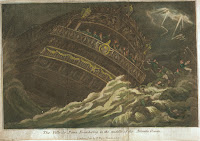
Ville de Paris sinks off Newfoundland
April 29, 1782 - Port Royal, Jamaica - HMS Ville de Paris is towed by HMS Namur to Port Royal for repairs, arriving with Rodney's fleet and its prisoner, de Grasse
July 25, 1782 - Port Royal - Sails for England in a convoy of 94 ships
September 19, 1782 - Off Newfoundland - HMS Ville de Paris and other ships are hit by the 1782 Central Atlantic hurricane while heading to England. The ship sinks off Newfoundland with the loss of all 500 hands but one =(END)

Boudeuse (1766) | Timeline

Boudeuse was a 26-gun, 12-pounder-armed sailing frigate named Boudeuse on 6 June 1765. She is most famous for being the exploration ship of Louis Antoine de Bougainville between 1766 and 1769. She also served in the American and French Revolutionary Wars, during which she captured two enemy vessels. She was broken up for firewood at Malta in early 1800. (Intro from Wikipedia)

May 1(?), 1765 - Nantes, France - Keel laid down at the Indret Shipyard - Nantes
March 25, 1766 - Nantes - Acquired by the Marine Nationale
October 1(?), 1766 - Nantes - Commissioned =(START)
November 5, 1766 - Saint-Brevin-les-Pins - "Boudeuse" is moved from Paimbœuf to Saint-Brevin-les-Pins to finish arming it
November 15, 1766 - Nantes, France - Bougainville sails from Nantes two ships: The 1,030-ton frigate "Boudeuse" (captain : Nicolas Pierre Duclos-Guyot) and the 480-ton fluyt "Étoile" (commanded by François Chenard de la Giraudais), with a crew of 214 aboard Boudeuse and 116 aboard Étoile
November 21, 1766 - Brest - Decides to stop in Brest after the mainmast is broken in a strong gale
December 4, 1766 - Brest - Departs from Brest after repairing the mast
December 17, 1766 - Savage Islands (between Madeira and Canary Islands) - Sailing past Savage Islands
December 18, 1766 - La Palma, Canary Islands - Sailing past La Palma island, Canary Islands
December 19, 1766 - El Hierro, Canary Islands - Sailing past El Hierro island, Canary Islands
January 8, 1767 - Line of the Equator - Bougainville crosses the line of the Equator
January 29, 1767 - Between Lobos Island and Playa de los Ingleses, Punta del Este, Uruguay - Bougainville sees land while sailing between Lobos Island and Playa de los Ingleses, Punta del Este
January 31, 1767 - Montevideo, Uruguay - Bougainville anchors in Montevideo Bay. He meets Don Felipe Ruiz Puente, captain of the "La Esmeralda" and "La Liebre" (the Hare) and future governor of Islas Malvinas, to transfer possession and evacuate the French population
February 1, 1767 - While in Buenos Aires, Argentina - Bougainville and Puente go together to Buenos Aires in order to consult there with the Governor General, Don Francisco Bucarely, the necessary measures for the cession of the establishment he was to hand over to the spaniards. Meanwhile, a second ship, the "Étoile" sets sail from Rochefort to join Bougainville
February 16, 1767 - Montevideo, Uruguay - Bougainville returns from Buenos Aires
February 28, 1767 - Montevideo - Bougainville sets sail to the Malvinas in company of the two spanish frigates
Louis-Antoine de Bougainville
March 3, 1767 - South Atlantic Ocean - After days of bad weather, Bougainville manages to leave River Plate
March 21, 1767 - Falkland/Malvinas Islands - Bougainville reaches the northeastern coast of the Falkland Islands
March 25, 1767 - Port Louis, NE Falkland/Malvinas Islands - "Boudeuse" and the two spanish frigates enter the harbor of Port Louis
April 1, 1767 - Port Louis, NE Falkland/Malvinas Islands - Bougainville hands over the french establishment to the spanish. He reads a letter from the King to the french inhabitants, in which he allowed them to remain there under the domination of the Catholic King
April 27, 1767 - Port Louis, NE Falkland/Malvinas Islands - The families that didn't want to stay, sail with the spanish frigates back to Montevideo. Bougainville waits for the "Étoile"
June 2, 1767 - Port Louis, NE Falkland/Malvinas Islands - With enough food for only 2 months, Bougainville decides to sail for Rio de Janeiro
June 21, 1767 - Rio de Janeiro, Brazil - Bougainville anchors in Guanabara Bay, Rio de Janeiro
June 22, 1767 - Rio de Janeiro - Visit to the portuguese Viceroy
June 25, 1767 - Rio de Janeiro - The portuguese Viceroy visits Bougainville and offers help. Bougainville is invited to attend opera
July 14, 1767 - Rio de Janeiro - Bougainville sets sail for the Strait of Magellan
July 29, 1767 - River Plate - Bougainville reaches River Plate
July 31, 1767 - Montevideo, Uruguay - Bougainville anchors in Montevideo Bay
August 11, 1767 - While in Montevideo - Bougainville goes to Buenos Aires to accelerate the provision of food necessary for the voyage
August 25, 1767 - Montevideo, Uruguay - The french celebrate the feast of Saint-Louis, with Bougainville back in Montevideo
September 8, 1767 - While in Montevideo - Bougainville boards the "Étoile" with carpenters from the "Boudeuse" and sails up river to Encenada de Baragan. Days before, the ship was hit at anchor by a spanish ship during a storm and damaged
October 8, 1767 - While in Montevideo - The "Étoile" enters the port of Punta Lara (Lara Point), Argentina
October 21, 1767 - While in Montevideo - The "Étoile" begins being loaded with wood, flour, biscuit and other provisions
November 3, 1767 - Montevideo, Uruguay - Bougainville and the "Étoile" return to Montevideo
November 10, 1767 - Montevideo - Back aboard the "Boudeuse", the ships' masts are rigged and they are floated to anchor at the head of the harbor 
November 14, 1767 - Montevideo - Bougainville sails from Montevideo
November 22, 1767 - off the Coast of Patagonia - The "Étoile" suffers serious damage during a stormy night and looses all but two oxen
November 27, 1767 - Cape Virgines, Argentina - Bougainville reaches Cape Virgines
December 6, 1767 - Cape Possession, Chile - After days of bad weather and contrary winds, Bougainville reaches Cape Possession, in the mouth of the Strait of Magellan
December 8, 1767 - Strait of Magellan - In difficult weather, Bougainville passes the first bottleneck inside the Strait of Magellan
December 11, 1767 - Isabel Island, Punta Arenas, Strait of Magellan - Bougainville anchors at Isabel Island, as temperature falls to 7ºC
December 16, 1767 - Cape Froward, Strait of Magellan - Bougainville reaches Cape Froward, The southernmost point of America and where the Strait of Magellan turns to northeast
December 18, 1767 - W. of Cape Froward, Strait of Magellan - The "Étoile" is repaired
January 2, 1768 - Isla Rupert, Strait of Magellan - Bougainville anchors at Rupert Island (near Carlos III Island)
January 26, 1768 - South Pacific Ocean - Bougainville exits the Strait of Magellan and enters into the Pacific Ocean
March 22, 1768 - Tuamotu Islands, French Polynesia - Reaches the islands of the Tuamotu group. Discovers the atolls of Vahitahi and Akiaki
April 2, 1768 - Mehetia, French Polynesia - Sees the peak of Mehetia
Arrival in Tahiti, 1768
April 4, 1768 - East Tahiti - Bougainville reaches Tahiti. The natives receive the french expedition in their canoes and some trading happens
April 6, 1768 - North Tahiti - Bougainville reconnoitres the north coast of Tahiti but decides to turn around to find an anchorage
April 7, 1768 - Tahiti - Bougainville anchors at Tahiti. The chief of the island comes aboard with gifts, but later he is displeased when the french go ashore and establish a camp
April 15, 1768 - Tahiti - Bougainville sets sail from Tahiti
May 3, 1768 - Samoa - Bougainville reaches Samoa. The natives receive the french expedition in their canoes and some trading happens
May 22, 1768 - Pentecost Island, Vanuatu - Bougainville reaches the islands of Vanuatu
June 4, 1768 - near the Great Barrier Reef, off the NE coast of Australia - Bougainville almost runs into heavy breakers and has to change course to the north and east. He had almost found the Great Barrier Reef
June 17, 1768 - Ouessant Island, off the SE tip of Papua New Guinea - Sailing to the NE, Bougainville finds a tiny island in a line of breakers. As the crew begins feeling hunger, the last goat from the Malvinas is sacrificed, aswell as an old dog from the Strait of Magellan
June 28, 1768 - Off Bougainville Island - Bougainville sights the island to which later would have his name
June 30, 1768 - Bougainville Island - A group is sent ashore to look for a good anchorage. The small boat is followed by unfriendly natives in canoes and Bougainville decides to leave that spot
July 1, 1768 - Choiseul Island, Salomon Islands - After finding a good anchorage, the french are attacked by 150 indians in canoes but they repel the attackers
July 4, 1768 - Bouka Island (N. Bougainville) - Bougainville finds another settlement of unfriendly natives and decides to move on
July 10, 1768 - Port Praslin, west side of the Southern tip of New Ireland - A perfect anchorage is found: a bay in the west of the southern tip of New Ireland, to which Bougaiville names Port Praslin. The ships begin being repaired. For the first time in a while, provisions are transfered from the "Étoile" to the "Boudeuse"
July 13, 1768 - Port Praslin - The french observe a solar eclipse for the delight of the scientists aboard
July 29, 1768 - Eastern Coast of New Ireland - After sailing for days by the coast of New Britain, the french are visited again by canoes with unfriendly indians
July 31, 1768 - Eastern Coast of New Ireland - "Étoile" is attacked by natives in canoes at night but repels the attackers with musket shots
August 4, 1768 - Mussau Island, NW of New Ireland - Bougainville reaches "Matthias Island" and "Stormy Island"
August 11, 1768 - Off the North coast of New Guinea - Bougainville sights the coast of New Guinea while sailing west
August 20, 1768 - Line of the Equator - The Line of the Equator is crossed
August 31, 1768 - Seram Island, Maluku Islands - Bougainville reaches the Maluku Islands
September 1, 1768 - Kayeli, Buru Island, Maluku Island - After passing Boano, Kelang and Manipa Islands, Bougainville anchors at Buru Island, where the dutch garrison offers a supper to him and his starving officers, against the policy of the Dutch Governor of Ambon. Enough food is taken to the ship to feed the rest of the crews
September 7, 1768 - Kayeli - After spending a week at Buru, resting, hunting and taking care of the sick, the ships are loaded with provisions and the french set sail for Batavia
September 12, 1768 - Buton Strait (between Buton Island and Wowoni Island), Celebes - Bougainville correctly calculates a route to Buton Strait and crosses it carefully
September 18, 1768 - Selayar Island, SE of Makassar - Selayar Island is sighted
September 20, 1768 - Tanakeke Island, off Makassar - Bougainville reaches Tanakeke Island
September 23, 1768 - Madura Island, NE Java - Bougainville reaches Madura Island
September 28, 1768 - Batavia, Dutch East Indies - Bougainville anchors at Batavia
September 29, 1768 - Batavia - Visit to the Governor-General of the Dutch East Indies, Petrus Albertus van der Parra. The sick crewmen are accepted in the Dutch East India Company hospital in Batavia
October 16, 1768 - Batavia - Bougainville sets sail for France
October 19, 1768 - Sunda Strait - Bougainville crosses Sunda Strait
November 5, 1768 - NE of Mauritius - Mauritius is sighted
November 8, 1768 - Port Louis, Mauritius - "Boudeuse" enters port in Mauritius. "Étoile" arrives on the same day
December 12, 1768 - Port Louis - Bougainville sets sail to France while the "Étoile" is careened at Port Louis
January 8, 1769 - False Bay, South Africa - Bougaiville reaches False Bay
January 9, 1769 - Cape Town, South Africa - Bougainville doubles the Cape of Good Hope following a dutch ship and later anchors at Cape Town, where 14 other ships many nations were anchored
January 17, 1769 - Cape Town - Departs from Cape Town, hoping to catch Carteret
January 29, 1769 - Off St.Helena Island - Surveys St.Helena Island
February 4, 1769 - Ascension Island, South Atlantic - Bougainville anchors at Ascension Island
February 6, 1769 - Ascension Island - Sets sail to France
February 11, 1769 - Line of the Equator - Crosses the Line of the Equator for the sixth time!
February 25, 1769 - North Atlantic Ocean - Bougainville catches the slower Carteret. The british captain delivers Bougainville letters from Cape Town to France. Carteret offers him an arrow from a tribe of the Pacific. Bougainville is surprised with how Carteret sailed around the world with such a small and apparently unseaworthy ship.
March 4, 1769 - Off Terceira Island, Azores - Bougainville reaches the Azores
March 14, 1769 - Ouessant Island, NW France - Bougainville reaches Ouessant Island
March 16, 1769 - St.Malo, France - Bougainville reaches St.Malo, having lost only 7 men in 28 months of circumnavigation
April 14, 1769 - While in St.Malo(?) - "Étoile" returns to St.Malo
January(?) 1(?), 1775 - Brest - Refit (until 1776)
April(?) 5(?), 1778 - Brest - Jacques de Grenier is given command of the "Boudeuse" in Estaing's Brest squadron
April 13, 1778 - Toulon - Comte D'Estaing departs to America with 12 ships-of-the-line and 4 frigates
May 17, 1778 - Strait of Gibraltar - After encountering difficult conditions in the Mediterranean, the french squadron crosses the Strait of Gibraltar
June 18, 1778 - North Atlantic Ocean - British forces in Philadelphia evacuate the city after being informed that the French fleet led by d'Estaing was on its way to America and might blockade the Delaware River, cutting the main British supply line
July 6, 1778 - Delaware Bay - Comte D'Estaing arrives at Delaware Bay
July 11, 1778 - Sandy Hook, off New York - Comte D'Estaing arrives off New York and finds the city defended by a strong garrison
July 29, 1778 - Off Newport, Rhode Island - Comte D'Estaing reaches Newport
August 8, 1778 - Newport, Rhode Island - The french squadron enters Newport Bay
August 28, 1778 - Boston, Massachussets - The squadron arrives at Boston Bay
November 4, 1778 - Boston - Comte D'Estaing sails for the West Indies
December 9, 1778 - Fort-de-France, Martinique - Comte D'Estaing arrives in the West Indies with his fleet
December 14, 1778 - St.Lucia, Caribbean Sea - The french fleet arrives at St.Lucia
December 15, 1778 - St.Lucia - Battle of St.Lucia - British victory
December 16, 1778 - St.Lucia - Comte D'Estaing lands 7,000 troops for an assault on the british lines at La Vigie
December 29, 1778 - St.Lucia - Comte D'Estaing reembarks his troops and sails from St.Lucia. The island surrenders to the British
January 13, 1779 - Off St.Eustatius - Captures the 16-gun sloop HMS Weazel off St.Eustatius
February 28, 1779 - Saint Martin, Caribbean Sea - Takes Saint Martin Island
June 16, 1779 - Saint Vincent, Caribbean Sea - Comte d'Estaing captures Saint-Vincent
July 5, 1779 - Grenada - Comte d'Estaing captures Grenada
July 6, 1779 - Off Grenada, Caribbean Sea - Battle of Grenada - French victory
August 16, 1779 - Cap Français, Saint-Domingue (Cap Haitien, N. of Haiti) - D'Estaing's fleet of 30 ships and 3,000 soldiers sails from Cap-Français
September 12, 1779 - near Savannah, United States - Comte d'Estaing begins landing troops near Savannah
September 16, 1779 - Off Savannah - Comte d'Estaing lays siege to Savannah
October 17, 1779 - Off Savannah - Comte d'Estaing abandons the siege after being wounded twice
April 12, 1780 - Fort-de-France, Martinique - Comte de Guichen sails from Fort-de-France with his 22 ships, escorted by "Le Fier" and the "Boudeuse" (just arrived on that day to Martinique)
November 1(?), 1780 - Brest - Returns to Brest under command of Étienne Bruix
August 1(?), 1793 - Toulon - Captured by the British at Toulon
December 1(?), 1793 - Toulon(?) - Retaken by the French and returned to service
June 4, 1794 - Toulon - Rear-Admiral Pierre Martin leaves Toulon with 7 ships-of-the-line and 5 frigates, taking the opportunity to break out from Hotham's blockade to Toulon during heavy gales that drive the british admiral to the east
June 8, 1794 - Off Fréjus, SE France - Captures the former french 36-gun frigate "Alceste" from the Sardinian Navy
June 9, 1794 - Off Nice - The french capture the British 14-gun brig "Speedy"
June 13, 1794 - Golfe-Juan (Between Cannes and Cap d'Antibes) - Pierre Martin anchors in the shoals of Golfe Juan, under protection of the batteries on the islands of St.Margaretta, St.Honora and Cap d'Antibes
July 5, 1795 - Golfe-Juan(?) - Sets sail to Algiers to buy corn for the blockaded french forces
July 10, 1794 - Algiers - Arrives in Algiers
July 12, 1794 - Algiers - Sails back to the blockaded french fleet
October 12, 1794 - Golfe-Juan (Between Cannes and Cap d'Antibes) - Lord Hood sails for England, leaving Hotham in the temporary command of the Mediterranean Fleet
November 1(?), 1794 - Toulon - Pierre Martin is able to make his escape in a storm and returns with his blockaded fleet to Toulon
January 28, 1799 - Toulon - Sets sail to Malta under the command of Lieutenant Calaman
February 4, 1799 - Grand Harbour, La Valetta, Malta - "Boudeuse" runs the british/portuguese blockade and enters the french-controlled Grand Harbour
July 1(?), 1800 - Grand Harbour, La Valetta, Malta - "Boudeuse" is broken up by the besieged french forces for firewood =(END)